
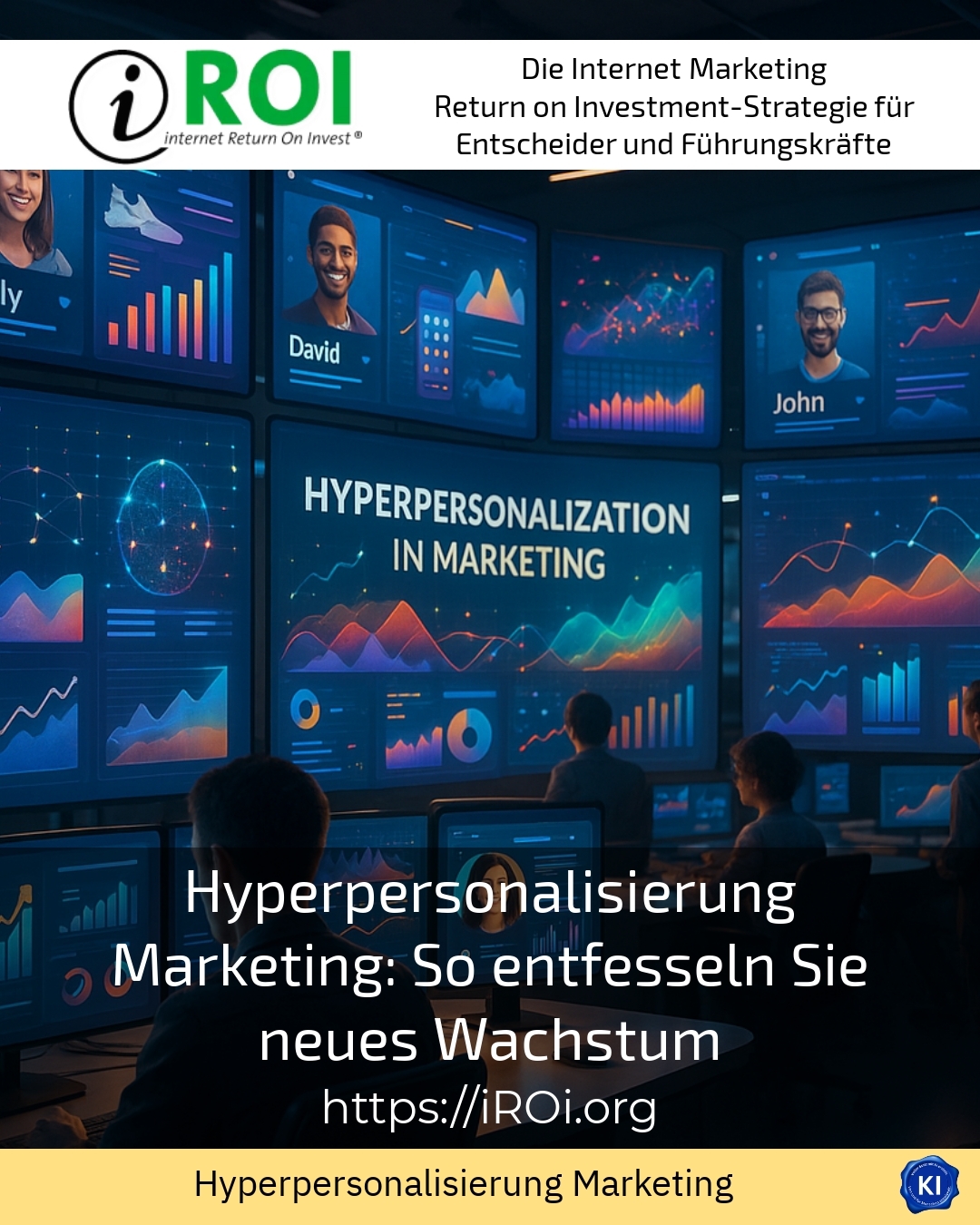
Hyper-personalised marketing enables companies to significantly strengthen their customer relationships through tailored experiences. Using meticulous data analysis and artificial intelligence, individualised approaches and offers can be generated that are suited to the specific interests and preferences of customers. This method can lead to a significant increase in customer satisfaction and loyalty, which in turn positively impacts revenue [1][2].
Fundamentals of Hyper-personalisation
Hyper-personalisation is based on the collection and analysis of large amounts of data to describe customers by profile type. These profiles make it possible to develop targeted marketing measures that address the individual directly. For example, hyper-personalisation can be used to create dynamic websites that adapt to location or user behaviour [1].
Examples from practice
An excellent example is Netflix, which customises its user interface to individual user preferences. The platform uses thumbnail images tailored to the interests of each user [3][11]. Similarly, Spotify uses hyper-personalisation to create daily and weekly playlists that are matched to users' music preferences [9][11].
BEST PRACTICE with a customer (name hidden due to NDA contract): A fashion company used hyper-personalisation to recommend fashion collections to customers, targeting them based on purchasing behaviour and fashion preferences. This strategy led to a considerable increase in sales figures.
Hyper-personalisation in hyper-personalisation marketing
In the context of hyper-personalisation marketing, the aim is to engage customers through tailored experiences. This can be achieved through intelligent chatbots, dynamic advertisements, or personalised loyalty programmes. Starbucks, for instance, uses its loyalty programme to send customers personalised offers based on their preferences and purchasing behaviour [3][9].
Advantages and challenges
Hyper-personalisation offers numerous benefits, including increased customer loyalty and revenue. However, it also requires effective data management and compliance with data protection regulations. Companies like Amazon and Netflix successfully demonstrate how hyper-personalisation can be used to enhance customer satisfaction [3][9].
BEST PRACTICE with a customer (name hidden due to NDA contract): A company in the hair care sector used hyper-personalisation to recommend individual products to customers, tailored to their specific needs. This led to a significant increase in customer satisfaction and loyalty.
Practical application and coaching
To be successful in practice, companies often require external support. iROI coaching can help with the strategic planning and implementation of hyper-personalisation marketing projects. This includes analysing customer behaviour data and developing targeted marketing strategies to strengthen customer loyalty and increase revenue.
My analysis
Hyper-personalisation in marketing is a powerful tool that can significantly strengthen companies in the competitive landscape. By combining data analysis and personalised customer communication, retail companies and service providers can achieve crucial advantages. Examples such as Netflix and Spotify clearly show that hyper-personalisation can lead to an increase in customer satisfaction and, ultimately, revenue.
Through targeted adjustment of marketing strategies and consideration of individual customer interests, hyper-personalisation marketing supports companies in deepening their customer relationships and thus achieving long-term success.
Further links from the text above:
What is hyper-personalisation?
The Power of Hyper-Personalisation
Hyper-personalisation for greater customer satisfaction
For more information and if you have any questions, please contact Contact us or read more blog posts on the topic internet Return on Investment - Marketing here.











 Deutsch
  English (UK)