
The term Human-Machine Interface (HMI) is mainly associated with the fields of automation, industry, Industry 4.0, and Artificial Intelligence. A Human-Machine Interface is the interface between humans and machines. This means that the human communicates with technical devices, systems, or even robots via the HMI.
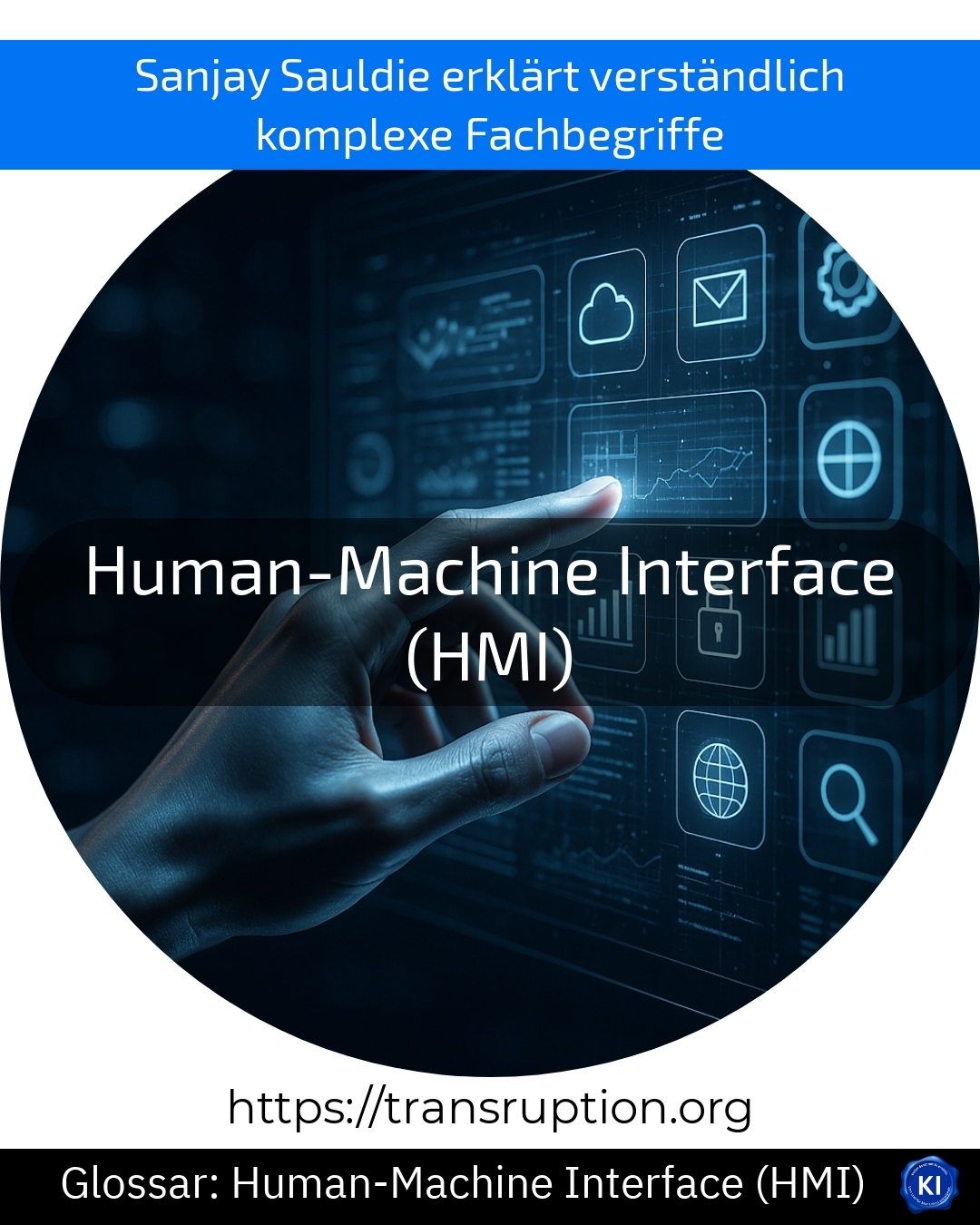
HMIs can be as simple as a touchscreen, which you could use to control a machine in a factory, for example. You see important data on the screen, such as temperatures or production figures, and can change settings with just a tap of your finger. Modern HMIs are often designed to be particularly user-friendly, so that people without technical training can also operate them.
A practical example: In a production hall, there is a large robotic arm that assembles car parts. Staff can not only read the current work progress via a human-machine interface, but also control the robot or quickly stop it if necessary.
HMIs make work more efficient, safer, and flexible. They are particularly indispensable in Industry 4.0, as more and more machines are becoming intelligent and networked. The Human-Machine Interface is therefore the gateway to the digital control of modern industry.











 Deutsch
  English (UK)