
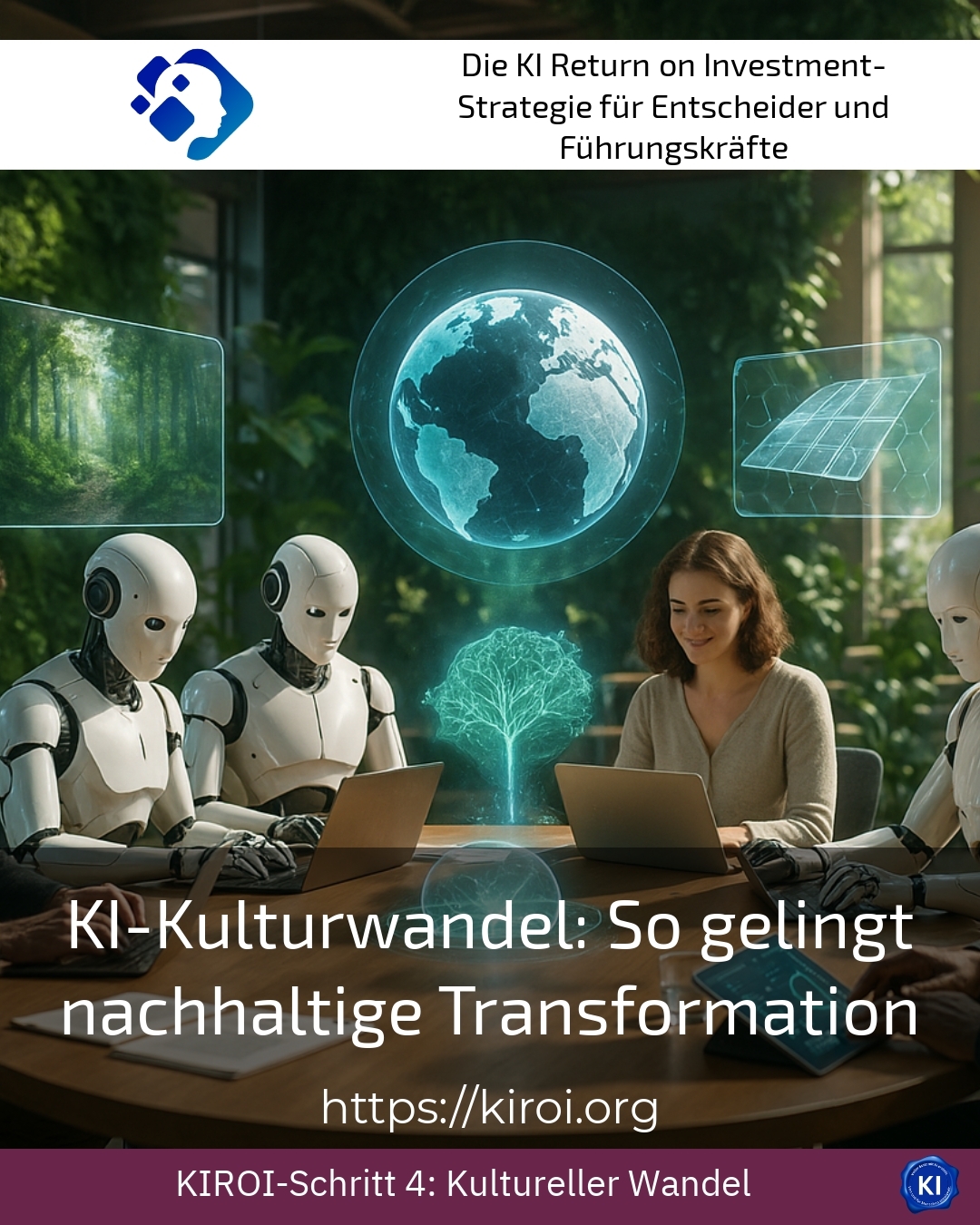
The digital revolution is fundamentally changing our working world. Companies are faced with the challenge of not just introducing technologies. They need to rethink their entire corporate culture. The AI cultural change This accurately describes this profound process. It's about much more than software implementations. Rather, the human component is at the heart of all change. Employees are asking themselves if their jobs are secure. Leaders are seeking guidance in unfamiliar territory. This is precisely where sustainable transformation comes in. It combines technological progress with emotional intelligence. This article outlines concrete paths for you. You will learn how organisations can successfully manage this change.
Why the AI culture shift requires more than just technology
Many organisations considerably underestimate the cultural dimension of digital transformation. They invest millions in modern systems and intelligent algorithms. However, the hoped-for results often fail to materialise. The reason rarely lies in the technology itself. Instead, projects fail due to a lack of acceptance and insufficient preparation. Employees feel blindsided and react with resistance. This resistance is humanly comprehensible and absolutely understandable. Change triggers uncertainty and activates fundamental fears. Therefore, sustainable change requires time and empathetic support.
A medium-sized manufacturing company recently introduced automated quality control. The technology worked flawlessly and delivered precise results. Nevertheless, productivity declined significantly in the first few months. The workforce did not trust the systems and performed manual checks. Only intensive training and open dialogue changed the situation. A mechanical engineering company experienced something similar when introducing predictive maintenance. The maintenance teams felt controlled rather than supported. Through participative workshops, employees developed their own suggestions for improvement. Thus, initial resistance turned into active co-design. A third example shows an automotive supplier. There, intelligent systems were supposed to optimise production planning. The planners saw their expertise questioned. Their attitude only changed when they were allowed to help design the algorithms.
Best practice with a AIROI customer A long-established manufacturer of precision tools faced a fundamental change in its production processes. Management had decided to introduce intelligent assistance systems into production. These systems were intended to support employees in complex decision-making. Initially, the workforce reacted with considerable scepticism and noticeable reluctance. Many experienced skilled workers felt their decades of expertise were not adequately appreciated. Transruption coaching accompanied the entire transformation process over several months. Together, all participants developed a vision for the collaboration between humans and machines. The regular reflection sessions with mixed teams were particularly valuable. Concerns could be openly addressed and constructively dealt with there. Managers learned to take resistance seriously as important feedback. Gradually, a new culture of openness and a willingness to experiment emerged. After about six months, employees reported significantly higher job satisfaction. Productivity increased by a considerable double-digit percentage. Today, the company is considered a role model for successful digital transformation.
Understanding the human side of AI cultural change
Every transformation begins in the minds and hearts of people. No matter how powerful technical systems may be, without human acceptance, they remain ineffective and unused. Therefore, organisations must take the emotional aspects of change seriously. Fears of job loss are real and justified. They do not disappear through rational arguments or platitudes. Instead, genuine participation and transparent communication are needed. Employees want to understand why changes are necessary. They want to know what role they will play in the future. These questions deserve honest and appreciative answers.
An plant manufacturer developed a comprehensive qualification program for all employees. This wasn't just about technical skills. Competencies such as critical thinking and adaptability were equally important. A manufacturer of packaging machinery established regular innovation workshops. There, all employees could try out and evaluate new technologies. This playful approach significantly reduced initial apprehension. Another example is provided by a manufacturer of electric drives. There, experienced specialists mentor the introduction of new systems. They translate technical possibilities into practical applications. This builds trust through familiar faces and known points of contact.
Leaders as Pioneers of Transformation
Leaders play a key role in any company change process. Their behaviour significantly shapes the company culture. If they themselves exude uncertainty, this will be passed on to teams. Conversely, they can build trust through authentic confidence. To achieve this, leaders must first reflect on their own concerns. They too have questions and doubts about the digital future. Addressing these openly demonstrates strength, not weakness. Teams value leaders who can show vulnerability. Such authenticity creates psychological safety throughout the entire company [1].
A machine tool manufacturer trained all management levels in transformational leadership. Participants learned to communicate change as an opportunity for development. A conveyor technology manufacturer established a reverse mentoring programme. Younger employees explained digital tools to senior managers. This role reversal significantly strengthened mutual understanding between generations. A specialist in hydraulic components organised regular leadership dialogues. Managers openly exchanged their transformation experiences there. Such formats support collective learning and reduce isolation.
Sustainable transformation through holistic support
Successful change processes rarely arise from one-off interventions or short training courses. They require continuous support over longer periods. Transruption coaching offers precisely this sustainable support for projects involving AI cultural change. It connects strategic perspectives with practical implementation support in everyday work. The focus is always on people and their needs. Technology is understood as a tool, not an end in itself. This results in solutions that truly fit organisations.
A textile machinery manufacturer underwent a multi-year transformation process with external support. All stakeholders jointly developed a shared vision for the future. A specialist in pumps and compressors utilised regular reflection loops. After each project phase, experiences were evaluated and course corrections were made. A printing press manufacturer established an internal transformation team. This team coordinated all activities and ensured networking. External impetus complemented the internal competencies in a meaningful and enriching way.
Best practice with a AIROI customer A medium-sized special machine manufacturer recognised early on the need for a comprehensive cultural change. Management had formulated ambitious goals for digital transformation. Initially, however, there was no clear path to achieving these goals. The transruption coaching began with a comprehensive assessment of the company culture. This revealed interesting insights into existing strengths and areas for development. The employees' strong specialist expertise, in particular, was identified as a valuable resource. On this basis, a customised transformation programme was created for the company. It combined technical training with cultural development measures in a balanced way. Regular pulse checks captured the mood and allowed for quick adjustments. Managers received individual coaching support for their personal development as transformation leaders. The involvement of all hierarchical levels in the process was particularly valuable. Apprentices and working students also actively contributed their perspectives. After two years, employees reported a noticeably more open communication culture within the company. The speed of innovation had significantly increased, and new products were developed more quickly. Customers praised the company's improved responsiveness and problem-solving skills.
Success factors for AI culture change in practice
Key success factors for transformation processes can be derived from numerous projects. Firstly, a clear and motivating vision for the future is needed. This vision must be authentically represented by senior management. Equally important is the early involvement of all affected employees. People support changes in which they have participated in shaping. Transparent communication builds trust and effectively reduces rumours. Mistakes should be understood as learning opportunities and not punished [2]. Sufficient resources for training and support are essential. Finally, sustainable transformation requires patience and perseverance.
A manufacturer of agricultural machinery consciously and publicly celebrated small successes. This created positive energy and motivation for further steps. A medical technology specialist set up an anonymous feedback system where employees could voice concerns without fear of negative consequences. A manufacturer of packaging machinery developed an internal communication format. In a monthly podcast, employees reported on their transformation experiences. Such formats make change tangible and create identification.
Constructively use and integrate resistances
Resistance to change is not a disruption but a valuable indication. It shows where people need support or where information is lacking. Experienced transformation facilitators know how to interpret and assess these signals. Often, legitimate concerns and important experiences are hidden behind resistance. Long-serving employees know the processes and their pitfalls intimately. Their knowledge is indispensable for successful change projects within the company. Therefore, critical voices should be heard and taken seriously. This does not mean accepting every form of resistance. Rather, it is about understanding the underlying needs.
A manufacturer of woodworking machinery appointed skeptical employees as project sponsors. These employees were tasked with identifying weaknesses and proposing improvements. This transformed critics into constructive contributors to change. A specialist in plastics processing introduced regular "worry clinics" where employees could voice their concerns without prior appointment. An elevator manufacturer organised experience-sharing sessions between sites. Teams that had already undergone transformation steps reported on their findings. Such peer-learning formats build credibility and sustainably reduce resistance.
My AIROI Analysis
After intensive consideration of the topic, it becomes clear that the AI cultural change goes far beyond technical implementations and touches upon fundamental human needs. Successful transformation requires a deep understanding of emotional dynamics within organisations and patience in its execution. The examples impressively show that companies succeed when they place people at the centre of their change processes and enable genuine participation. Technology alone does not create sustainable change and remains ineffective without cultural integration. Instead, a holistic perspective is needed that equally considers and integrates technical and human aspects. Transruption coaching has proven to be a valuable support for these complex processes in numerous projects, providing impetus for sustainable development. The combination of strategic consulting and practical implementation support, in particular, creates real added value for organisations. Leaders often report new perspectives and strengthened capabilities following coaching processes. In the future, it will be crucial how well companies manage to anchor and cultivate learning ability and adaptability on a permanent basis. The AI cultural change is not a one-off project with a defined end. Rather, it describes a continuous development process that will never truly be completed. Organisations that adopt this perspective will be more successful and resilient in the long term than those that hope for quick fixes.
Further links from the text above:
[1] Harvard Business Review: Psychological Safety in Organisations
[2] McKinsey: Future of Work and Digital Transformation
For more information and if you have any questions, please contact Contact us or read more blog posts on the topic Artificial intelligence here.








 Deutsch
  English (UK)