
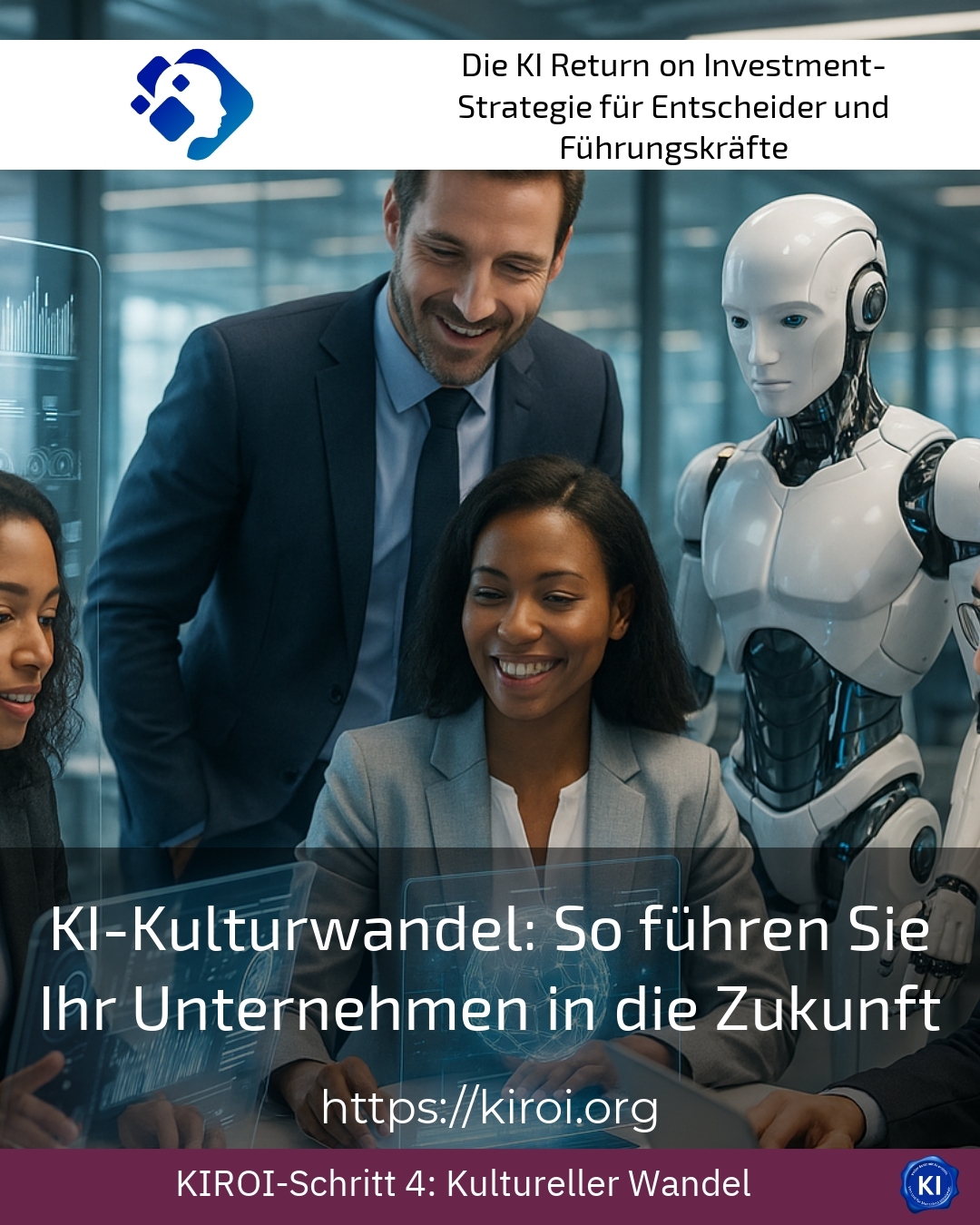
Have you ever wondered why some organizations seem to glide effortlessly into the digital future while others, despite enormous investments, are stagnating and increasingly leaving their employees frustrated? The answer often lies not in the technology itself, but in the AI cultural change, It is the invisible engine that determines success or failure, and it encompasses far more than the mere implementation of new software solutions. In numerous conversations with executives, I repeatedly experience that the real challenge lies in taking people on a journey whose goal constantly changes and whose path no one has fully mapped out yet.
Why technological progress alone is not enough
The introduction of intelligent systems rarely fails due to a lack of computing power or insufficient algorithms, but rather due to the lack of willingness of the workforce to fundamentally rethink established working methods and to embrace new approaches with openness. Many companies invest substantial sums in state-of-the-art infrastructure, but forget that technology can only reach its full potential if it is understood, accepted, and creatively developed by people. AI cultural change Therefore, it does not begin in the server room but in the minds and hearts of the employees who make decisions and shape processes on a daily basis.
For example, a medium-sized manufacturing company implemented predictive maintenance systems that were intended to predict machine breakdowns. However, the on-site technicians systematically ignored the warning messages because they did not trust the system. Only after management conducted intensive training and actively involved employees in the further development did the situation change noticeably. A trading company experienced a similar situation when introducing automated ordering systems. The buyers routinely ignored the recommendations because they valued their own experience higher. The breakthrough came only when workshops took place in which both parties learned from each other.
Best practice with a AIROI customer
An international logistics company faced the challenge of optimizing its entire warehouse management through intelligent systems, but encountered significant resistance from long-standing employees who saw their expertise being undermined and feared losing their jobs. In the context of intensive transruptive coaching support, we developed a comprehensive change program together with the management that positioned the employees not as recipients of change but as active creators of the new working world. As a result, acceptance within a few months improved significantly. The warehouse workers were trained to become so-called technology ambassadors who trained their colleagues and served as contact points for questions and concerns, which significantly strengthened trust in the new systems while simultaneously infusing valuable practical knowledge into the further development of the algorithms. The company now reports an efficiency increase of over thirty percent, with employee satisfaction even rising because repetitive tasks were eliminated and more demanding tasks came to the fore.[1]
The leader as a catalyst for the transformation of AI culture
Leaders bear a special responsibility when it comes to guiding their teams through times of profound change, providing both direction and security without masking the need for adaptation. They must create an atmosphere where experimentation is encouraged and mistakes are viewed as learning opportunities, rather than spreading fear of sanctions that would stifle any innovation at its very inception. Clients often report uncertainties that prevent them from experimenting with new technologies, even though they fully recognize their potential.
A financial services provider established regular „innovation Fridays“ where employees could test new tools. This initiative led to several valuable improvement suggestions from the workforce. One insurance company went even further and created an internal „experimentation room“. There, teams were allowed to try new approaches without pressure to succeed. The best ideas were then incorporated into the regular operations. One energy provider held monthly „reverse mentoring sessions“ where younger employees shared their technical knowledge with experienced executives [2].
Communication as a Key Competence in Transition
The way changes are communicated decisively determines whether employees become allies or resistance fighters. Therefore, leaders should continuously develop their communication skills to make complex matters understandable and at the same time take emotional needs into account. Transparency about goals, timelines, and expected outcomes creates trust and reduces the rumor mill that thrives especially actively in uncertain times and often unleashes destructive forces that can endanger the entire transformation process.
A pharmaceutical company developed a „transformation roadmap“ that was accessible to all employees. This transparency reduced fears and significantly increased engagement. An automotive supplier introduced weekly video updates to the management team. Direct communication created closeness and understanding of the need for change. A telecommunications provider established anonymous feedback channels through which employees could express concerns [3].
Understanding and constructively using resistance
Resistance to change is not a sign of malice or a lack of intelligence, but a deeply human response to perceived threats that should be taken seriously and used as a valuable source of information, rather than ignored or suppressed, which would cause far greater problems in the long run. The concerns of skeptics often contain important clues about the actual weaknesses of the transformation plan that could be overlooked by more enthusiastic stakeholders, which is why a smart management actively seeks dialogue with critical voices and incorporates their perspectives into the planning process.
A mechanical engineering company identified the biggest skeptics and made them part of the transformation team. Their critical questions significantly improved the implementation strategy. A chemical company conducted „concerns workshops“ in which concerns were openly discussed. These formats created trust and resolved many blockages. A retailer appointed a „Chief Skeptic Officer,“ whose task was to critically question planned measures and uncover weaknesses.
Best practice with a AIROI customer
A traditional family business in the food industry faced massive resistance when the management announced that it would automate large parts of quality control through intelligent image recognition systems, with long-standing employees fearing that their decades of experience would suddenly become worthless. As part of the transruptive coaching process, we organized a series of moderated dialogue sessions where both the workforce’s concerns and the strategic imperatives were openly discussed, leading to a shared understanding and laying the foundation for a collaborative transformation. The experienced quality inspectors were then further qualified as „system trainers,“ whose expert knowledge now contributes to improving the recognition algorithms and who simultaneously act as mentors for younger colleagues, creating a cross-generational knowledge transfer that was enriching for all involved. The company was able to reduce its error rate by over forty percent, while at the same time strengthening employee engagement because people experienced that their expertise was still valued and needed. [4]
Anchor AI cultural change through continuous learning
A learning organization that continuously trains its employees and promotes both technical and social competencies is much better positioned to master the challenges of the digital age than a rigid structure that relies on one-time training initiatives and then expects all changes to work smoothly. AI cultural change it requires a constant willingness to adapt, which must be deeply embedded in the corporate culture and reflected in concrete structures and processes.
A media company introduced personalized learning paths tailored to the individual needs of each employee. This measure significantly increased learning motivation. A consulting firm established „peer learning groups“ where colleagues learned from each other. The informal exchange proved particularly effective. A technology company funded external training and conference visits for interested employees [5].
The role of values and purpose in times of transformation
In times of profound change, shared values and a clearly formulated corporate purpose gain importance because they can serve as guiding principles when other certainties fade away and the future appears uncertain. This often strengthens cohesion and maintains motivation, even when the path becomes rocky. Employees who understand why certain changes are necessary and how they relate to the company’s overarching goals often show a significantly higher willingness to actively contribute and to perceive challenges as opportunities.
A healthcare provider explicitly linked its digitalization strategy to the goal of better serving patients. This sense of purpose significantly motivated the employees. One educational institution emphasized that new technologies would create more time for individual care. The perspective on the added value for learners convinced many skeptics. One social enterprise showed how automated processes would free up resources for the core mission.
My AIROI Analysis
The intense discussion on the topic of cultural change in the context of intelligent technologies constantly reminds me that the human factor remains the decisive success factor, regardless of how powerful the systems used may be. In my work with transformation projects, I regularly witness that organizations that treat their employees as partners in the change process and grant them real opportunities for co-creation are significantly more successful than those that implement technology top-down and expect everyone to conform.
The AIROI-methodology offers a structured framework for shaping this complex change by simultaneously considering technological, organizational, and human aspects and integrating them into a coherent overall concept. Particularly valuable in this regard is the iterative approach, which enables learning from experience and continuously adapting the course rather than following a rigid plan that must fail in reality. The AI cultural change It is successful when leaders have the courage to relinquish control and trust their teams, while at the same time setting clear guidelines and providing direction.
The future belongs to organizations that manage to combine technological innovation with human wisdom and at the same time develop a culture that sees change not as a threat but as a permanent opportunity. Transruptions coaching helps you to take this path together with your teams and unlock the potential that lies dormant within your organization.
Further links from the text above:
[1] AIROI-Methodology in practice
[2] Harvard Business Review: Change Management
[3] McKinsey: People & Organizational Performance
[4] Transruptions Coaching Overview
[5] Gartner: Human Resources Research
For more information and if you have any questions, please contact Contact us or read more blog posts on the topic Artificial intelligence here.







 Deutsch
 English (UK)