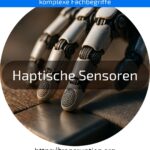
Haptic sensors are primarily at home in the fields of robotics, industry and Industry 4.0, as well as the Internet of Things. They help machines to „feel“ and react to their surroundings more effectively. This works similarly to the human sense of touch: haptic sensors measure contact, pressure, force, or vibrations.
A simple example is a modern robotic arm in a factory. This uses haptic sensors to detect how tightly it is gripping an object. This way, it can carefully lift fragile items like eggs without crushing them. At the same time, it learns when it can apply more force, for instance, when stacking heavy components.
In Internet of Things products, haptic sensors ensure, for example, that a smart vacuum cleaner detects obstacles and navigates around them. In industry, they enable greater automation and safety because machines react immediately as soon as they sense unusual resistance or a problem.
In short, haptic sensors teach machines to „feel“ and are an important building block for a smart, automated future.






 Deutsch
  English (UK)