
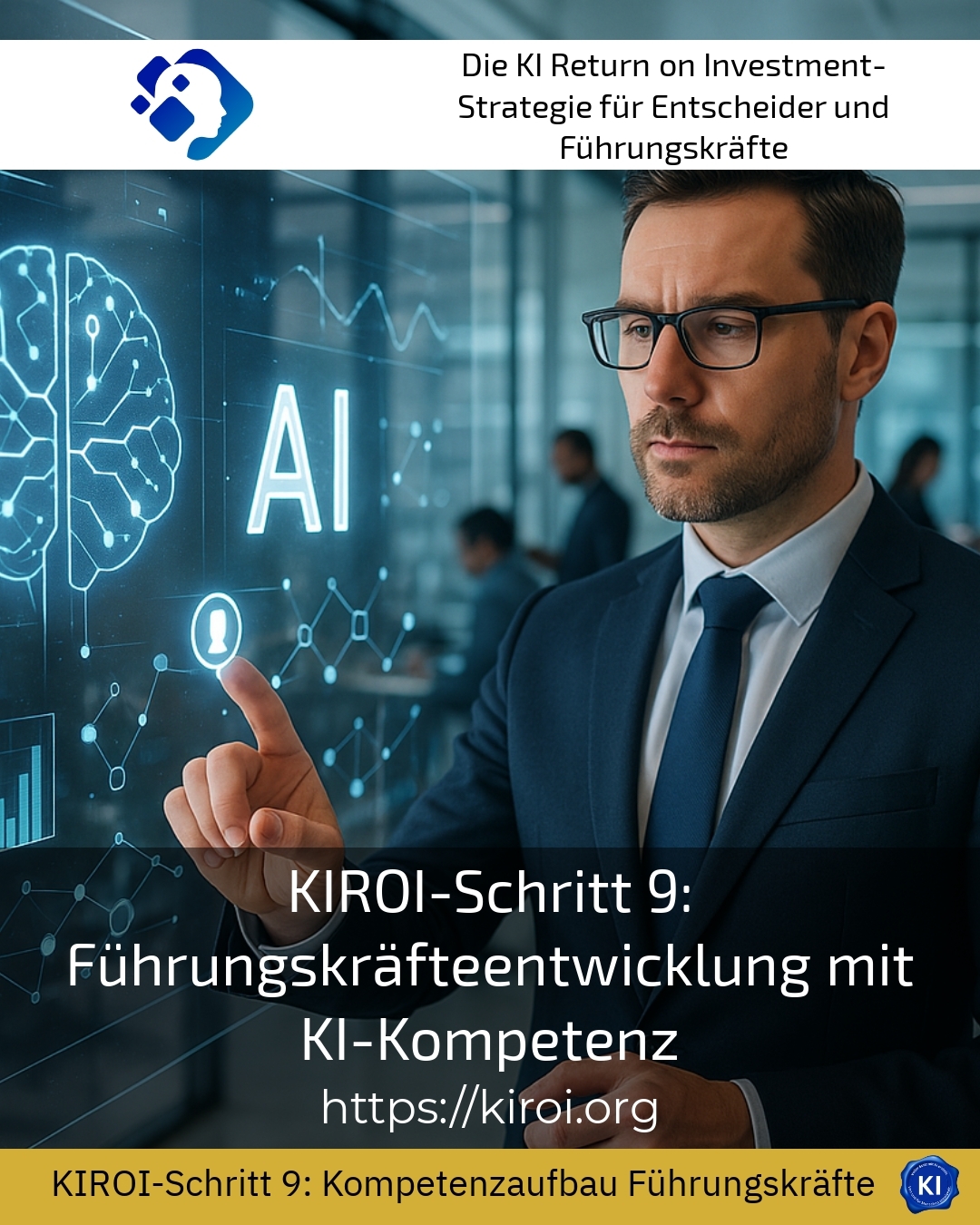
The Leadership Development gains a whole new meaning in the age of digitalisation. The targeted development of competencies, particularly in the area of Artificial Intelligence (AI), supports executives in meeting the challenges of the modern world of work and securing sustainable company success. This is not just about the pure transfer of knowledge, but about holistic support that fosters individual potential and actively shapes change.
Leadership development as a key to digital transformation
In various sectors, it is becoming clear how essential the Leadership Development This is crucial for dealing with new technologies. For example, in the automotive industry, executives with AI expertise enable earlier detection of market trends and competitive situations, thereby improving strategic positioning. In the healthcare sector, executives use AI-supported analytical methods to make patient care more efficient while upholding ethical standards. In retail, executives with an understanding of AI help their teams better identify customer needs and develop personalised offers that boost sales.
Leaders who inspire their teams and guide them through the transformation process not only foster innovation but also support an open learning culture. This allows the digital transformation to be perceived as an opportunity rather than a risk.
BEST PRACTICE with one customer (name hidden due to NDA contract)
In a medium-sized technology company, leadership development with a focus on AI competence was strategically implemented. Leaders received individual coaching to learn how to use AI tools while simultaneously fostering critical reflection. Within a year, many reported improved decision quality and enhanced team communication, which positively stimulated innovation processes.
Methods and practical examples for successful leadership development
The Leadership Development utilises a broad spectrum of methods to specifically promote various competencies:
Coaching supports managers individually in recognising their own strengths and overcoming challenges in a professional context. For example, in the financial sector, a coach might support a manager in better understanding AI-powered risk assessments and deriving strategic decisions from them.
Mentoring is widespread, particularly in industry, where experienced leaders pass on their knowledge of AI applications to junior staff. Reverse mentoring is increasingly valued here, for example, when younger employees introduce digitalisation and AI, while established leaders contribute strategic know-how.
Workshops and training allow for the rapid development of technical knowledge. In the pharmaceutical industry, these formats enable managers to learn about and apply new AI-driven methods for data analysis in projects.
BEST PRACTICE with one customer (name hidden due to NDA contract)
A trading company introduced regular AI skills workshops for its executives. The focus was on practical scenarios, such as using AI for customer analysis. The executives began to use AI as a strategic sparring partner, which, according to internal surveys, noticeably improved the effectiveness of marketing campaigns.
AI competence as an integral part of leadership development
Building AI competence in leadership training is not merely an additional building block, but fundamentally changes the nature of leadership. Leaders learn to view AI as a team member that takes over routine tasks, thereby creating free space for strategic decisions.
In the IT services sector, for example, managers are using AI assistants for automatic error analysis. This saves time and at the same time enables more targeted staff development. In mechanical engineering, AI systems supplement the expertise of managers by monitoring plant data in real-time and thus providing early warnings of possible malfunctions.
Leadership development also implies responsibility for ethical and transparent AI use. In public administration, leaders expect of themselves to establish control mechanisms that safeguard data protection and curb algorithmic biases.
BEST PRACTICE with one customer (name hidden due to NDA contract)
A large logistics company integrated AI competency coaching into its management programme. Executives were trained to ask critical questions of AI systems and understand their decisions. The result was increased acceptance of AI solutions and improved human-machine collaboration.
My analysis
The Leadership Development remains a central theme for making companies fit for digital transformation. The targeted development of AI competence supports leaders in promoting innovation, improving decision-making processes, and leading teams with a future-oriented approach. Various methods such as coaching, mentoring, and workshops offer practical opportunities for individual support and competence development. Companies that leverage these potentials sustainably strengthen their competitiveness.
Further links from the text above:
AI for Executives: AI requires new leadership competence
Leadership Development: Methods and Concepts
How to succeed in leadership development – Methods
Leadership Trends with AI 2025
The future of leadership development with AI
For more information and if you have any questions, please contact Contact us or read more blog posts on the topic Artificial intelligence here.











 Deutsch
  English (UK)