
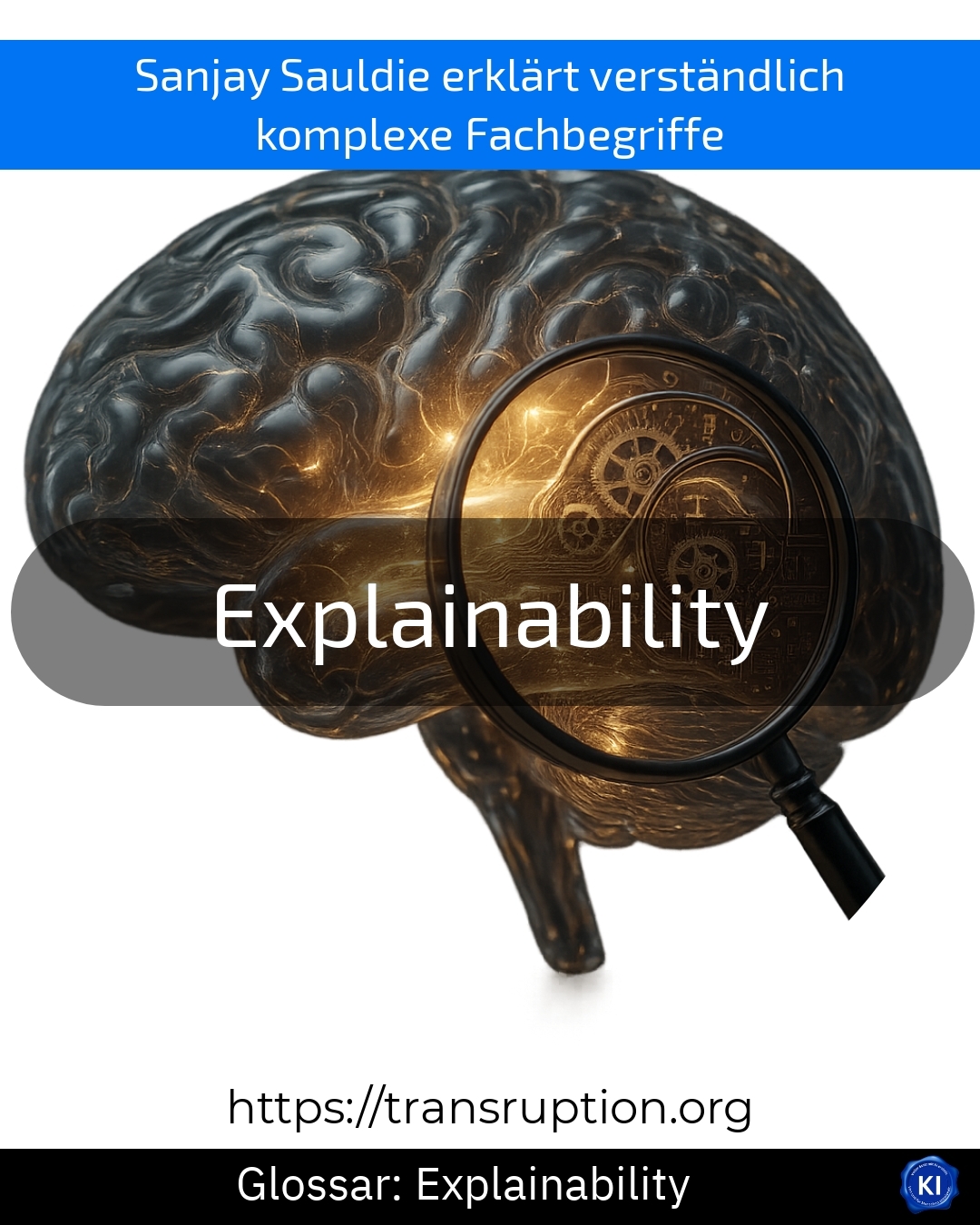
The term explainability is particularly important in the fields of Artificial Intelligence, Big Data and Smart Data, and Digital Leadership. It describes how well one can understand how an artificial intelligence, computer program, or complex data model arrived at a decision or result.
AI systems often seem like a „black box“: they provide an answer, but no one really knows for sure how it was reached. This can be problematic when it comes to important decisions, for example, with loan applications, medical diagnoses, or recruitment processes. Explainability ensures that such decisions become comprehensible and transparent.
A simple example: an algorithm decides whether someone gets a loan. Without explainability, the applicant doesn't understand why their request was rejected. With explainability, the bank can explain: „The application was rejected because the income is too low and there have been payment arrears in the last six months.“ This makes the decision-making process fairer and more understandable.
Explainability strengthens trust in AI-based technologies and helps companies to handle data and automation responsibly. This is particularly important in the digital transformation.











 Deutsch
  English (UK)