
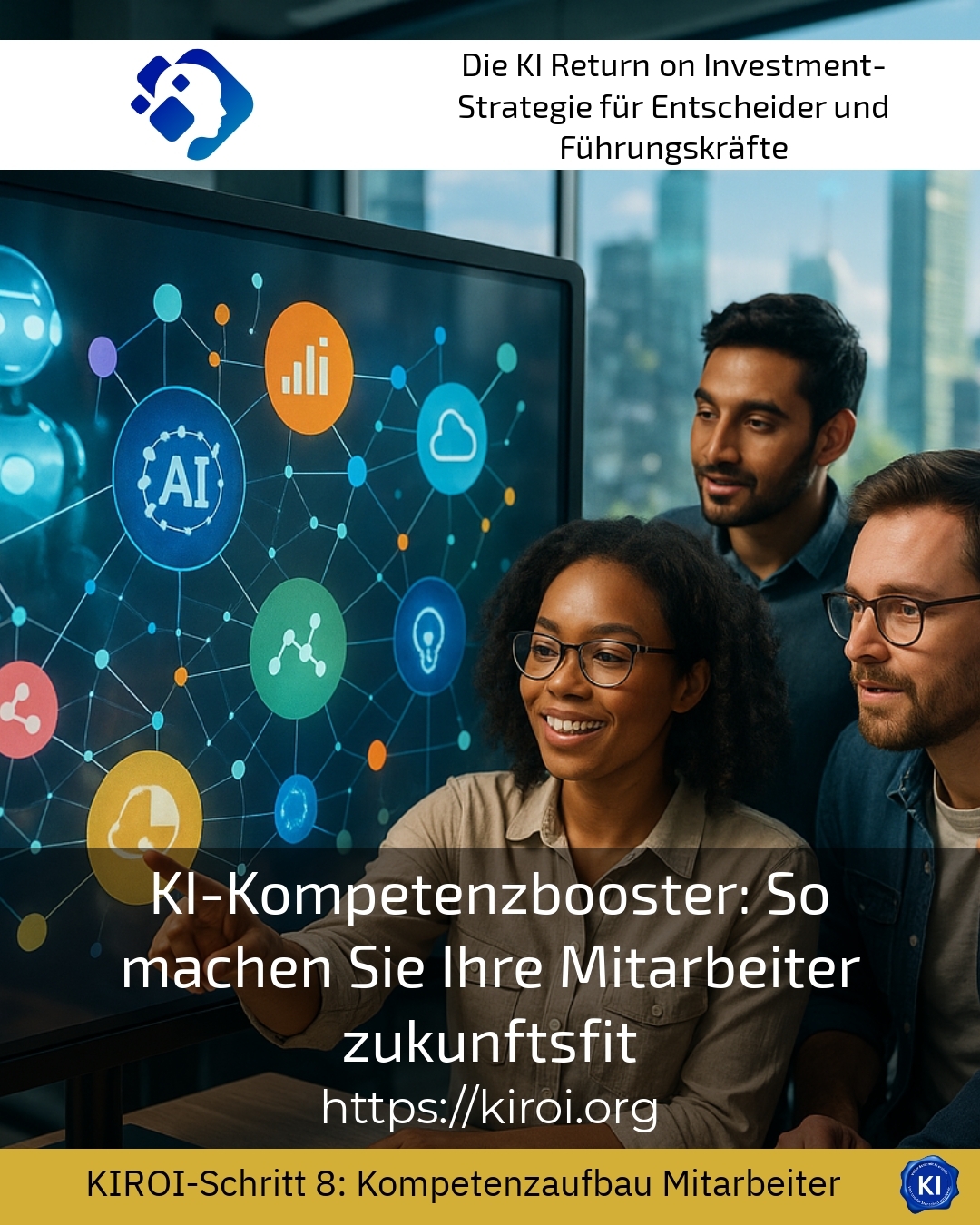
The digital revolution is fundamentally transforming every workplace. Companies are facing a critical question. How do they prepare their workforce for the new demands? AI Skills Booster offers valuable approaches here. This is how you make your employees future-proof and secure your competitiveness. Many managers report uncertainty within their teams. At the same time, the pressure to quickly integrate technological innovations is growing. This article shows you practical ways to systematically develop skills.
Why technological further education is essential today
The world of work is undergoing a profound transformation. Traditional job descriptions are changing rapidly. New skill sets are emerging almost overnight. Companies that do not systematically train their employees risk falling behind. This is not just about technical knowledge. Rather, the focus is on developing holistic competence. This includes analytical thinking, creative problem-solving, and the ability to adapt continuously. In practice, we frequently encounter teams facing precisely these challenges. They are looking for guidance and concrete recommendations for action. Therefore, we support organisations in this important transformation.
Manufacturing provides clear examples of this. Today, a machine operator works with intelligent control systems. They independently analyse data and optimise production processes. A quality inspector uses imaging analysis methods for error detection. The logistics department coordinates autonomous transport systems in the warehouse. All these activities require new skills. The previous training is often no longer sufficient for this.
The AI Skills Booster as a Strategic Instrument
A structured approach to developing skills brings measurable benefits. Employees gain confidence in dealing with new technologies. They better understand interdependencies and can make informed decisions. This leads to higher productivity and increased job satisfaction. At the same time, staff turnover decreases because employees feel valued. Companies benefit from shorter implementation times for new systems. Acceptance of change increases noticeably [1].
This is particularly evident in the automotive industry. Workshop employees now diagnose vehicle problems digitally. They interpret complex sensor data and make repair decisions. Sales employees use predictive analytics for customer advice. Development engineers work with generative design tools. Production planners optimise manufacturing processes using intelligent algorithms. Each of these tasks requires specific knowledge.
Best practice with a AIROI customer
A medium-sized automotive supplier approached us with a specific concern. The workforce showed clear reservations about new digital tools. Management reported slowed implementation processes, with projects regularly delayed by several months. We supported the company in developing a tailor-made qualification programme. First, we analysed the existing skill profiles of all departments, identifying specific knowledge gaps and development potential. Subsequently, we designed modular learning units for different functional areas. Production employees received practical training on operating intelligent manufacturing systems. Quality management learned to interpret automated test reports. The management level developed skills in data-driven decision-making. After six months, those responsible reported significantly improved acceptance. The implementation time for new systems decreased considerably, and employee satisfaction increased measurably.
Practical implementation strategies for various business areas
Successful skills development requires a differentiated approach. Not every employee needs the same knowledge. An accountant has different requirements than a service technician. A buyer works with different systems than a marketing expert. That's why we recommend a role-based training strategy. This takes into account individual starting situations and target requirements. At the same time, it creates a common foundation for cross-departmental collaboration.
Particular fields of application arise in healthcare. Nurses document patient data in intelligent systems. Doctors use diagnostic support tools when interpreting findings. Administrative staff optimise appointment scheduling and resource allocation. Pharmacists check medication interactions using specialised software. Therapists employ digital aids in rehabilitation. All these activities benefit from targeted skills development [2].
How the AI competence booster supports learning processes
Modern learning formats offer diverse opportunities for skills development. Microlearning units impart knowledge in small portions. Practical projects enable the direct application of new skills. Mentoring programmes foster intergenerational knowledge transfer. Peer learning groups create spaces for collegial exchange. Simulation environments allow risk-free experimentation. The combination of different formats demonstrably increases learning success.
The retail sector impressively illustrates this diversity. Sales assistants use personalised recommendation systems during customer interactions. Store managers analyse sales data for assortment optimisation. Warehouse staff work with intelligent picking systems. Buyers forecast demand trends with the help of analytical tools. Marketing teams personalise customer engagement across various channels. Visual merchandisers employ virtual planning tools.
Best practice with a AIROI customer
A regional retail chain was looking for ways to develop its staff. The company operates several branches with different product ranges. The challenge lay in the decentralised structure. In-person training was logistically complex and costly. We developed a hybrid learning concept together. We imparted foundational knowledge through digital learning modules, which employees could complete flexibly during quiet business hours. For practical applications, we organised regional workshops where participants practiced using new systems. Experienced employees took on mentoring roles for colleagues. An internal forum facilitated cross-site exchange. We accompanied the entire process with regular feedback loops. After implementation, branch managers reported an increased quality of advice. Customer satisfaction improved in several areas. The project received a positive response at all company levels.
Overcoming resistance and creating acceptance
Change processes naturally encounter reservations. Some employees fear job losses. Others feel overwhelmed by new requirements. Still others doubt the benefit of technological innovations. These concerns deserve to be taken seriously. Transparent communication forms the basis for trust. Managers should address fears and outline realistic prospects. Success stories from within the company are particularly convincing [3].
The financial industry is very familiar with these dynamics. Bank advisors fear the automation of their activities. Clerks worry about the future of repetitive tasks. Risk managers question the reliability of algorithmic assessments. Compliance officers examine the regulatory requirements of new systems. Customer advisors adapt their communication style to digital channels. Investment analysts integrate data-driven insights into their evaluations.
Leaders as the key to success
The leadership's attitude significantly influences success. Managers shape the learning culture within their teams. They allocate time resources for further training activities. They encourage a willingness to experiment and tolerate mistakes. They acknowledge learning progress and appreciate commitment. They themselves must lead by example. Leaders who demonstrate their own willingness to learn inspire their employees. This role model function cannot be delegated.
These connections are particularly clear in the manufacturing sector. Production managers decide on training times during shifts. Foremen impart practical application knowledge directly at the workplace. Team leaders support the integration of new working methods. Works councils constructively accompany change processes. HR managers design suitable development paths. Management provides the necessary resources.
Best practice with a AIROI customer
A medium-sized mechanical engineering company contacted us with a specific concern. The technical leadership was hesitant about new digital tools. This attitude permeated the entire organisation. Employees did not take training opportunities seriously enough. We designed a special programme for the managers. In several workshops, we collaboratively developed use cases from their everyday work. The participants experienced concrete potential for improvement in their work. They developed their own project ideas for their areas of responsibility. Subsequently, they presented these ideas to senior management. Several proposals received immediate approval for implementation. The positive experience permanently changed the managers' attitudes. They became active promoters of skills development. Consequently, participation in learning within their teams increased noticeably.
Ensuring sustainability in skills development
One-off training measures are not enough. Technological developments are advancing continuously. What is considered innovation today is already standard tomorrow. That is why companies need structures for permanent learning. Regular refreshers keep knowledge current. New employees require systematic induction. Experienced colleagues benefit from advanced training opportunities. AI Skills Booster unfolds its full effect only in this continuity [4].
The energy sector vividly illustrates this necessity. Network technicians monitor intelligent power grids in real-time. Customer advisors explain complex tariff models in an understandable way. Installers set up networked energy systems for customers. Planners optimise generation and consumption with predictive models. Maintenance teams use predictive maintenance systems. Billing specialists process dynamic consumption data.
Measurable success through systematic evaluation
The success of training measures should be measurable. To achieve this, companies need suitable key performance indicators. The participation rate for learning offerings provides initial indications. Knowledge tests systematically assess learning success. Practical assessments measure application competence in everyday work. Productivity metrics show economic impact. Employee surveys capture subjective satisfaction. Combining various indicators provides a meaningful overall picture.
These effects can be well observed in the service sector. Customer service employees resolve queries more quickly and precisely. Consultants create more well-founded analyses in less time. Project managers coordinate complex projects more efficiently. Sales employees identify customer needs more accurately. HR departments sustainably optimise recruiting processes. Finance teams create forecasts with greater accuracy.
My AIROI Analysis
Systematic skills development is decisive for a company's success. Organisations that specifically promote their employees gain competitive advantages. The AI Skills Booster It offers a structured framework for this. It combines technological knowledge with practical application skills. At the same time, it takes into account the human dimension of change. Fears are taken seriously and addressed constructively.
From our consulting experience, we are aware of the complexity of such projects. Every company brings individual prerequisites. Industry-specific requirements differ considerably. Corporate culture influences the acceptance of new learning formats. Available resources limit the scope for action. That is why we support organisations with tailor-made concepts. We provide impetus for strategic alignment. We support operational implementation. We evaluate progress and adapt measures.
The most important takeaway is that competence development is not a one-off task. It requires continuous commitment at all levels. Leaders must lead the way and provide resources. Employees need the courage to change and openness to new things. HR managers create suitable frameworks. External support can provide valuable impetus and reveal blind spots. Together, the transformation into a learning organisation can succeed. Companies that embark on this path secure their long-term future viability [5].
Further links from the text above:
[1] McKinsey – Reskilling in the Age of AI
[2] World Economic Forum – Future of Work Skills
[3] Harvard Business Review – Change Management
[4] LinkedIn Learning – Cursuri de inteligență artificială
[5] Bitkom – Digital Transformation
For more information and if you have any questions, please contact Contact us or read more blog posts on the topic Artificial intelligence here.







 Deutsch
  English (UK)