
„`html
Why Event Forecasting Marketing Redefines Your Success
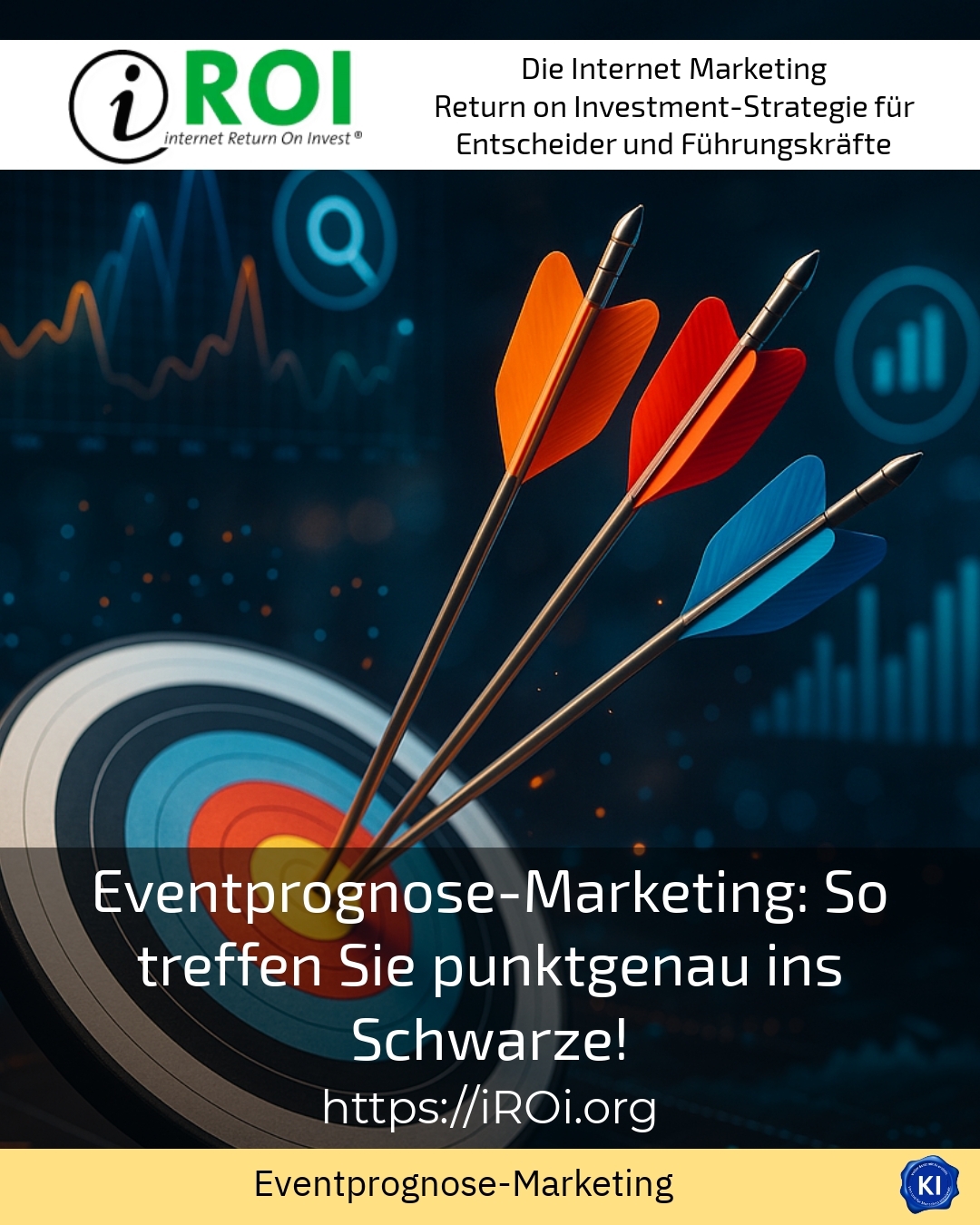
Event forecasting marketing is at the dawn of a new era when it comes to successfully managing event projects. This method combines data analysis, market research, and a deep understanding of potential attendee behaviour. Companies that strategically utilise event forecasting marketing gain a clear competitive advantage because they can identify trends early and adapt their strategies accordingly. This way, you not only start with informed decisions but also remain flexible and agile throughout the entire lifecycle of your event.
Identifying the right target audience with event forecasting marketing
Many clients tell us that they are unsure when identifying their target audience. This is precisely where event forecasting marketing comes in. By analysing sociodemographic data, interest groups, and past attendee events, you get a much clearer picture of who really fits your event.
Example 1: Trade fairs with digital participant analysis
A trade fair for innovative technologies used Eventprognose-Marketing to analyse its audience. The organisers relied on tracking systems from the previous year and social media trends to define their target audience. The result: registrations rose by 15%, as the programme was tailored precisely to their needs.
Example 2: Hybrid Conferences in 2025
Hybrid conferences particularly benefit from event forecasting marketing, where both in-person and online attendees are considered to best design the event format. Data on session attendance and participant feedback are directly integrated into the next planning phase.
Example 3: Corporate Events with Individualised Communication
At a medium-sized company, the focus was on staff retention. Using predictive analytics, the organisers were able to identify the specific interests and willingness to participate of their workforce. Participation rose by 30% because the topics and formats were chosen to perfectly suit the audience.
BEST PRACTICE with one customer (name hidden due to NDA contract) The client, an event organiser for B2B conferences, wanted to increase their international reach. Together with iROI-Coaching, we conducted a multi-stage target group analysis. This involved evaluating historical participation data, market trends, and social media interactions. Even in the initial phase, it became clear that most potential participants work in an industry with high innovative strength. The marketing campaign was subsequently refocused: the theme and speaker selection reflected this development. Registrations began five weeks earlier than in previous years, and the event was a complete success with over 650 participants. Feedback from guests was overwhelmingly positive, as the content and networking opportunities were precisely tailored to their current challenges.
Strategic Planning: From Trend to Action
Event forecasting marketing bridges the gap between trend observation and operational implementation. Companies that systematically set up their event marketing save resources in the long term and increase efficiency. The strategy is based on three pillars: in-depth analysis, flexible planning, and continuous optimisation.
You also use external resources such as industry studies, competitor analyses, and modern forecasting models to align your event even more precisely[9]. Especially in the business event industry, it is important not only to anticipate your own behaviour but also the expectations of the market.
Example 1: Early bird offers thanks to forecast data
A conference organiser used event forecasting marketing to find the right timing for early-bird offers. By analysing past booking trends, the offer could be precisely timed within the target audience's decision-making window. The result: Early-bird tickets sold out within three days.
Example 2: Trend-driven Speaker Selection
A trade fair for modern mobility used market forecasts to find speakers who would cover future developments. This meant the programme was not only diverse, but also absolutely up-to-date.
Example 3: Data-driven reporting
An international congress organisation evaluated feedback after each event. The results were immediately incorporated into the planning for the following year, with the event evolving a little more each time.
Event forecasting marketing in practice: How to implement it correctly
Event marketing doesn't start when the event begins, but months beforehand. The right tools and methods ensure that every phase is optimally utilised.
Use data analytics to identify relevant topics even during preparation. Artificial intelligence and machine learning help to recognise patterns and predict behaviour [1]. Focus on landing pages tailored to search terms and user needs, and use targeted search engine marketing to increase visibility [2][4].
Build a network of keynote speakers, sponsors, and partners that aligns with the forecasts. Integrate multi-channel campaigns to reach your target audience via email, social media, display, and traditional advertising. This will create broad reach with high effectiveness[11].
In the run-up to the event, iROI Coaching helps you derive concrete actions from data. During and after the event, we help you specifically evaluate feedback and develop further steps from it. Continuous optimisation is the focus – not only in event forecasting marketing, but also for your digital return on investment.
Example 1: Data-driven communication control
A digital platform for business enthusiasts used event-driven marketing to tailor communication at any given moment. This strategy ensured that emails and social media posts were delivered when the target audience was most receptive.
Example 2: Social Listening for spontaneous adjustments
An event provider for the creative industries used social listening tools. These showed that interest was shifting – the organisers reacted immediately by adding new sessions to the programme at short notice.
Example 3: Sustainable Event Management
A congress on climate issues integrated sustainability forecasts into its planning. The location, catering, and networking were specifically geared towards ecological aspects – a USP that was very well received by participants.
My analysis
Event forecasting marketing is no longer a playground for digital pioneers, but a proven method for making events of all sizes a success. Those who rely on their gut feeling are missing out on opportunities – those who focus on data, trends, and systematic analysis score points. Especially in times of rapidly changing markets, it is crucial to think ahead and remain flexible.
iROI-Coaching supports you in implementing event forecasting marketing and assists you in planning, optimising and tracking your events based on data. We begin with an analysis of your current situation, jointly develop strategies and create individual solutions that fit your goals.
Leverage the insights derived from well-made forecasts to make your events more relevant, efficient, and successful. Event forecasting marketing is more than a trend – it's the key to sustainable success in the event industry.
Further links from the text above:
For more information and if you have any questions, please contact Contact us or read more blog posts on the topic internet Return on Investment - Marketing here.
„`









 Deutsch
  English (UK)