
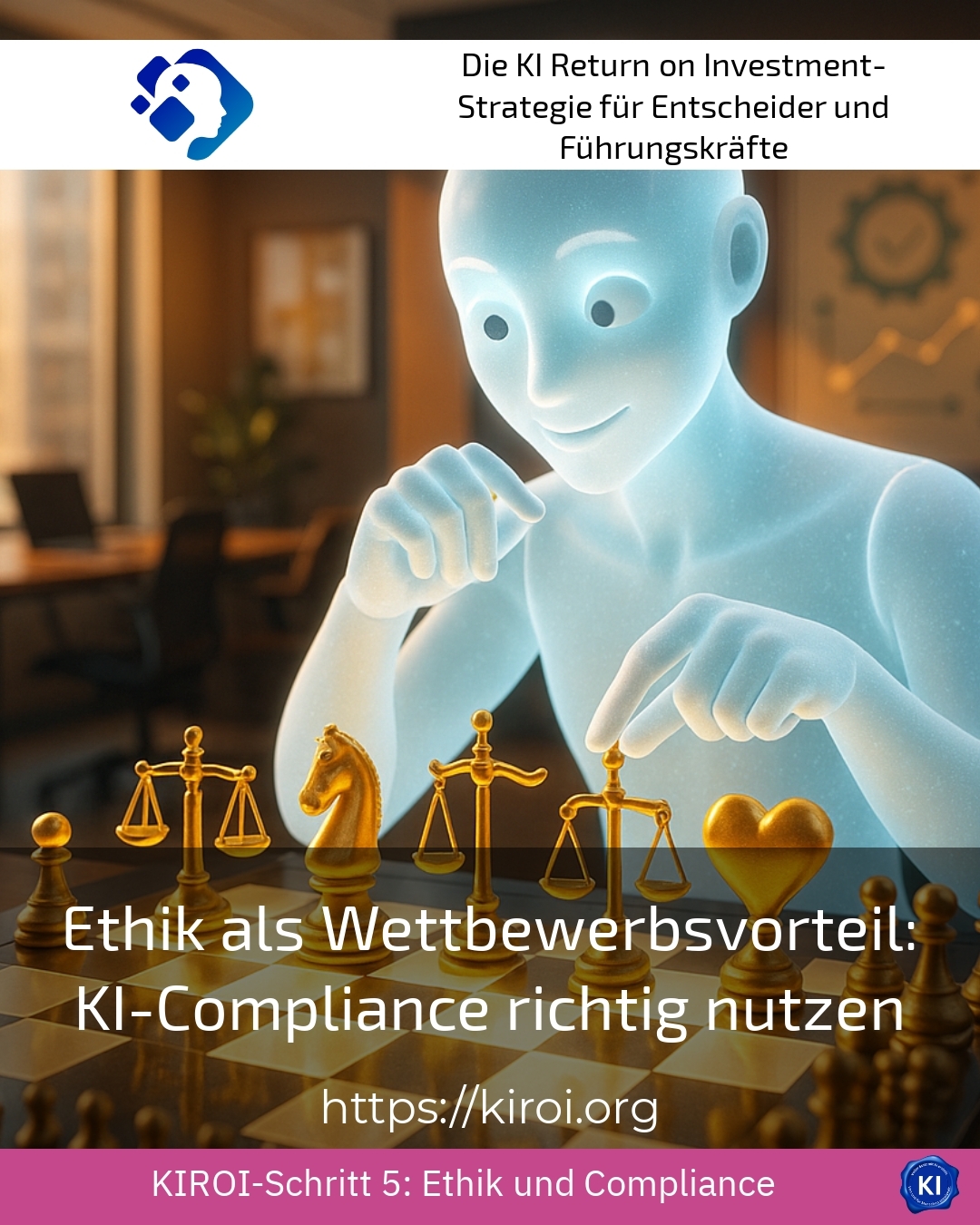
Imagine your company losing the trust of its most important customers overnight because an algorithm-based system is making decisions that no one can understand. This scenario is no longer fiction, but a real threat to organisations that underestimate the responsible use of intelligent technologies. The good news, however, is: those who Ethics as a Competitive Advantage: Harnessing AI Compliance Effectively understands and consistently implements, transforms potential risks into real market opportunities. In an era where transparency and sustainability are becoming crucial purchasing criteria, the ethically considered use of intelligent systems becomes a strategic differentiating factor. Companies that recognise this paradigm shift position themselves not only as innovation leaders but also as trustworthy partners for their stakeholders.
The new reality: Why moral principles drive economic success
The implementation of intelligent systems in business processes is advancing at a breathtaking pace. Companies are using self-learning algorithms for personnel decisions, credit lending, and customer interactions. Inevitably, this raises questions about fairness, freedom from discrimination, and verifiability. Studies from MIT show that organisations with robust ethical guidelines are more profitable in the long term [1]. This connection is only surprising at first glance. Loss of trust costs money, while building trust fosters loyal customer relationships. This creates a direct path from ethical reflection to economic added value.
This dynamic is particularly evident in the manufacturing industry. Car manufacturers are implementing intelligent quality control systems that detect production errors in real-time. A Bavarian supplier integrated explanation components that document every decision. This not only significantly increased the acceptance among production staff. Customers from the premium segment also appreciated the transparency and placed larger orders. Another example comes from the food industry, where traceability systems strengthen consumer confidence. Retailers who disclose how algorithmic freshness ratings work are seeing higher customer satisfaction. The pharmaceutical industry, in turn, uses intelligent systems for drug development and dosage recommendations. Here, ethical acceptability often decides on market approvals and thus on billions in investment.
Ethics as a Competitive Advantage: Effectively Utilising AI Compliance in Practice
Theory and practice often diverge significantly on this topic. Many leaders fully recognise the importance of ethical principles. Nevertheless, they often lack concrete guidance for operational implementation. This is where transruption coaching comes in, supporting companies in integrating responsible technology use. Clients frequently report uncertainty when evaluating algorithmic decision-making processes. They wonder how to identify and eliminate bias. Other companies seek support in developing internal governance structures. These diverse questions demonstrate that the need for expert guidance is immense.
The financial services sector vividly illustrates the complexity of these challenges. Credit institutions use scoring models that can decide the course of people's lives. A North German regional bank implemented an audit framework that checks every credit decision for discriminatory patterns. The result: fewer complaints, better regulatory evaluations and a strengthened brand image. Similar approaches are being established in the insurance sector for setting premium rates. Providers who communicate their pricing transparently gain the trust of sceptical customer groups. This trend is also evident in the healthcare sector with diagnostic support systems. Clinics that inform patients about the use of intelligent technologies experience higher treatment acceptance.
Best practice with a KIROI customer
A medium-sized trading company in the consumer goods sector faced a critical situation when internal investigations revealed that its recommendation system systematically disadvantaged certain product categories. The cause lay in historical sales data that reflected societal prejudices, thereby unintentionally perpetuating discriminatory patterns. The company turned to transruptions-coaching to guide a comprehensive realignment of its algorithmic systems. Together, we first developed an analysis process that examined all training data for hidden biases. Subsequently, interdisciplinary teams of IT specialists, legal experts, and ethics experts developed new guidelines for data selection. From then on, the implementation of a monitoring dashboard enabled continuous monitoring of system outputs for potential fairness issues. The training of managers proved particularly valuable, fostering a deeper understanding of the interplay between technology and social responsibility. The project spanned several months of intensive collaboration. The outcome exceeded the expectations of all involved: the company not only resolved the identified problems but also positioned itself as an industry leader in the responsible use of technology. Media reports on this transformation process generated additional attention and significantly strengthened brand perception.
Understanding regulatory requirements as a driver of innovation
European legislation is developing dynamically and setting global benchmarks. The European Union's AI Act defines risk classes for intelligent systems. High-risk applications are subject to strict documentation and transparency obligations [2]. Companies that proactively meet these requirements avoid costly rectifications. They also secure competitive advantages over less foresighted competitors. The regulation thus acts as a catalyst for responsible innovation. Those who Ethics as a Competitive Advantage: Harnessing AI Compliance Effectively sees regulatory requirements not as an obstacle, but as a strategic guide.
The logistics sector impressively demonstrates this perspective. A European parcel delivery service developed autonomous delivery vehicles that meet the strictest safety standards. Early integration of ethical evaluation criteria significantly accelerated the approval processes. In the retail sector, companies are using intelligent inventory management systems that reduce overproduction. The disclosure of these sustainability effects resonates with environmentally conscious consumers. The energy sector, in turn, relies on predictive maintenance systems for critical infrastructure. Transparent decision-making logic creates the necessary trust with regulatory authorities and the public here.
Ethics as a competitive advantage: Leveraging AI compliance through cultural change
Technical solutions alone are not sufficient for sustainable transformation. Organisations must cultivate a culture that anchors ethical reflection as a core competence. This begins at the leadership level, which embodies corresponding values. It continues in training programmes that raise awareness among all employees. And it manifests itself in processes that not only permit critical questions but actively demand them. transruptions-Coaching supports companies in systematically developing this cultural dimension.
The telecommunications industry offers instructive examples of successful cultural change. A Scandinavian provider established ethics boards that give their opinion before every product launch. These committees have real decision-making powers and halt problematic projects. The media industry is experimenting with transparent recommendation algorithms that give users insight into how they work. Initial results show increased trust and longer usage times. In the education sector, providers of adaptive learning systems are focusing on understandable personalisation. Learners and educators appreciate the ability to understand and question algorithmic recommendations.
Best practice with a KIROI customer
An internationally operating industrial company in the mechanical engineering sector integrated intelligent systems into its production control without initially sufficiently considering the cultural implications. Employees developed reservations towards the new technologies because they couldn't understand their decision-making logic. Productivity gains fell significantly short of expectations, and the atmosphere on the factory floors deteriorated noticeably. The company realised that technical excellence without cultural acceptance does not lead to success. Together with transruptions coaching, we developed a comprehensive transformation programme that addressed both dimensions. We organised workshops in which production employees were given understandable explanations of how the algorithms used worked. Engineers learned to equip their systems with explanation components that are comprehensible even to non-experts. Managers completed special training on ethical issues in the use of technology. The company also set up an internal feedback channel where concerns could be voiced at any time. These measures fundamentally and sustainably changed the company culture. Acceptance of the intelligent systems rose significantly, and the originally forecast efficiency gains were eventually even surpassed. The company today reports a strengthened innovation culture that extends far beyond the original project.
Stakeholder Communication as a Strategic Tool
Transparent communication about the use of intelligent technologies is becoming increasingly important. Customers expect clarity on how companies use their data. Investors evaluate sustainability and governance criteria in their investment decisions. Regulators demand detailed documentation. And the general public forms opinions that spread rapidly via social media. Companies that communicate proactively and honestly actively shape these narratives.
The technology sector itself demonstrates varied communication strategies. Some platform providers publish detailed transparency reports on their moderation systems. Others are experimenting with interactive explanation tools for users. In the automotive sector, manufacturers are increasingly communicating about the ethical foundations of their driver assistance systems. The aviation industry relies on comprehensive certification processes that strengthen public trust in intelligent onboard systems. In retail, progressive retailers explain how their pricing algorithms work. This openness pays off in customer loyalty and positive media coverage.
My KIROI Analysis
A systematic review of current developments reveals clear patterns that are relevant for strategic decisions. Companies that establish responsible technology use as a core value achieve measurable advantages across multiple dimensions simultaneously. They reduce regulatory risks because they proactively meet legal requirements. They strengthen their brand perception because customers and partners develop trust. They improve their ability to innovate because ethical reflection leads to more thoughtful solutions. And they increase their attractiveness as employers because talented professionals prefer value-oriented organisations.
The KIROI methodology offers a structured framework for this transformation. It combines technical analysis with cultural development and strategic positioning, taking into account the specific circumstances of different industries and company sizes. Experience from numerous support projects shows that sustainable change requires time and continuous attention. Quick fixes do not exist in this area, but systematic approaches reliably lead to the goal. The integration of ethical guardrails into technology projects is no longer an optional add-on, but a business imperative. Organisations that internalise this understanding early on secure decisive advantages in the competition for customers, talent, and societal acceptance. Ethics as a Competitive Advantage: Harnessing AI Compliance Effectively ultimately means understanding economic success and social responsibility as two sides of the same coin.
Further links from the text above:
[1] MIT Sloan: Why Ethical AI Is Good Business
[2] European Commission: Regulatory Framework for AI
For more information and if you have any questions, please contact Contact us or read more blog posts on the topic Artificial intelligence here.











 Deutsch
  English (UK)