
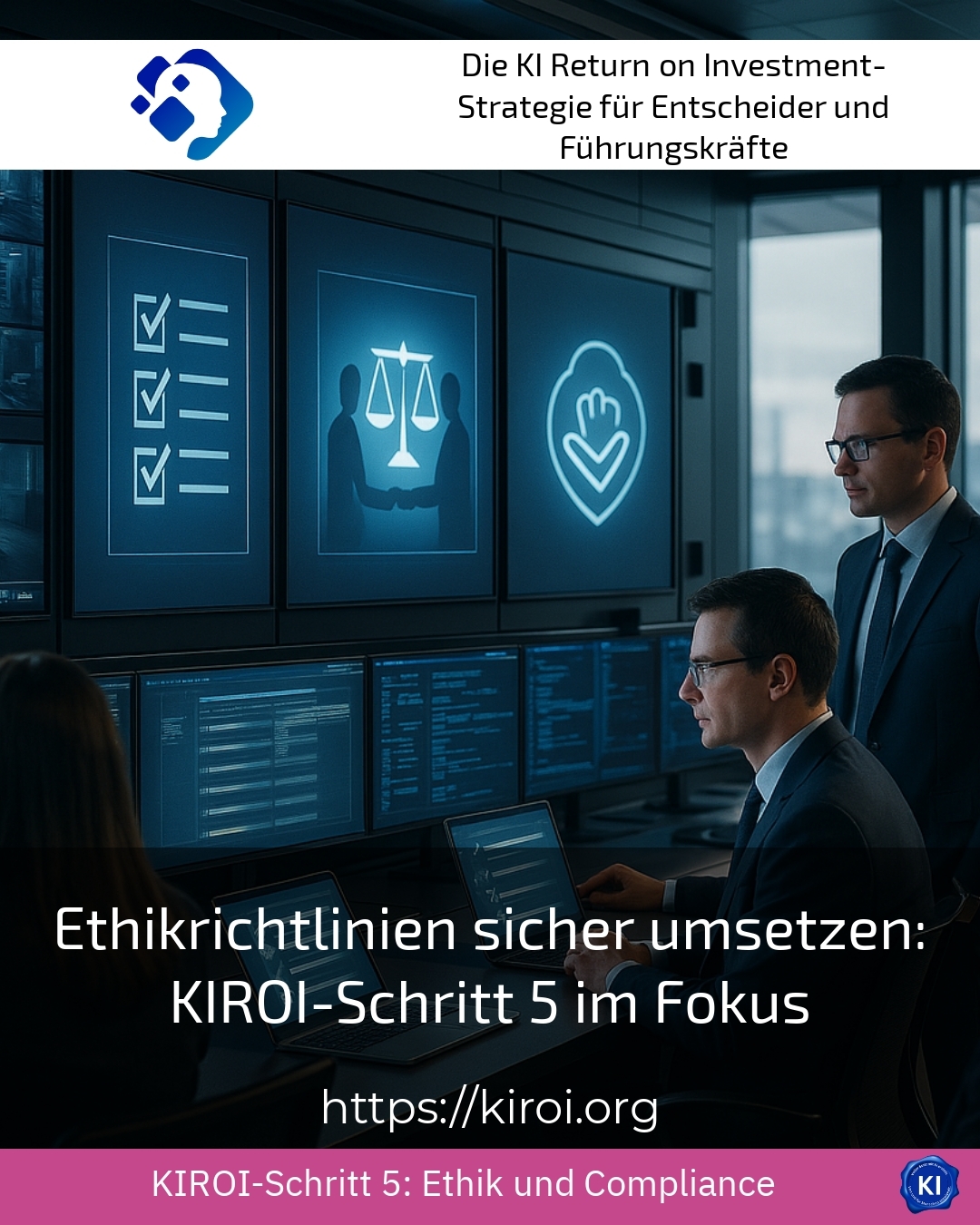
Ethical guidelines are an indispensable aspect for companies wishing to position themselves responsibly and sustainably. They offer clear guidance for employees, management, and stakeholders, contributing to companies acting ethically and complying with legal, social, and environmental standards [3]. KIROI Step 5, which focuses on the implementation and execution of ethical guidelines, demonstrates the importance of not only formulating these guidelines but also integrating them actively into everyday life [1].
Why ethics guidelines are important
Ethical guidelines promote integrity and transparency within a company. They serve as a guide for decisions that touch on moral and ethical issues, and support compliance with laws and international standards [3]. Ethical guidelines often include regulations for the protection of employees, customers and investors, as well as for the promotion of diversity and inclusion in the workplace [5].
In dynamic sectors such as the automotive industry or the energy sector, codes of ethics are used to ensure that the development of new technologies, such as self-driving vehicles or AI-controlled networks, is trustworthy and sustainable [2].
Implementation of ethical guidelines: challenges and solutions
The successful implementation of ethical guidelines requires comprehensive commitment from all areas of the company. It is not enough merely to document rules in writing; rather, regular impetus must be provided and spaces for open dialogue created [1]. Many companies report benefits from modular training and accompanying governance systems that monitor and communicate the safe use of technologies [2].
Responsibility and transparency
A key part of the ethical guidelines is the embedding of ethical values in combination with legal requirements. This creates trust and minimises risks. Companies that actively support their employees and create spaces for ethical reflection are better positioned in the long term and can stand out from competitors [1].
Examples from practice
Best practices for a medium-sized service sector company: An ethics policy has been implemented to govern the transparency of AI-generated recommendations. Employees are systematically trained to critically question algorithms and provide feedback for improvement. This fosters an open company culture and promotes trust both internally and externally [2].
Ethical Guidelines in Practice
In business practice, ethical guidelines are closely linked to compliance measures. They not only protect investors from corporate crime, but also provide frameworks for employee conduct within and outside the company [5]. Typical regulations include the prohibition of accepting gifts, the reporting of conflicts of interest, and whistleblowing [5].
Leadership by example and communication
Managing directors play a crucial role in establishing and implementing ethical standards. They should themselves exhibit ethical behaviour and clearly communicate the company's values. This creates clarity and direction for employees and promotes a corporate culture that rewards ethical behaviour [7].
Conclusion on ethical guidelines
My analysis
Ethical guidelines are a central factor for sustainable corporate governance. They provide orientation and support in dynamic industries and promote transparency and trust. The implementation of ethical guidelines requires a comprehensive commitment that extends to all areas of the company. Through flexible and practice-oriented implementation methods, companies can not only support compliance but also positively influence their corporate culture and differentiate themselves in the long term [1].
Further links from the text above:
– KIROI Step 5: Ethics guidelines as the key to compliance
– Code of ethics definition
– Ethical Guidelines – Implementation and Co-determination
– How managing directors set ethical standards
For more information and if you have any questions, please contact Contact us or read more blog posts on the topic Business ethics here.











 Deutsch
  English (UK)