
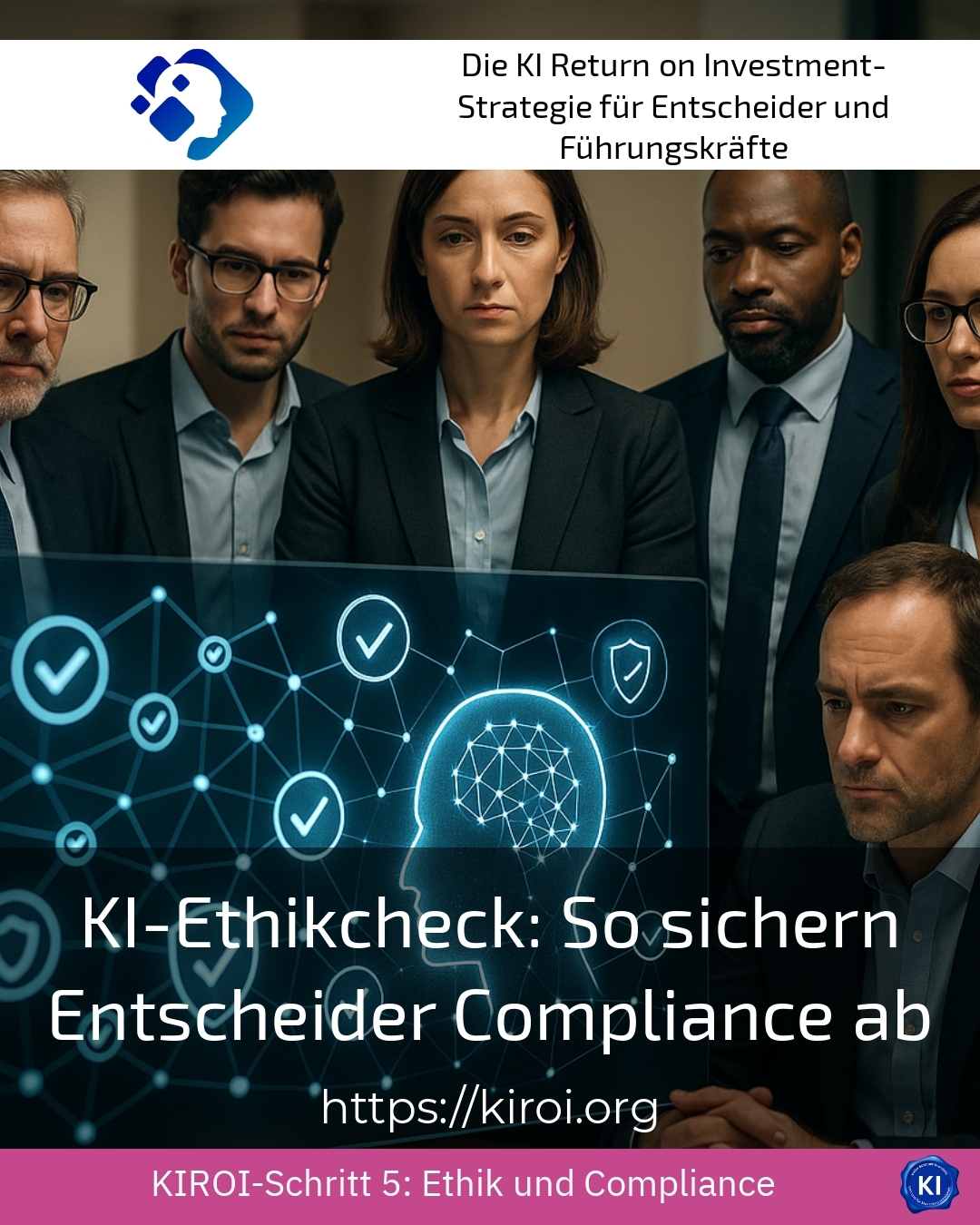
Imagine your company is using a highly sophisticated algorithmic solution that makes decisions in seconds. But suddenly, the compliance department is at the door. AI Ethics Check could have prevented this scenario. The rapid development of intelligent systems presents leaders with entirely new challenges. At the same time, regulatory requirements are growing exponentially. More than ever, decision-makers need to understand how to integrate ethical principles into technological processes. This is not just about legal compliance. It's about trust, reputation, and sustainable value creation.
Why the AI ethics check has become indispensable for decision-makers
The implementation of intelligent systems is fundamentally changing business models. Leaders face the challenge of balancing innovation and responsibility. A systematic review process helps to identify potential risks early on. Clients often report that it is only through external support that they recognise the full impact of their decisions. The societal debate surrounding algorithmic fairness is constantly intensifying. Media reports about discriminatory systems cause lasting damage to a company's image. Therefore, forward-thinking organisations are proactively investing in ethical review mechanisms.
For instance, a medium-sized company in the mechanical engineering sector implemented a predictive maintenance system. The software analysed sensor data and recommended replacement cycles for critical components. Initially, everything seemed to be running smoothly. However, the team then noticed systematic biases in certain product lines. A structured testing process would have uncovered this problem beforehand. Another example comes from the logistics industry. There, an algorithm optimised route planning for delivery vehicles. The savings were considerable, but certain districts were systematically disadvantaged. Such impacts require careful ethical evaluation before implementation.
Best practice with a AIROI customer
An internationally active automotive supplier faced the challenge of automating its quality control. The company wanted to use image recognition systems to identify production defects more quickly. As part of our transruptions coaching support, we initially carried out a comprehensive analysis of the planned application. We discovered that the training dataset had significant gaps. Certain types of errors were underrepresented, which could lead to systematic blind spots. Together, we developed a catalogue of criteria for data acquisition. We also established a regular review cycle for system performance. The team received input to raise awareness of algorithmic bias. After six months of support, the company had not only implemented a functional system but also had robust governance structures in place for future projects. The documentation met all the requirements of upcoming regulatory frameworks. This holistic approach ensured both the technical quality and the ethical integrity of the project.
Understanding regulatory requirements and implementing them strategically
European legislation sets global benchmarks for the responsible use of intelligent systems. Decision-makers must be aware of these frameworks and proactively integrate them into their strategies. A AI Ethics Check This forms the foundation for sustainable compliance. The categorisation of applications by risk classes requires sound expertise. High-risk systems are subject to strict documentation and transparency obligations. Companies that establish processes early on gain a competitive advantage.
An example from the energy sector illustrates these interdependencies impressively. A utility company used predictive analytics for grid control and load distribution. The algorithms optimised energy flow and significantly reduced losses.However, the decisions also influenced the security of supply in individual regions. Careful risk classification was therefore essential. A similar situation arises with manufacturing companies that implement automated quality controls. The systems decide on scrap and thus significantly influence economic key figures. Here too, the regulatory landscape requires precise documentation of the decision logic.
Cross-border activities become particularly complex. Different jurisdictions have different requirements for algorithmic transparency. For example, a manufacturer of industrial robots must consider multiple standards. Documentation must comply with both European and international regulations. Transruptions Coaching guides companies in navigating this regulatory labyrinth. Together, we develop practical solutions that ensure compliance and enable innovation.
Practical steps for an effective AI ethics check
Implementing ethical review processes starts with an honest stocktake. What algorithmic systems are already in use? What decisions are being automated? These questions form the starting point for any structured analysis. Clients often report surprising discoveries during this inventory phase. Many systems operate in the background, escaping the awareness of senior management.
For example, a chemical company discovered seventeen different algorithmic applications in its processes. Nobody in management had a complete overview of this system landscape. Another example comes from metal processing. There, an algorithm optimised the cutting tool allocation on CNC machines. The decision logic was no longer accessible to anyone. Situations like these pose significant risks for compliance. A third case concerns a manufacturer of precision components. There, a self-learning system controlled the temperature regulation in hardening processes. The effects on product quality and energy consumption were significant.
Following the inventory, each application is systematically evaluated. Various criteria play a central role in this process. Transparency in decision-making is paramount. Can those affected understand how decisions are reached? Fairness and non-discrimination form another key focus. Are certain groups systematically disadvantaged? Data protection and data security also require careful scrutiny. What information is fed into the systems?
Building governance structures for sustainable compliance
One-off checks are not enough to ensure lasting compliance. Companies need robust governance structures for continuous monitoring and adaptation. The AI Ethics Check Must be firmly integrated into organisational processes. Responsibilities must be clearly defined and communicated. Escalation routes for critical situations require precise definition.
For example, a manufacturer of industrial electronics established an ethics council for technological issues. This body reviews all new algorithmic applications before implementation. Its composition includes representatives from various departments and external expertise. Decisions are documented and regularly reviewed. A similar model was implemented by a company in the packaging industry. There, the focus is particularly on the environmental impact of algorithmic optimisations. Another example comes from food production. The company uses intelligent systems for quality assurance and traceability. The governance structure takes into account specific food safety requirements.
Employee training and awareness are another success factor. Technical teams must understand the ethical implications of their work. Managers require a foundational knowledge of algorithmic decision-making. Transruption coaching provides impetus for the development of such training programmes. Together, we develop tailored concepts for different target groups within the company.
Best practice with a AIROI customer
A leading manufacturer of drive technology approached us with a specific challenge. The company was planning to introduce a predictive maintenance system for major customers. The solution was intended to calculate failure probabilities and automatically issue maintenance recommendations. At the same time, this gave rise to new liability issues and transparency requirements. As part of our support, we first developed a comprehensive catalogue of criteria for ethical assessment. We analysed potential impacts on various stakeholder groups. We paid special attention to the traceability of the recommendations. Customers needed to be able to understand why certain maintenance measures were being suggested. Together with the development team, we devised a concept for explainable algorithms. The documentation met the highest standards for regulatory compliance. Furthermore, we established a feedback mechanism for continuous improvement. Customers can rate recommendations and provide feedback. This information is fed into the further development of the system. The project impressively demonstrates how ethical scrutiny and technical innovation can go hand in hand.
Overcoming common challenges in AI ethics checks
Decision-makers often approach us with similar questions. The complexity of the subject matter creates uncertainty and pressure to act simultaneously. Many executives wonder where to even begin. Others struggle with internal resistance to additional review processes. The balance between speed of innovation and careful evaluation presents challenges for many.
A typical example concerns the integration of third-party solutions. A conveyor technology manufacturer sources optimisation software from an external provider. The algorithms are not fully transparent because the provider protects trade secrets. How can the company ensure compliance nonetheless? Another common issue relates to legacy systems. A manufacturing company has been using a planning system with self-learning components for years. The original documentation is incomplete and outdated. Reconstructing the decision logic proves to be complex. A third example comes from the HR sector. An industrial company uses algorithmic support for shift planning. The fairness of the allocations is being questioned by employees.
Pragmatic solutions exist for all these situations. Transruption coaching supports companies in developing individual strategies. We provide inspiration and assist with practical implementation. In doing so, we always consider the company's specific framework conditions and resources.
My AIROI Analysis
The systematic integration of ethical review processes into algorithmic decision-making is developing into a strategic imperative for forward-thinking companies. My analysis shows that organisations with established governance structures are significantly better prepared for regulatory requirements. They avoid costly rectifications and reputational damage. At the same time, they build trust with customers, employees, and business partners.
Practice shows that early investment in ethical review processes pays off many times over. Companies identify risks before they become problems. They develop a deeper understanding of their own systems and processes. Leaders gain confidence in navigating a complex environment. Documentation significantly simplifies future audits and certifications. Furthermore, unexpected opportunities for improvement often arise. Critical analysis reveals inefficiencies and potential for optimisation. The ethical perspective promotes innovation rather than hindering it [1].
My recommendation for decision-makers is therefore clear: Start establishing systematic auditing procedures now. Do not wait for regulatory pressure or public criticism. Seize the opportunity to proactively shape your algorithmic landscape. Technological development is progressing relentlessly. Companies that take ethical responsibility seriously position themselves as trustworthy partners [2]. This differentiation will become a decisive competitive advantage in increasingly sensitive markets. The integration of ethics and technology is not a limitation, but an opportunity for sustainable value creation [3].
Further links from the text above:
[1] EU Regulatory Framework for Artificial Intelligence
[2] Federal Ministry for Economic Affairs – Artificial Intelligence
[3] Platform Learning Systems
For more information and if you have any questions, please contact Contact us or read more blog posts on the topic Artificial intelligence here.









 Deutsch
  English (UK)