
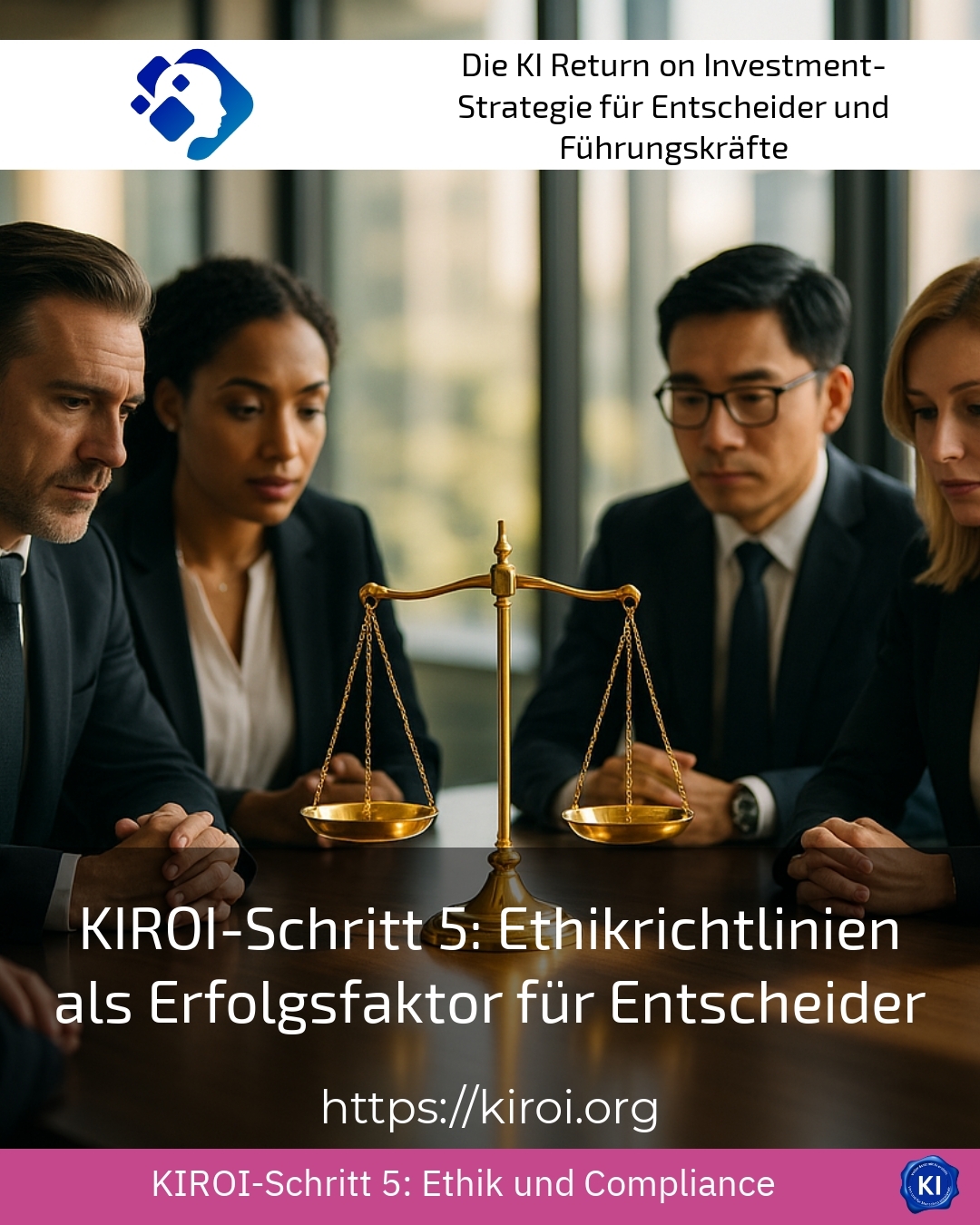
Ethical Guidelines as a Compass in Complex Times
Ethical guidelines are no longer mere formalities today, but crucial success factors in responsible management. They not only provide direction but also shape a company's culture in the long term, thus forming a central building block for entrepreneurial action. Many clients approach us with questions about uncertainties in the conflict between profit and responsibility, law and morality, tradition and innovation – and are specifically looking for inspiration and support in the development and implementation of ethical guidelines.
In today's dynamic economic environment, businesses face the challenge not only of setting ethical standards but also of living them. Practice shows that those who understand ethical guidelines as a continuous process of learning and reflection build trust, strengthen their own profile, and prove themselves as employers, business partners, and responsible players in society.
Ethical Guidelines in Practice: From Theory to Lived Culture
The introduction of ethical guidelines is an important milestone for many decision-makers. Companies often start with a comprehensive code of conduct that defines clear rules for dealing with colleagues, customers, and suppliers. The ABC analysis helps to set priorities and identify the most important ethical issues – thus ensuring practical relevance[1].
Example application areas
A medium-sized mechanical engineering company is integrating ethics guidelines into its onboarding process, ensuring new employees are informed about ethical expectations from the outset. Regular workshops supplement this offering and promote open discussion about difficult decision-making situations.
An international trading company prioritises transparent communication: internal ombudsmen are available as points of contact for ethical questions. This creates an environment in which concerns and questions can be openly addressed without fear of negative consequences.
An automotive supplier is systematically integrating its ethical guidelines into supplier selection and evaluation. Sustainability, human rights, and environmental protection are thus becoming measurable criteria in collaboration.
BEST PRACTICE with one customer (name hidden due to NDA contract) A manufacturing company, with my support, revised its code of ethics. The focus was on involving all levels of the hierarchy in the development process to foster acceptance. Additionally, regular ethics workshops were introduced, where real-life cases from everyday work were discussed and solutions were developed. Challenges such as conflicts of interest, data protection, and diversity were thus integrated into daily operations. Employees today report a noticeably improved working atmosphere and greater clarity in difficult situations. The success is also evident in external communication: the company is perceived as a trustworthy partner, which has a positive impact on customer relationships.
Ethical Guidelines as a Success Factor for Decision-Makers
Leaders report that ethical guidelines provide security and clear direction in complex situations [2]. They assist in making difficult decisions and promote a culture of openness and responsibility. Ethical guidelines are not a rigid set of rules, but rather thrive on continuous reflection, dialogue, and adaptation to changing circumstances.
Recommendations for practice
Invite your teams to discuss and further develop ethics guidelines together. Create spaces for open conversations, as this fosters a shared understanding and ensures the guidelines become lived practice.
Integrate ethical guidelines into all relevant processes – from staff selection and supplier evaluation to crisis management. Only then will ethics be visible not just on paper, but also in everyday life.
Utilise coaching and external support, for example within the framework of transruption coaching. External input helps to identify blind spots and adopt new perspectives. Clients often report that external moderation decisively supports the process.
Further examples from the industry
A technology group is implementing an internal reporting system for ethical violations, which allows for anonymous tips. The evaluation of these reports has led to the optimisation of internal processes and the strengthening of the compliance culture.
A financial services provider is integrating ethical guidelines into its executive performance agreements. This makes ethical behaviour measurable and directly influences variable remuneration.
A trading company is jointly developing a code of conduct with its suppliers that makes social and environmental standards binding. Regular audits ensure transparency and trust in the supply chain.
My analysis
Ethical guidelines are more than a compliance tool – they are a key success factor for sustainable and responsible business. They provide stability in difficult times, strengthen the trust of all stakeholders, and ensure clarity in an increasingly complex world. Companies that actively live and develop their ethical guidelines benefit from a positive corporate culture, a strong employer brand, and long-term market success.
Seize the opportunities that ethical guidelines offer: create transparency, foster dialogue and receive professional support during implementation. This is how you successfully move from theory to lived practice – and position your company for the future.
Further links from the text above:
Ethical Guidelines Definition | Stock Exchange Lexicon – AlleAktien [1]
Mastering Ethical Guidelines: KIROI Step 5 for Leaders – SAULDIE [2]
For more information and if you have any questions, please contact Contact us or read more blog posts on the topic Artificial intelligence here.











 Deutsch
  English (UK)