
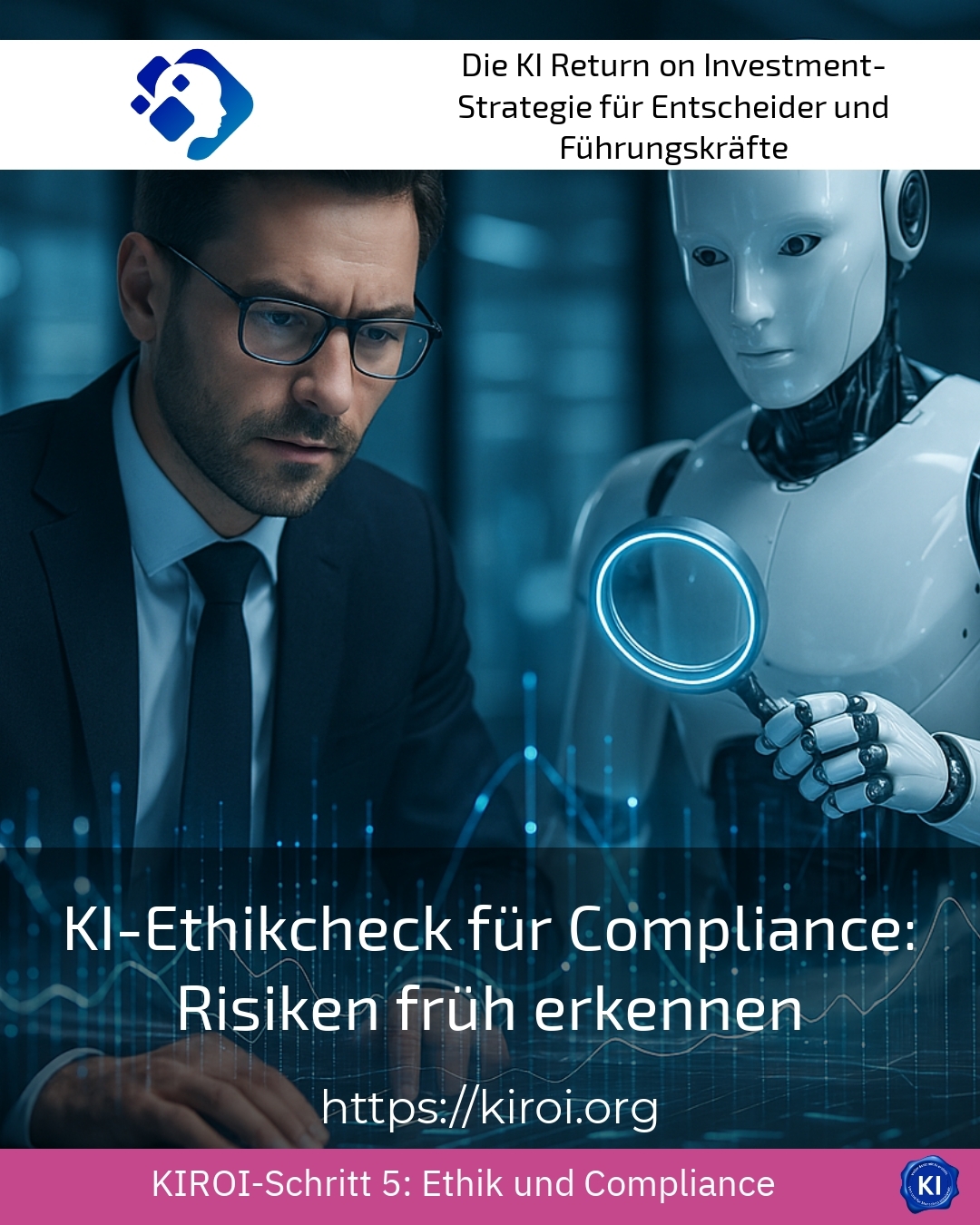
In a world that is rapidly digitalising, companies face a fundamental challenge: how can automated decision systems be used responsibly without violating ethical principles or regulatory requirements? The AI Ethics Check for Compliance: Recognising Risks Early develops into an indispensable tool that helps organisations identify potential pitfalls as early as the conception phase. The need for a systematic review of algorithmic systems is particularly evident in areas that handle sensitive personal data and make far-reaching decisions about individuals.
Why systematic reviews are becoming indispensable
The integration of automated decision-making systems is advancing unstoppably. Companies are using these technologies for staff selection and performance evaluation. They are deploying them for credit provision and risk assessments. Customer service and complaint management also benefit from them. However, this gives rise to considerable risks, which can lead to serious consequences without appropriate control mechanisms. A well-thought-out AI Ethics Check for Compliance: Recognising Risks Early enables organisations to systematically address these dangers before they materialise and cause harm.
For example, a recruitment agency implemented a system for pre-selecting applications without checking the underlying training data for biases. The result was systematic discrimination against certain applicant groups. This bias went undetected for months and caused significant reputational damage. In turn, a financial institution used automated credit decisions. The algorithms unconsciously favoured certain demographic characteristics. It was only an external audit that uncovered these problematic patterns. In the healthcare sector, a diagnostic assistance system led to varying quality of treatment. Patients from certain population groups received poorer recommendations. These examples illustrate why proactive reviews are so important.
Understanding the dimensions of ethical review
A comprehensive ethical review of automated systems must consider several dimensions. The first dimension relates to fairness and non-discrimination. Here, those responsible check whether the system disadvantages specific groups. The second dimension includes transparency and explainability. Affected individuals must be able to understand how decisions are made. The third dimension addresses data protection and privacy. Personal information deserves adequate protection. The fourth dimension deals with human oversight and control. Humans must ultimately remain accountable.
A telecommunications company introduced a customer churn analysis and found that it preferentially identified older customers. Marketing measures consequently focused disproportionately on this group. Following an ethical review, the company adjusted its models. A group of insurance companies, in turn, used risk assessment algorithms for premium calculations. The systems accessed socio-economic data. This practice raised significant ethical questions. In the education sector, a university used predictive models for academic success. The algorithms systematically disadvantaged students from less educated backgrounds.
Best practice with a AIROI customer
A medium-sized financial sector company approached our transruption coaching team with a complex challenge. The company had invested significant resources in developing an automated decision-making system. This system was intended to pre-screen loan applications and make recommendations. However, initial test runs revealed concerning patterns in the decisions. Certain postcode areas were systematically receiving poorer ratings. This correlation had initially gone unnoticed by the developers. Our transruption coaching supported the project team over several months. Together, we developed a structured process for ethical review. In doing so, we not only identified the problematic variables in the model. We also established permanent monitoring mechanisms for continuous oversight. The company implemented a governance framework for all future projects. Management later reported increased trust from regulatory authorities. Internal processes also benefited significantly from the gained clarity. Clients often report similar positive side effects from such accompanying processes.
AI Ethics Check for Compliance: Identifying Risks Early in Practice
The practical implementation of a systematic ethical review requires clear structures and defined responsibilities. Many organisations significantly underestimate the necessary effort. They treat ethical questions as a downstream compliance exercise. However, this approach regularly leads to costly rectifications. The more effective approach integrates ethical considerations from the outset. It makes them an integral part of the development process. A structured approach sustainably supports the teams involved.
For example, a trading company implemented a dynamic pricing system. The algorithms also took individual purchasing behaviour into account. Customers with lower price sensitivity were shown higher prices. This practice raised significant ethical concerns. Following public criticism, the company fundamentally revised its strategy. In turn, a logistics group used automated route planning with employee monitoring. The systems recorded detailed movement profiles of the drivers. Trade unions and data protection advocates successfully intervened against this practice. In retail, a chain used facial recognition for theft prevention. However, the systems generated a disproportionately high number of false alarms among certain customer groups.
Methodical approaches for effective reviews
Various methodological approaches have proven effective for ethical reviews. Impact assessments systematically analyse potential effects on affected groups. Algorithmic audits examine technical systems for biases and sources of error. Stakeholder consultations actively involve the perspectives of those affected. Red team exercises simulate possible misuse scenarios and vulnerabilities. These methods complement each other and together create a comprehensive picture.
A media company conducted a comprehensive impact assessment before introducing a recommendation algorithm. The team identified potential filter bubble effects early on. The company subsequently implemented mechanisms to promote content diversity. A public authority, in turn, had its performance evaluation system audited externally. The audit uncovered systematic disadvantages for certain employee groups. The authority fundamentally revised its evaluation criteria. In the healthcare sector, a hospital consulted with patient representatives when developing a triage system. Stakeholder perspectives led to important adjustments in the prioritisation logic.
Integration into existing governance structures
Embedding ethical reviews into existing corporate structures poses challenges for many organisations. Existing compliance departments often lack the necessary technical understanding. IT departments, in turn, frequently underestimate the regulatory and ethical implications of their work. Effective integration therefore requires interdisciplinary collaboration. It also demands the support of senior management at the highest level. Only in this way can the necessary commitment for all those involved be established.
An automobile manufacturer established a dedicated ethics board for automated driving functions, bringing together expertise from technical, legal, and philosophical fields. Every new function undergoes a multi-stage ethical review. A pharmaceutical company integrated ethical checkpoints into its stage-gate process for research projects. Without a positive ethical assessment, no approval is granted for the next phase. In the banking sector, an institution implemented a three-lines-of-defence model for algorithmic systems. The first line of defence rests with the development teams themselves. The second line is formed by specialised risk functions. The third line is represented by internal audit.
Best practice with a AIROI customer
A large insurance company sought assistance with the reorientation of its algorithmic risk assessment. The existing system had delivered satisfactory results over many years. However, new regulatory requirements fundamentally challenged the established practice. Transruption coaching supported the company through this transformation over an eight-month period. Together, we developed a comprehensive ethics framework for all automated decision systems. This framework took into account both European regulations and international best practices. The inclusion of various stakeholder groups in the development process proved to be particularly valuable. Consumer advocates, data protection experts, and employee representatives brought important perspectives. The company established a permanent ethics council for future system developments. Management reported a significantly increased level of trust from customers and regulatory authorities. The structured approach also considerably supported internal communication. Employees now better understood the ethical principles that should guide their work. This clarity led to higher motivation and improved decision-making quality in day-to-day operations.
Continuous monitoring and adjustment
Ethical reviews must not remain one-off events. Automated systems change their behaviour over time. Training data evolves and reflects new patterns. Societal expectations and regulatory requirements also change. Therefore, effective AI Ethics Check for Compliance: Recognising Risks Early continuous monitoring mechanisms. These mechanisms must be able to capture and evaluate changes in a timely manner.
A streaming service implemented real-time monitoring for its recommendation algorithms [1]. The system automatically detects when specific content types are being recommended disproportionately. An online marketplace continuously monitors its search result rankings for biases. Anomalies trigger automatic alerts to the compliance team. In human resources, a corporation uses dashboard solutions to monitor its recruiting algorithms. Demographic distributions in applicant pools are continuously analysed and documented.
The role of external support and expertise
Many organisations benefit significantly from external support for ethical reviews. Internal teams often develop blind spots for their own systems. External perspectives can break down this blindness and open up new ways of looking at things. This is not about external control or criticism. Rather, external guidance constructively supports internal learning processes. It provides impetus for improvements and shares cross-industry experience [2].
An energy provider engaged external experts to review its smart meter analytics. The external auditors identified data protection risks that had been overlooked internally. A mobility service provider had its surge pricing algorithms externally audited. The audit led to fair upper limits on price adjustments. In the real estate sector, a company sought external expertise for its rental price forecasts. The analyses uncovered potential discrimination patterns in tenant selection.
My AIROI Analysis
The systematic ethical review of automated decision systems is developing into a core competence of future-proof organisations. The numerous examples from various industries illustrate the diversity of risks and how differently they can manifest. A clear pattern emerges: organisations that proactively address ethical issues not only avoid regulatory problems and reputational damage. They also build trust with customers, employees, and other stakeholders, which represents a genuine competitive advantage in the long term.
The AI Ethics Check for Compliance: Recognising Risks Early There is no rigid set of rules, but rather a dynamic process. It must adapt to technological developments and take societal changes into account. Integration into existing governance structures often requires significant organisational adjustments. However, these investments pay off, as the practical examples described impressively demonstrate. External support from experienced partners such as our transruptions coaching team can significantly accelerate and improve the quality of this transformation process.
Clients often report that the structured engagement with ethical questions also has positive side effects. Teams develop a deeper understanding of their systems and their impact. Communication between technical and non-technical departments improves noticeably. And last but not least, more robust and fairer systems emerge, which can also withstand critical scrutiny. The future belongs to organisations that understand ethics not as a brake, but as a mark of quality and a driver of innovation [3].
Further links from the text above:
[1] AlgorithmWatch – Non-profit Research and Advocacy Organisation
[2] EU AI Act – European Parliament Overview
[3] Responsible AI Institute – Framework and Resources
For more information and if you have any questions, please contact Contact us or read more blog posts on the topic Artificial intelligence here.









 Deutsch
  English (UK)