
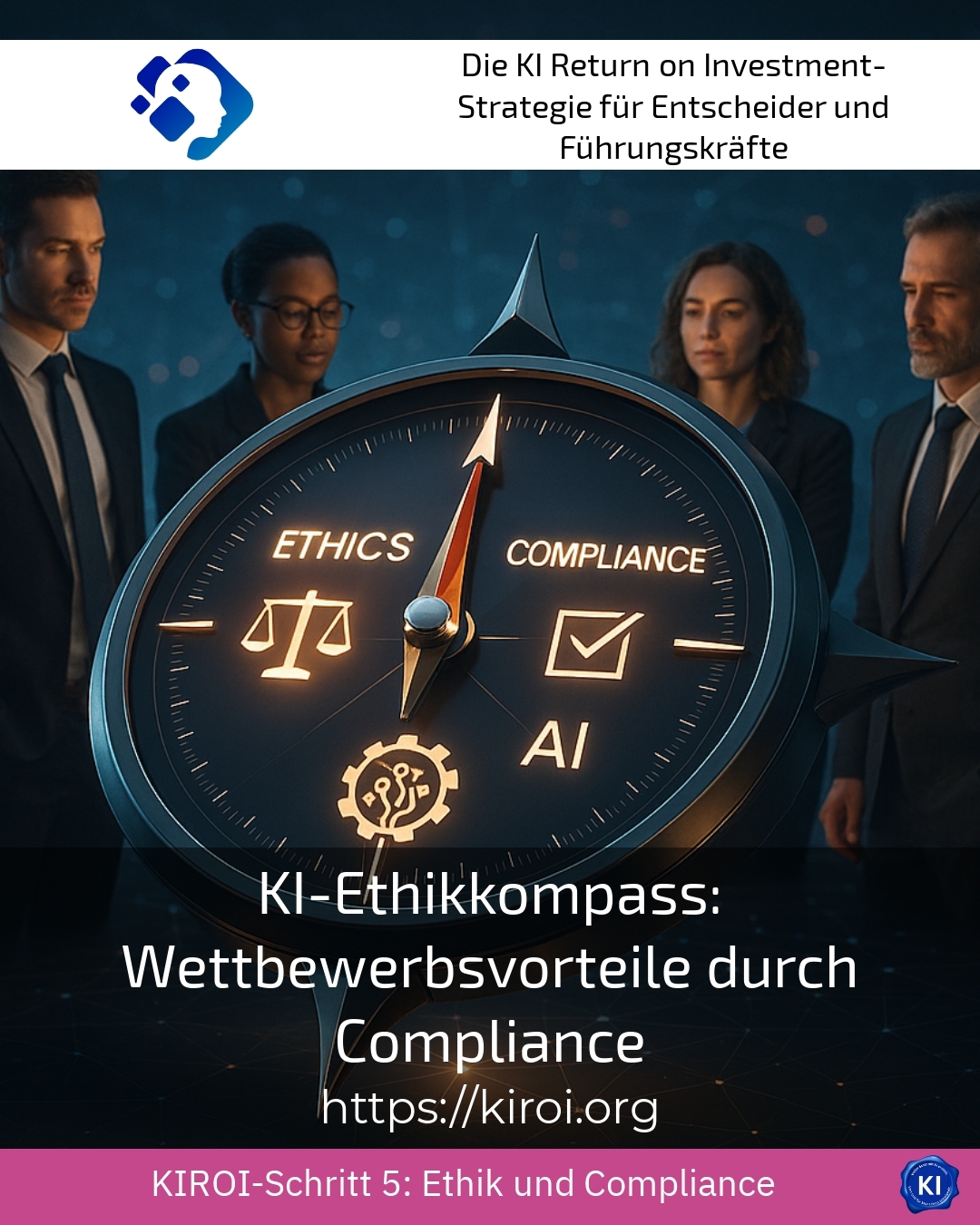
Imagine your company not winning *in spite of* ethical principles, but precisely *because of them*, gaining a crucial competitive advantage in an increasingly digitised business world. The AI Ethics Compass: Competitive Advantages through Compliance is rapidly developing into a strategic instrument that opens up far-reaching economic opportunities. Many executives still underestimate the transformative potential that lies dormant in the consistent connection of technological innovation and values-based corporate governance. In a time when trust is becoming the hardest currency, the ethical alignment of algorithmic systems determines market success and long-term customer loyalty.
The strategic dimension of responsible technology use
Companies today face a fundamental challenge. They must unite technological efficiency with social responsibility. This task may seem contradictory at first glance. However, upon closer inspection, a synergistic relationship is revealed. Organisations that prioritise transparent and comprehensible decision-making processes early on often report increased customer trust. This trust is reflected in measurable business outcomes.
Integrating values-based principles into digital transformation projects sustainably alters company culture. Employees develop a deeper understanding of the implications of algorithmic decisions. Leaders increasingly recognise that responsible action is not an obstacle. Rather, it serves as a catalyst for innovation and market differentiation.
For example, a medium-sized logistics company implemented a route optimisation system with built-in fairness parameters. The software considered not only efficiency but also the working conditions of the drivers. The result surprised even the sceptics in management. Employee satisfaction increased significantly. At the same time, staff turnover costs decreased by a considerable amount.
Best practice with a AIROI customer
An international food retailer faced the challenge of making its algorithmic pricing more transparent because customers were increasingly posing critical questions about dynamic pricing and trust in the brand was noticeably declining. As part of transruption coaching, we supported the project team in developing a governance framework that defined clear guardrails for automated price adjustment. Through our input, executives realised that complete transparency does not jeopardise the business model, but rather strengthens customer loyalty. Together, we developed communication strategies that explained complex algorithmic processes in an understandable way. Implementation was carried out gradually over several months. During this time, we supported the team in training employees and adapting internal processes. After the introduction, those responsible reported a significant improvement in customer satisfaction scores. Complaints about pricing noticeably decreased. The company successfully positioned itself as a pioneer for fair trading practices in the digital age.
AI Ethics Compass: Competitive Advantages Through Compliance as a Differentiator
The regulatory landscape is constantly changing, presenting companies with complex demands. Those who view this development as a burden will miss strategic opportunities. Organisations with a proactive compliance approach position themselves as trustworthy partners. They win tenders against competitors with less robust governance structures.
A financial services provider established a comprehensive framework for responsible lending decisions. The automated assessment processes were subject to strict fairness audits. Regular reviews ensured that no population groups were systematically disadvantaged. This investment paid off multiple times over. The company received public recognition for its pioneering role. New customer groups actively approached the provider [1].
In healthcare, the importance of value-based technology use is particularly evident. A clinic network used AI-driven assistance systems to support diagnostic processes. The introduction was carried out with strict adherence to transparency and traceability. Patients received understandable explanations about algorithm-based recommendations. Medical staff always retained the final decision-making authority. This approach sustainably strengthened the trust of all involved.
The insurance industry is experimenting extensively with automated claims assessments. Some companies are relying on completely opaque systems. Others are deliberately choosing a more open approach. Experience shows that the latter achieve better customer loyalty values in the long term. Transparency is becoming a unique selling proposition in a highly competitive market.
Practical implementation in day-to-day business operations
The implementation of ethical principles requires structured processes and clear responsibilities. Many organisations struggle to translate abstract principles into concrete instructions for action. This is where transruption coaching assists in the development of tailor-made frameworks. The support encompasses the analysis, conception, and implementation phases equally.
A retail group developed a training program for all hierarchical levels with our support. Managers learned to systematically identify ethical issues. Development teams received concrete checklists for system design. The purchasing department integrated governance criteria into supplier selection. This holistic approach created a culture of responsibility.
In the manufacturing industry, predictive maintenance systems play a central role. These systems analyse machine data and predict the probability of failures. The ethical dimension here primarily concerns the handling of employee data. An automotive supplier deliberately designed its system in such a way that individual performance evaluations were excluded. This decision significantly promoted acceptance among the workforce [2].
Best practice with a AIROI customer
A telecommunications provider approached us because the introduction of a chatbot system encountered massive resistance from employees and customers, and management was at a loss for solutions. As part of our support, we worked with the project team to identify the central concerns of all stakeholder groups. Employees feared for their jobs, while customers criticised a lack of empathy and transparency. We provided impetus for a participatory redesign of the implementation process. Employees were actively involved in the further development of the system. They took on the roles of quality testers and trainers for the algorithmic system. This repositioning transformed those affected into participants. For customer communication, we collaboratively developed clear transparency standards. Customers always knew whether they were interacting with an automated system. The option for human contact remained available at all times. Following the realignment, those responsible reported significantly improved acceptance on all sides. The company actively communicated its responsible approach in public relations.
Long-term value creation through the AI ethics compass: competitive advantages through compliance
The economic impacts of responsible technology use manifest on various levels. In the short term, investment is certainly required for governance structures and training measures. In the medium term, however, risks and consequential costs are significantly reduced. In the long term, a sustainable competitive advantage arises through trust capital.
A pharmaceutical company used algorithmic systems to optimise clinical trials. Patient selection was carried out with strict adherence to diversity criteria. This approach not only improved the ethical quality of the research, but also led to more robust trial results with greater evidential value. Regulatory authorities explicitly acknowledged this practice during approval processes.
In the education sector, institutions are experimenting with adaptive learning systems. These systems tailor educational content to individual learning progress. The ethical challenge concerns the protection of sensitive performance data. A university developed a model with maximum data economy. Learners retained full control over their personal information. This transparency fostered acceptance and willingness to use [3].
Energy suppliers are increasingly relying on intelligent grid management systems. The optimisation of electricity flows requires granular consumption data. Some providers opted for non-transparent data collection methods with far-reaching analytical capabilities. Others consciously prioritised data protection and customer sovereignty. The latter recorded higher approval rates for smart meter installations.
Cultural change as the foundation for sustainable transformation
Technical measures alone are not sufficient for an authentic ethical orientation. Organisations require a profound cultural shift at all levels. This change begins with the leadership and gradually permeates all areas of the company. transruptions-Coaching supports this process with a systemic perspective.
A media group was struggling with accusations of algorithmic filter bubbles. The recommendation systems primarily optimised engagement metrics without considering societal impact. As part of a comprehensive realignment, plurality criteria were integrated. Editorial principles were incorporated into the algorithm development. The public perception of the company improved measurably.
The real estate sector uses algorithmic valuation models for property prices and credit checks. The risk of discriminatory patterns is particularly high here. An estate agency invested in regular bias audits of its systems. Identified biases were communicated transparently and consistently resolved. This openness built trust with clients from all backgrounds.
The advertising industry is facing fundamental questions about the ethical use of behavioural data. Personalised targeting promises higher conversion rates. At the same time, concerns about manipulation and privacy are growing. Agencies that consciously refrain from invasive practices are increasingly differentiating themselves successfully. Brands are actively seeking partners with a demonstrable track record of responsible working methods.
My AIROI Analysis
Looking at numerous transformation projects reveals a clear pattern that underscores the strategic relevance of responsible technology use. Companies with a proactive approach to integrating ethical principles into digital systems achieve better long-term business results than competitors with a purely efficiency-oriented focus. This outcome contradicts the widespread assumption of a trade-off between economic efficiency and responsibility. The analysis shows, rather, that both dimensions can mutually reinforce each other.
The AI Ethics Compass: Competitive Advantages through Compliance proves to be a strategic instrument with measurable business value. Organisations benefit from reduced reputational risk and increased employee retention. They experience higher customer loyalty and improved relationships with regulatory authorities. These advantages do not manifest immediately but unfold their impact over time.
Guidance from transruption coaching supports organisations in navigating this complex transformation. We provide impetus for the development of tailor-made governance structures. We guide leaders in communicating new benchmarks for values. We support teams in the practical implementation of ethical principles in their daily work. This holistic approach addresses technical, organisational, and cultural dimensions equally. Experience from numerous projects shows that acting early offers decisive advantages. Companies investing today secure their position for tomorrow.
Further links from the text above:
[1] Federal Ministry of Justice – Artificial Intelligence and Law
[2] Federal Ministry of Labour and Social Affairs – Digitalisation of the World of Work
[3] Federal Commissioner for Data Protection – Artificial Intelligence and Data Protection
For more information and if you have any questions, please contact Contact us or read more blog posts on the topic Artificial intelligence here.









 Deutsch
  English (UK)