
Have you ever wondered if your decisions in the digital age still meet the moral and legal requirements that society and legislators impose on you?
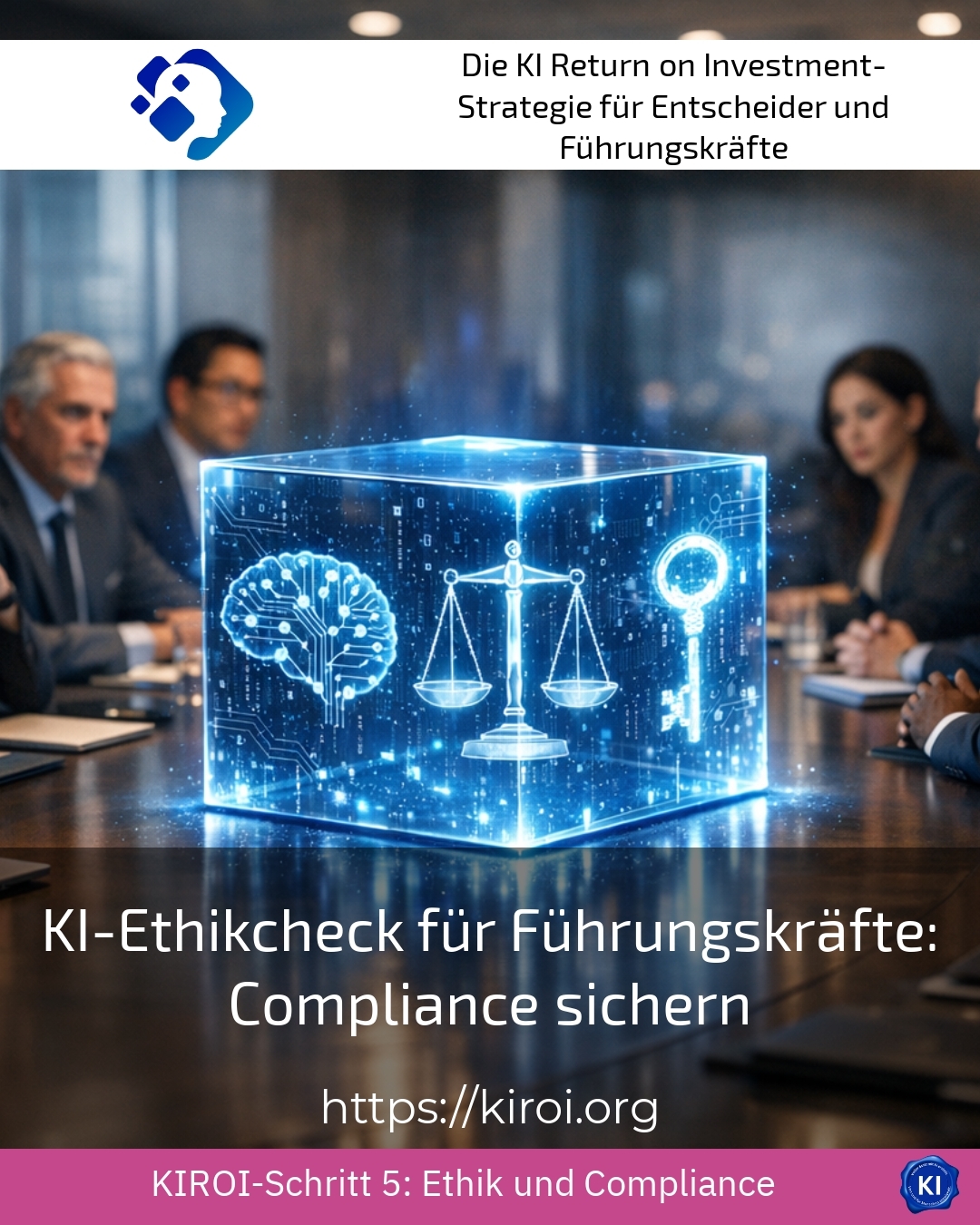
In a world where algorithmic systems increasingly control business-critical processes, leaders face an unprecedented challenge: they must not only demonstrate economic excellence but also assume ethical responsibility that goes far beyond traditional compliance requirements. AI Ethics Checklist for Managers It is evolving into an indispensable tool that helps companies align technological innovation with social responsibility. This new reality requires a deep understanding of how automated decision-making systems work, the risks they pose, and how to use them responsibly. Especially in sensitive business areas where decisions directly affect people’s lives, this competence becomes a core qualification for modern corporate management.
Why an AI ethics check for executives is essential today
The digital transformation is changing business models at an astonishing speed. At the same time, regulatory requirements are growing exponentially. Executives find themselves in a tension between the pressure to innovate and the responsibility to manage the consequences. They need to understand technologies that were still science fiction just a few years ago.
In the financial sector, for example, institutions use algorithmic systems for credit scoring, which make decisions that can significantly impact the lives of applicants. Insurance companies employ automated risk assessments that determine premiums and coverage terms. Human resources managers increasingly rely on software-based applicant screening that pre-selects potential candidates. Each of these applications carries the risk of discriminatory results or opaque decision-making processes. Therefore, decision-makers need systematic vetting procedures.
Clients often report that they feel overwhelmed by the complexity of these issues. They are aware of their responsibility, but they lack the tools and methods to fulfill it. This is where structured support comes in, providing inspiration and guidance.
Best practice with a AIROI customer
A mid-sized financial services company faced the challenge of ensuring the ethical integrity of its automated credit decision processes after internal analyses revealed indications of potential biases in certain customer groups. As part of the transruptive coaching, we supported the management team over a period of six months in developing a corporate-wide ethics framework for algorithmic decision systems. Together, we identified critical decision points in the credit approval process and developed testing mechanisms that enable continuous monitoring of system performance. The leadership team received intensive training on the technical fundamentals and ethical implications of automated decision-making. Particularly important was the establishment of an interdisciplinary ethics committee that regularly evaluates the system’s results and issues recommendations for action. The clients reported that after completing the process, they felt significantly more confident in dealing with these complex issues and now have clear structures in place to identify and address ethical risks early on.
The dimensions of responsible technology leadership
Responsible technology leadership encompasses several interconnected dimensions. They range from strategic direction to operational implementation. Leaders must understand and actively shape these dimensions.
Transparency as a cornerstone of the AI ethics check for executives
The first dimension concerns the transparency of algorithmic decision-making processes, with companies having to document in a comprehensible way how and why certain systems arrive at their results. In the healthcare sector, this means, for example, that diagnostic support systems must explain their recommendations to doctors and patients. Logistics companies, in turn, face the task of designing route optimization systems so that dispatchers can understand the proposed decisions. Retail companies that employ personalized pricing must ask themselves whether their customers would understand and accept these practices.
Transparency creates trust among all stakeholders. It enables informed discussions about opportunities and risks. Without transparency, ethical evaluation remains impossible.
Fairness and non-discrimination in automated processes
The second dimension deals with fairness and the avoidance of discriminatory outcomes, which becomes particularly relevant where algorithmic systems make decisions that directly affect people. For example, telecommunications providers use systems to assess customer risk, which are intended to predict potential payment defaults based on historical data that may themselves contain biases. Real estate platforms employ automated evaluation systems whose results can have an impact on rental and purchase decisions. Energy providers develop systems to identify payment risks, which can be determined by advance payment requirements or delivery terms.
Fairness does not necessarily mean equal treatment. Sometimes it requires differentiated approaches. What is crucial is the conscious reflection on the criteria.
Establishing accountability and responsibility
The third dimension encompasses clear accountability structures and responsibilities, because algorithmic systems do not act autonomously but on behalf of people and organizations that must stand accountable for their consequences. In the automotive industry, these questions are particularly pressing in the case of partially autonomous driving assistance systems, where the boundaries between human and machine decision-making become blurred. Medical technology companies must define who is responsible for recommendations from diagnostic systems and how the final decision remains with the treating physician. Banks and financial service providers, in turn, need clear governance structures that define who is responsible for algorithmic trading decisions.
Best practice with a AIROI customer
An internationally operating staffing provider recognized the need to review its recruitment processes for ethical risks after studies across the industry raised concerns about algorithmic bias in applicant management systems. transruptions coaching accompanied the leadership team in developing a comprehensive audit process that addressed both technical and organizational aspects. First, we jointly analyzed the systems in use and their decision logic, with particular attention paid to potential discrimination risks related to factors such as gender, age, or ethnic origin. Subsequently, we developed a training program for human resources managers that enables them to critically question algorithmic recommendations and make independent evaluations. The implementation of regular fairness audits by an external panel created additional control mechanisms that enable continuous improvement. Executives now report a significantly increased confidence in their processes and improved communication with applicants and clients regarding the technologies used.
Practical implementation of ethical testing processes
The practical implementation of ethical testing processes requires a systematic approach. Individual measures are not enough; only a holistic framework can create sustainable improvements.
In the first step, a comprehensive inventory of all used algorithmic systems is recommended; not only obvious applications such as recommendation systems or decision support should be captured, but also embedded algorithms in standard software that often go unnoticed and have an impact on business processes. For example, manufacturing companies often employ predictive maintenance systems whose recommendations have an impact on workflows and resource allocation. Retail companies use inventory management algorithms that automate ordering decisions and thus influence supplier relationships. Service companies implement workforce management systems that optimize shift schedules and thus directly shape the working conditions of employees.
In the second step, a risk assessment of these systems is carried out. Not all algorithmic applications require equal attention. Prioritization based on impact potential is crucial.
The third step involves developing concrete testing criteria and processes that are applied regularly and systematically, with these criteria having to be adapted to the industry to adequately address relevant risks. For example, pharmaceutical companies must set particularly strict standards when developing algorithmic systems for clinical trials, as incorrect decisions can have life-threatening consequences. Educational institutions that use adaptive learning systems must ensure that these systems do not lead learners into unfavorable development paths. Public administrations that use algorithmic systems for resource allocation bear a special responsibility for equal treatment and non-discrimination.
AI ethics check for executives as a competitive advantage
The integration of ethical testing processes not only creates compliance security; it also offers strategic advantages. Responsible technology use becomes a distinguishing feature.
Consumers are increasingly developing an awareness of the ethical aspects of technological products and services, with companies that demonstrate credible responsible behavior able to gain trust advantages over less sensitive competitors. In the fintech sector, providers have already positioned themselves that explicitly rely on fair and transparent algorithms and communicate this as a core component of their value proposition. Insurance companies are experimenting with approaches where customers are actively involved in the design of algorithmic evaluation criteria. Human resources providers differentiate themselves through certified fairness standards in algorithmic candidate selection.
Furthermore, ethical testing processes reduce operational risks. Reputational damage caused by discriminatory algorithms can be significant. Proactive action prevents costly crisis management.
Best practice with a AIROI customer
A company in the field of digital healthcare services recognized the strategic importance of ethical excellence for its market positioning and decided to implement a comprehensive AI ethics check for executives that goes beyond regulatory minimum requirements. As part of the transruptive coaching, we supported the entire leadership level in developing a corporate ethics code for algorithmic applications in healthcare, which has since served as a reference document for product development and quality assurance. Special focus was placed on establishing processes for continuous ethical reflection that were integrated into existing product development cycles without significantly slowing them down. The executives were empowered to independently assess the ethical implications of new technologies and make informed decisions that take economic and societal perspectives into account. The company is now actively using its ethical standards in its communication with partners and end customers, and reports positive reactions that also translate into a distinctive feature in contract negotiations.
The role of the leader as an ethical navigator
Leaders cannot delegate ethical responsibility to functional departments. They must act as role models themselves. Their attitude shapes the entire organization.
This role requires continuous learning and reflection, as technological possibilities and societal expectations constantly evolve and practices that were acceptable yesterday may already be considered problematic tomorrow. In the advertising industry, for example, the boundaries of acceptable personalization are constantly shifting, and executives must anticipate these developments rather than merely reacting [1]. In e-commerce, there is an increasing critical questioning of whether dynamic pricing and personalized offerings are ethically acceptable. In the media industry, questions are being raised about the responsibility of algorithmic content recommendations and their impact on public discourse.
Transruptional coaching supports leaders in handling this complex navigation task. It provides guidance in uncertain terrain. Structured reflection processes create clarity.
My AIROI Analysis
The discussion of ethical aspects of algorithmic systems is not a passing fad. It is a permanent requirement for modern business management. My analysis shows that executives are increasingly recognizing how central this competence is for sustainable business success.
Implementing systematic testing processes presents companies with challenges. But it also creates opportunities. Those who act early secure themselves advantages.
I find the integration of ethical reflection into existing decision-making processes particularly important, as isolated ethical initiatives often remain ineffective if they are not linked to operational business [2]. Leaders need practical tools and methods that can be integrated into their daily work without dominating it. The AI Ethics Check for Leaders offers exactly this balance between thoroughness and practicality, which can be flexibly adapted to industry-specific requirements.
The experiences from numerous accompaniment projects show that successful implementations are based on three pillars: first, the genuine commitment of the management; second, the availability of relevant expertise; and third, the integration into the corporate culture. Without these three elements, ethical initiatives remain superficial and fail to have an impact. The transruptions coaching addresses all three dimensions and thus creates the prerequisites for sustainable change. Leaders who follow this path not only position their companies for regulatory requirements but also for a future in which responsible technology use becomes the decisive differentiating characteristic.
Further links from the text above:
[1] European Commission – Regulation of Artificial Intelligence
[2] Bitkom – Guidelines for responsible AI
For more information and if you have any questions, please contact Contact us or read more blog posts on the topic Artificial intelligence here.









 Deutsch
 English (UK)