
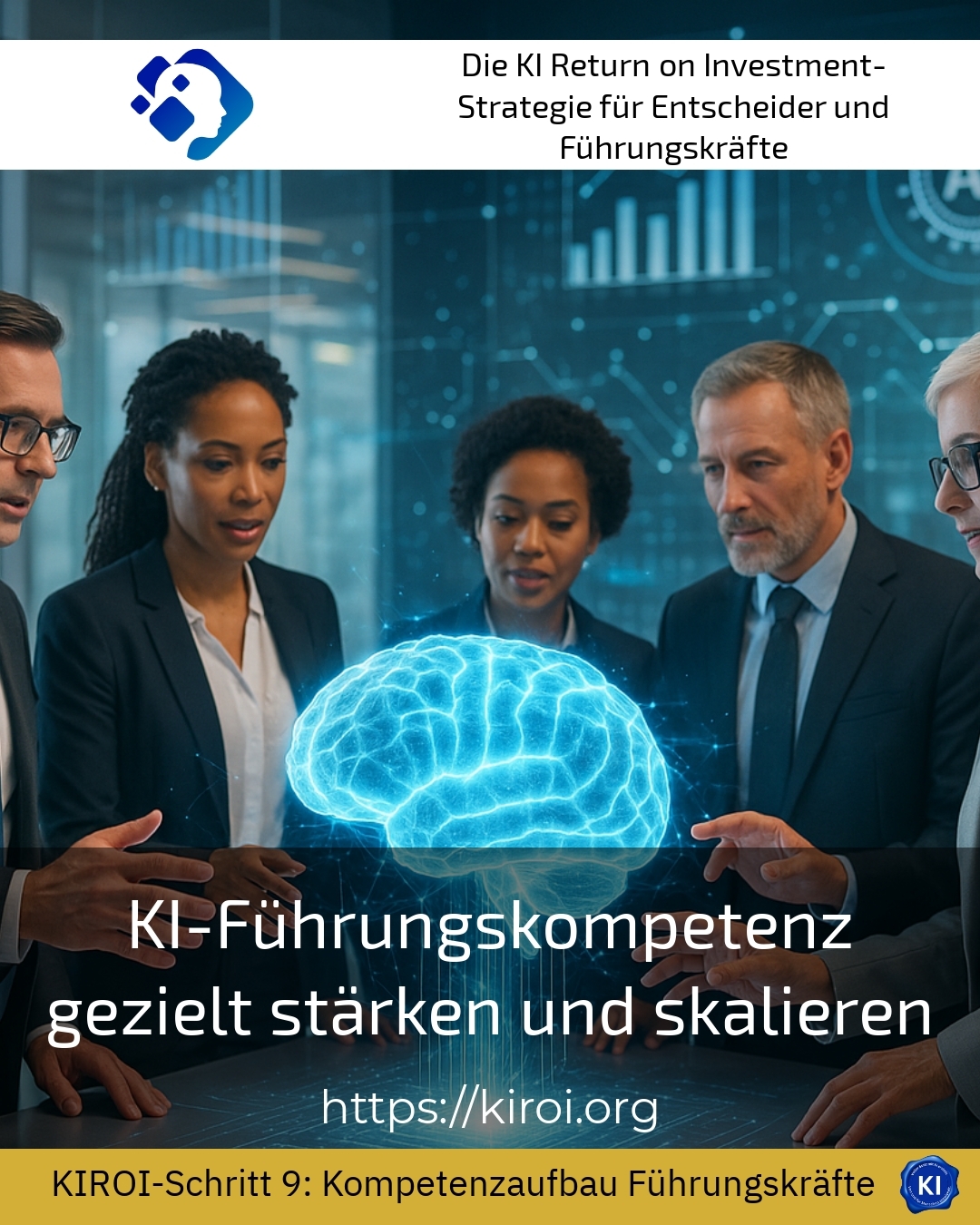
The transformation of entire industries is currently happening at a speed that presents entirely new challenges even for experienced leaders. Those in positions of responsibility today must not only master classic management skills. The ability to, Strengthening AI leadership skills deliberately the ability to do so is becoming the crucial differentiator between organisations that thrive and those that fall behind. This is no longer about the mere implementation of technical systems. Instead, the fundamental reorientation of leadership understanding and organisational culture is at the heart of a development that is already setting the course for the coming decades.
Understanding the new dimension of strategic leadership
Leaders in the manufacturing industry frequently report a fundamental uncertainty. While they recognise the need for change, they often don't know where to begin. A production manager at a medium-sized engineering company recently described this situation very aptly. He said that he sometimes felt like a captain whose ship was completely rebuilding itself while sailing. This metaphor highlights the area of tension in which modern leaders operate. They must simultaneously manage day-to-day operational business and initiate fundamental change processes. This phenomenon is particularly evident in the automotive supply sector. There, management teams must question traditional production philosophies. At the same time, they must not abandon proven quality standards. The art lies in preserving what has proven effective while daring to embrace radical new ideas.
In the chemical industry, executives are experiencing similar challenges with particular intensity. Here, strict safety regulations meet the drive for rapid innovation. A plant manager from a large chemical company shared that his teams initially had reservations about algorithmic decision support systems. They feared that their decades of experience could be devalued. It was only through intensive support and open dialogue that these concerns could be addressed and transformed into constructive energy. The pharmaceutical industry, in turn, faces the task of rethinking research and development processes. Here, intelligent systems can accelerate drug discovery. Executives must consider ethical issues and keep regulatory requirements in mind.
Best practice with a KIROI customer
A family-run business with a long tradition in precision mechanics approached us with a complex request. The management recognised that its existing leadership structures were no longer adequate for future demands. The company employed over three hundred staff at two sites in Germany. The challenge lay in merging the existing expertise of long-serving managers with new competencies. As part of our support, we collaboratively developed a transformation programme for the entire middle management level. We began by conducting in-depth individual discussions with all involved parties, identifying both existing strengths and areas for development. Subsequently, we designed a bespoke development path, which included both individual coaching sessions and group workshops. After eighteen months, the participants reported a fundamentally changed understanding of leadership. They felt better equipped to face the challenges of a changing world of work. Employee surveys clearly indicated improved scores in communication and willingness to innovate.
Targeted strengthening of AI leadership skills through systematic development
The systematic development of leadership skills requires a holistic approach. In the food industry, for example, leaders face the challenge of optimising complex supply chains. They must therefore achieve efficiency gains while also meeting sustainability requirements. A production manager at a dairy described how his team learned to make data-driven decisions. Previously, those responsible relied mainly on gut feeling and experience. Today, they systematically use collected information as the basis for their decisions. However, this change required more than just technical training. It necessitated a fundamental shift in corporate culture. Transruption coaching can provide valuable impetus as continuous support for such projects.
We are also experiencing profound changes in the construction industry at present. Here, managers must learn to integrate digital twins and predictive analytics into their planning processes. The CEO of a medium-sized construction company shared his experiences. He reported that the biggest challenge was not the technology itself. Rather, established hierarchies and communication patterns had to be questioned. Younger employees often brought more technical understanding than experienced site managers. This situation required a rethink regarding knowledge management and leadership authority. The textile and clothing industry, in turn, uses intelligent systems for trend forecasting and inventory optimisation. Here, creative processes must be combined with analytical approaches. Managers are learning to appreciate both perspectives and to integrate them productively.
Establish scalable structures for sustainable success
Scaling leadership competencies presents organisations with particular challenges. It is not enough to develop individual leaders further. Instead, the entire leadership system must be designed to foster learning processes. The electronics industry provides an exemplary illustration of how this can be achieved. Some pioneering companies there have established internal academies. These serve not only to impart knowledge but also to facilitate the exchange of experiences between different leadership levels. An HR manager at a large electronics manufacturer explained the philosophy behind this. He emphasised that leadership competence cannot be solely imparted in seminars. It primarily arises through reflective practice and collegial exchange.
The metal industry offers further insightful examples of scaling leadership development. Several companies there have established mentoring programmes that transcend traditional hierarchical boundaries. Experienced plant managers collaborate with young high-potential individuals from the data analysis sector. This creates a reciprocal learning process from which both sides benefit. The older leaders share their experiential knowledge of production processes and personnel management. The younger colleagues contribute fresh perspectives and technical know-how. In the plastics industry, on the other hand, some companies are experimenting with new leadership models. Temporary project teams are formed in which leadership responsibility rotates. This allows leadership skills to be developed and tested within a protected framework.
Best practice with a KIROI customer
An internationally active company in the packaging industry faced the challenge of harmonising leadership skills across multiple sites. The organisation operated plants in Germany, Poland and Portugal. Each site had developed its own leadership cultures over the years. The executive board recognised that this heterogeneity was increasingly becoming a problem. Strategic initiatives were interpreted and implemented differently at the various sites. As part of our support, we developed a cross-site development programme. This took cultural differences into account without smoothing them over. We organised international workshops where managers from all sites came together. This led to the creation of valuable networks and a shared understanding of leadership. Particularly important was the establishment of a common language for leadership topics. We worked with the teams on specific case studies from their everyday work. This allowed abstract concepts to be linked with practical relevance. After two years of intensive collaboration, significantly improved cross-site cooperation was evident. Managers reported a stronger sense of belonging and better communication structures.
Targeted strengthening and scaling of AI leadership competence in day-to-day business
Integrating leadership development into the daily work routine presents a particular challenge. Many leaders report that they find very little time for systematic further training. Operational business demands their full attention. In the paper and pulp industry, some companies have found creative solutions to this dilemma. They use short learning units that can be integrated into the daily work routine [1]. A department head reported on daily reflection sessions lasting just fifteen minutes. During this time, the management team discusses current challenges and shares learning experiences. The glass industry offers another interesting example. There, some companies have established so-called leadership circles. In these, leaders meet regularly for collegial exchange.
The wood processing industry shows how traditional sectors can forge new paths. Some companies there focus on experience-based learning in real-world projects [2]. Managers deliberately take on tasks outside their comfort zone. They are supported by experienced coaches who provide impetus and encourage reflection. A sawmill manager described his experiences with this approach. He had taken on the task of introducing a new quality management system. In doing so, he not only learned technical content but also further developed his leadership skills. The ceramics industry, in turn, is experimenting with digital learning formats. There, managers use online platforms for cross-site exchange. These virtual learning spaces make it possible to benefit from the experiences of others.
Acknowledging the human dimension of transformation
While strategic and structural aspects are emphasised, the human dimension must not be forgotten. Managers frequently approach us with issues such as feeling overwhelmed and lacking direction. They feel the pressure to do everything right, while simultaneously doubting their own abilities. In the printing industry, which is undergoing a fundamental structural transformation, we encounter this situation particularly often. Here, managers have to guide employees through uncertain times. However, they themselves often have no clear idea of where the journey is heading. A printing company owner described his thoughts very openly. He said that he sometimes doesn't know if his company will still exist in ten years. Bearing this uncertainty and remaining capable of action requires special skills.
The furniture industry provides examples of how leaders can deal with such uncertainties. Some companies there have established programmes to strengthen personal resilience [3]. Leaders learn to deal with ambiguity and make decisions even in unclear situations. A plant manager at a furniture manufacturer described how this development has helped him. He reported that he used to hesitate for a long time with every difficult decision. Today he can act more quickly because he has learned to deal with uncertainty. The jewellery industry, in turn, shows how traditional craftsmanship and modern leadership approaches can be combined. There, some manufactories preserve their artisan tradition. At the same time, they systematically develop their leadership structures. Transruption coaching can support development as a reliable partner on such projects.
My KIROI Analysis
The examination of leadership development in times of technological change reveals several fundamental insights. Firstly, it is apparent that technical competence alone is not sufficient. Leaders require a broad spectrum of skills to be successful. This includes emotional intelligence, strategic thinking, and the ability for self-reflection. The examples from various industry sectors illustrate that there is no one-size-fits-all solution. Each organisation must find its own path. External impetus can offer valuable support in this regard. Guidance from experienced coaches enables the recognition of blind spots and the acquisition of new perspectives.
The importance of corporate culture for successful leadership development seems particularly noteworthy to me. Where an open culture of error prevails, change processes succeed more easily. Leaders dare to break new ground because they know that failure is permitted. The systematic development of Strengthening AI leadership skills deliberately requires long-term commitment. Quick fixes rarely promise sustainable success. Rather, it needs continuous work on one's own competencies and on the organisational framework. The examples presented show that this effort is worthwhile. Organisations that invest in leadership development are better equipped for the challenges of the future. They can react more quickly to changes and make better use of opportunities. Human leadership competence remains the decisive success factor. No technology can replace what dedicated and competent leaders achieve.
Further links from the text above:
[1] McKinsey Insights on Organisational Development and Leadership
[2] Harvard Business Review Leadership Resources
[3] Gallup Workplace Leadership Studies
For more information and if you have any questions, please contact Contact us or read more blog posts on the topic Artificial intelligence here.











 Deutsch
  English (UK)