
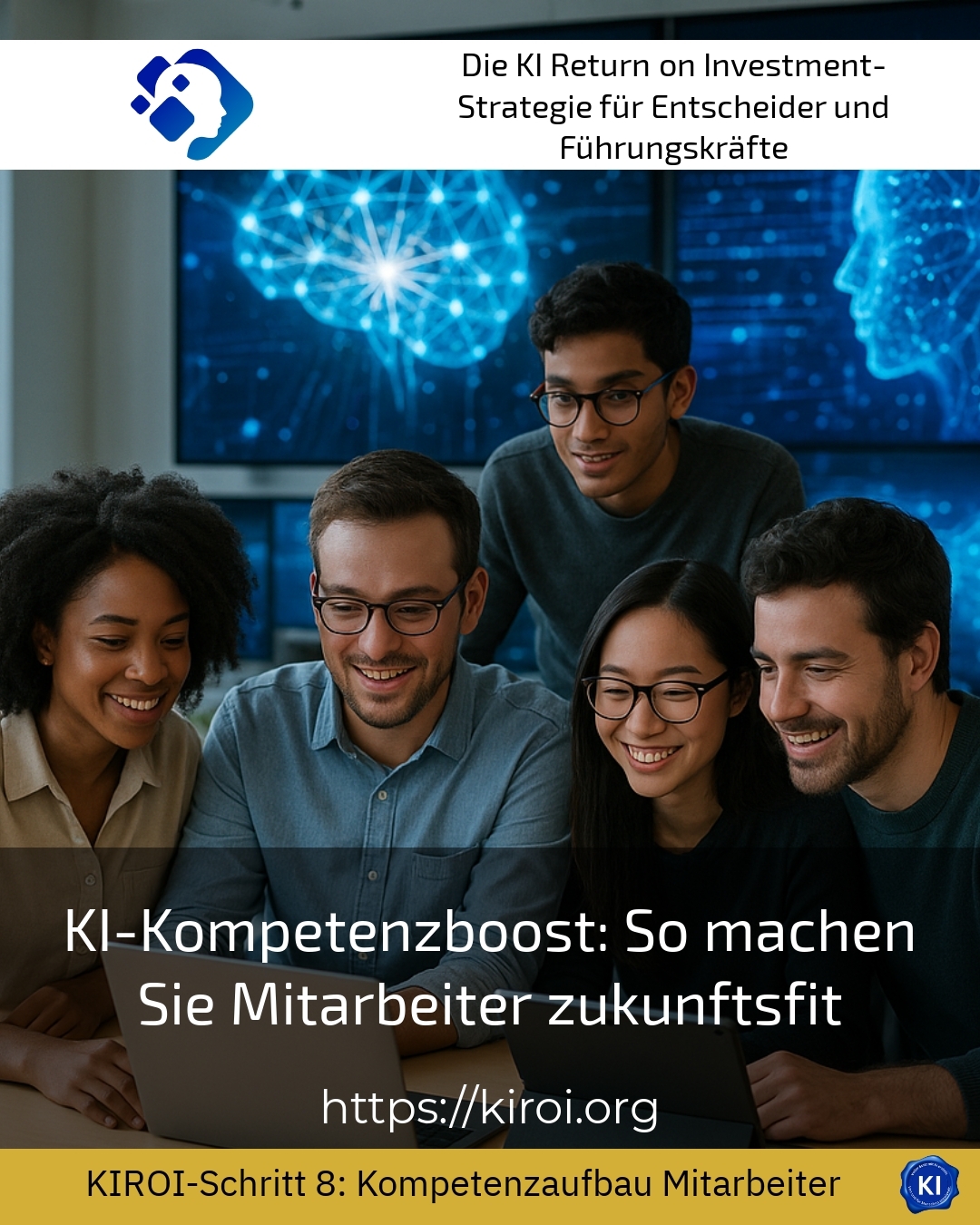
Digital transformation is changing the workplace at a pace that poses enormous challenges for many companies. At the same time, the targeted AI Skills Boost: How to Future-Proof Employees entirely new possibilities for growth and innovation. However, as technology rapidly evolves, people are often left behind and feel overwhelmed. This is precisely where a well-thought-out upskilling strategy comes in, reducing anxieties and unlocking potential. In this post, you will learn how to systematically prepare your workforce for the future.
Why AI skills have become indispensable today
The world of work is undergoing a fundamental change. Automated systems are taking over routine tasks in almost all sectors. At the same time, entirely new fields of activity are emerging that require creative and analytical skills. Companies that actively support their employees create a decisive competitive advantage. This is because qualified teams not only work more efficiently but are also more satisfied and loyal.
In the manufacturing sector, for example, production managers are already using smart systems for quality control. Machine operators are supported by predictive maintenance alerts that minimise downtime. In sales, too, smart algorithms analyse customer behaviour and provide valuable insights for personalised offers. These developments clearly show that a basic understanding of technology is becoming a core skill. Those who invest in this area will benefit in the long term from motivated and adaptable teams.
Many organisations report positive experiences with intelligent assistance systems, particularly in customer service. Service staff use these tools to respond more quickly to enquiries and resolve complex issues. This frees up more time for personalised advice, which customers particularly value. The technology does not replace anyone, but rather expands the scope of action available to each individual.
The path to a sustainable boost in AI expertise within your organisation
A successful skills development strategy always begins with an honest assessment of existing skills. In doing so, managers should first seek to understand the fears and reservations that employees may have. Clients often express uncertainty as to whether their skills will still be needed in the future. Taking these concerns seriously and addressing them openly forms the basis for any change. After all, only those who feel heard are open to new learning processes.
In the healthcare sector, nursing staff face the challenge of using digital documentation systems effectively. Doctors integrate diagnostic support tools into their daily work and make informed decisions. Administrative staff automate billing processes, thereby freeing up valuable time for patient-focused tasks. All these examples illustrate how the need for new skills is growing across all sectors. At the same time, they show that the transition should be gradual and supported.
Best practice with a AIROI customer
A medium-sized logistics company approached us with a specific concern. The workforce had serious reservations about the introduction of intelligent route planning systems. Many drivers feared that their experience would no longer be valued in future. Together, we developed a multi-stage workshop process that involved everyone concerned. First, we analysed existing workflows and identified areas with high potential for optimisation. We then trained selected employees as internal champions to pass on their knowledge to colleagues. A key message was that the technology complements, rather than replaces, the drivers’ expert knowledge. After six months, the teams reported significantly lower stress levels and improved collaboration. Route efficiency increased by a considerable margin, whilst employee satisfaction also rose. This example impressively demonstrates how transruptions coaching can support such transformation projects. The key lay in the combination of technical training and emotional support throughout the change processes.
Practical steps for an AI competency boost in everyday work
Successful training does not take place in a vacuum, but directly in the workplace. Micro-learning in short sessions has proven to be particularly effective in this regard [1]. Employees acquire new knowledge in manageable chunks and put it into practice straight away. This method reduces the risk of feeling overwhelmed and promotes long-term learning progress. Furthermore, employees can set their own pace.
In the retail sector, store managers are already experimenting with intelligent stock management systems. Sales staff receive recommendations for cross-selling opportunities based on purchasing patterns. Staff planning also benefits from predictive analytics, which provide more accurate forecasts of peak times. However, these tools require a fundamental understanding of how they work and their limitations. Only then can staff evaluate them critically and make decisions appropriate to the situation.
The financial sector offers further instructive examples of the successful integration of new technologies. Customer advisors use analytical tools to develop appropriate product recommendations. Compliance departments rely on automated monitoring systems that identify suspicious transactions. Case handlers significantly speed up the application review process through intelligent document recognition. All these applications require continuous professional development and a willingness to learn on the part of those involved.
The role of managers in the transformation
Change processes can only succeed if managers lead by example. They should speak openly about their own learning curves and accept mistakes as part of the process [2]. Clients often report that authentic leadership builds trust and reduces resistance. After all, when the boss tries new things themselves, others feel empowered to do the same. This culture of shared learning ultimately shapes the entire organisation.
In the construction industry, project managers face the challenge of integrating digital planning tools into diverse teams. Site managers use networked systems to coordinate the flow of materials and personnel more efficiently than ever before. Architects use generative design tools that provide creative inspiration for sustainable building concepts. Tradespeople on site benefit from mobile applications that provide instructions and safety guidelines. This diversity highlights just how varied requirements can be depending on the field of work.
The hospitality industry is also demonstrating innovative approaches to staff training in the digital age. Hotel reception desks are using smart booking systems that store and utilise guest preferences. Restaurant staff are receiving support with allergen labelling through automated menu analysis. Chefs are experimenting with recipe generators that provide inspiration for seasonal creations. These applications enhance day-to-day work and free up time for personal hospitality.
Best practice with a AIROI customer
A tax consultancy firm sought support in integrating automated document recognition systems into its existing workflows. Initially, staff feared that their expertise in document verification would be devalued. We supported the team over several months with regular reflection workshops and practical training sessions. It soon became clear that the technology was primarily capable of taking over time-consuming routine tasks. The consultants now used the freed-up capacity for in-depth client meetings and strategic tax planning. A key factor in the success was the involvement of experienced specialists as mentors for younger colleagues. This cross-generational collaboration significantly promoted the transfer of knowledge in both directions. The older employees shared their specialist tax knowledge, whilst the younger ones provided technical tips. Upon completion of the project, the management reported increased client satisfaction and higher staff retention. The transruptions coaching had provided valuable impetus as support for this transformation project.
Overcoming obstacles and constructively using resistance
Resistance to change is human nature and often provides valuable insights into blind spots. Rather than ignoring critics, companies should take their concerns seriously and incorporate them [3]. Sceptical employees often identify risks that enthusiasts have overlooked. It is this constructive use of resistance that distinguishes successful transformations from failed projects. A structured dialogue process that allows all voices to be heard is helpful in this regard.
The media industry offers clear examples of how to deal with technological change. Journalists use research tools that identify and summarise relevant sources more quickly. Editors work with writing assistants that help with phrasing and minimise errors. The picture desk also benefits from intelligent tagging of extensive archive collections. These tools by no means replace the journalistic judgement and creativity of media professionals.
In the education sector, teachers are also seeing far-reaching changes in the way they work. Educators are turning to adaptive learning systems that track each pupil’s individual progress. Lecturers are using automated feedback tools for exercises, freeing up time for personal support. Administrative staff are automating exam organisation and report card production using intelligent systems. All these developments require both technical training and pedagogical reflection.
Ensuring sustainability in the training process
One-off training sessions are not enough to remain competitive in the long term. Instead, companies should establish and nurture a culture of continuous learning. Regular refresher courses and discussions about new developments keep knowledge up to date. Internal communities and learning groups play an important supporting role in this. This creates a self-sustaining system that is capable of overcoming future challenges.
The automotive industry is a prime example of how entire workforces can be transformed step by step. Engineers are expanding their skill sets from traditional mechanical engineering to software and electronics. Production employees are learning to work with collaborative robots and networked production lines. The aftersales sector is also changing through digital diagnostic tools and predictive maintenance concepts. This comprehensive transformation requires long-term planning and consistent implementation over many years.
The energy sector is undergoing similar processes of change, with far-reaching implications for all employees. Grid technicians monitor smart grids around the clock using automated analysis systems. Customer service representatives use predictive consumption analyses for personalised consultations with private customers. The planning of decentralised energy generation also benefits significantly from complex simulation tools. These examples illustrate the range of new skills required within an industry.
My AIROI Analysis
Systematically upskilling staff for the digital future is no longer an option, but a strategic necessity. Companies that invest in building their workforce’s skills today are securing their long-term competitiveness. Time and again, it has become clear that technical training alone is not enough. Rather, a holistic approach is needed that also takes into account the emotional and cultural aspects of change. This is precisely where transruptions coaching, as a support mechanism for transformation projects, can provide valuable impetus and trigger sustainable developments.
The industry examples presented clearly illustrate the enormous range of potential applications and challenges. From logistics and healthcare to the media sector, organisations benefit from skilled teams. It is always crucial to involve those affected in all planning stages right from the start. Those who take employees seriously as experts in their own work will reap the rewards of commitment and a spirit of innovation. This participatory approach distinguishes successful transformations from technocratic implementation projects that fail due to resistance.
My recommendation is therefore to view the upskilling process as an ongoing journey rather than a one-off project. Invest in learning infrastructure, encourage the sharing of experiences and foster a sense of psychological safety. Then your teams will not only be able to cope with the changes ahead, but also play an active role in shaping them. The AI Skills Boost: How to Future-Proof Employees This works best in a culture of trust and mutual support. This investment pays off in many ways: through higher productivity, better staff retention and increased innovation.
Further links from the text above:
[1] McKinsey: The Skills Shift and the Future of the Workforce
[2] Harvard Business Review: Insights on Leadership
[3] World Economic Forum: The Future of Jobs Report
For more information and if you have any questions, please contact Contact us or read more blog posts on the topic Artificial intelligence here.








 Deutsch
  English (UK)