kiroi.org

KIROI - Artificial Intelligence Return on Invest
The AI strategy for decision-makers and managers

Business excellence for decision-makers & managers by and with Sanjay Sauldie

KIROI - Artificial Intelligence Return on Invest: The AI strategy for decision-makers and managers

KIROI - Artificial Intelligence Return on Invest: The AI strategy for decision-makers and managers

Start » KIROI step 8: Employee competence development for decision-makers
9 January 2025

KIROI step 8: Employee competence development for decision-makers

4.1
(1696)

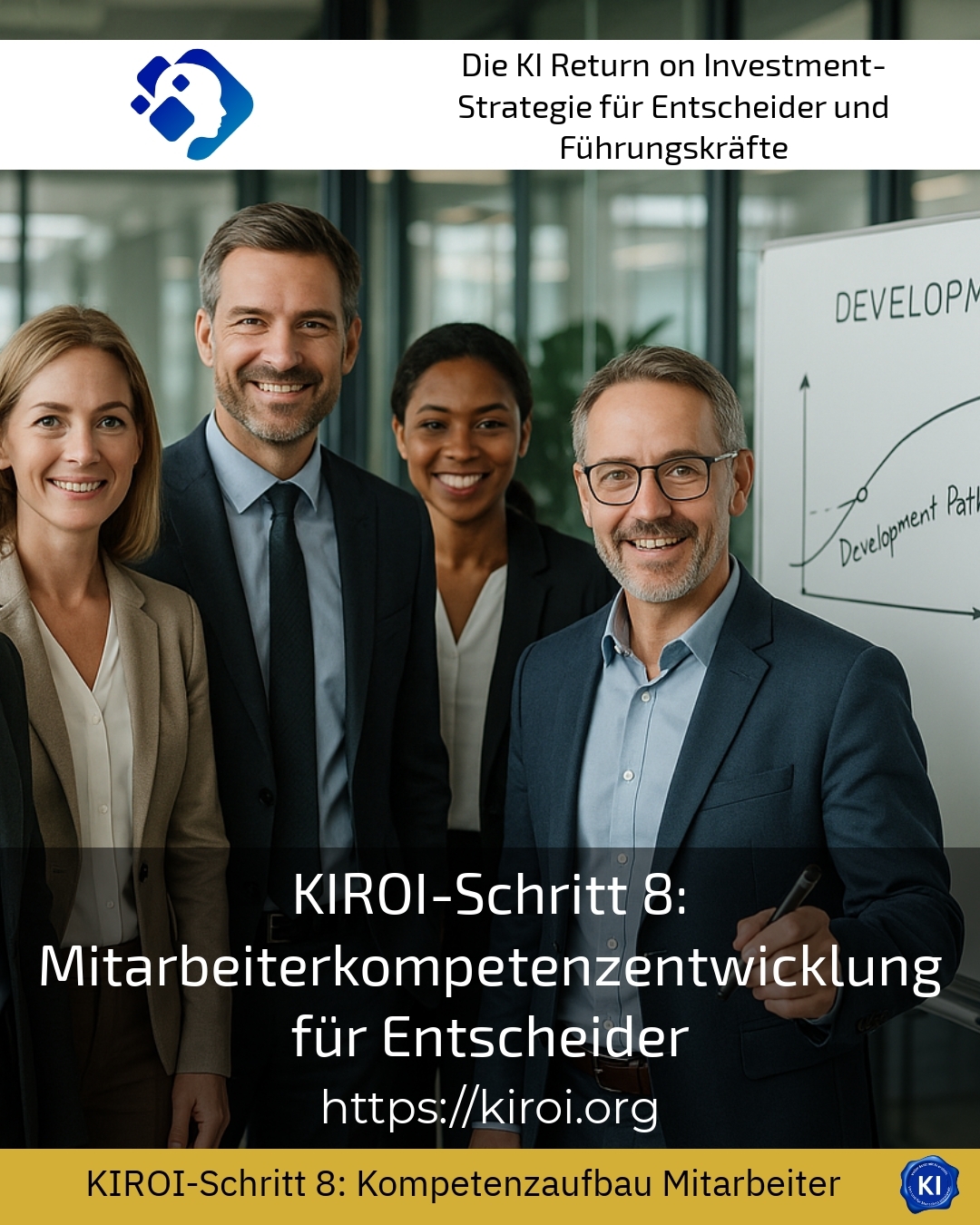
Employee competence development is at the heart of modern HR strategies and is crucial for sustainable business success. Decision-makers, in particular, often ask themselves how they can optimally develop and specifically promote the potential of their teams. KIROI Step 8 is about not just maintaining competencies, but actively and purposefully developing them further – and thus securing the company's future viability.

Why employee competency development is so important for decision-makers

Many customers report that they are unsure how to systematically build employee skills during change processes. Often, there is no clear picture of which skills are needed today and which might be relevant in the future. Competence development is not an end in itself, but a response to the changing demands of the market. It helps to increase quality, innovation, and motivation within the team [3].

Examples from practice

A medium-sized industrial company conducted a detailed skills analysis and focused on targeted on-the-job training to impart new skills directly within the daily work routine. Employees benefited from immediately applicable knowledge, and productivity increased measurably.

In another case, transruptions coaching supported a team in the service sector in establishing a feedback culture. Regular reflection sessions and individual coaching helped to sustainably strengthen both technical and methodological competence.

An example from the healthcare industry: Through job rotation, nurses got to know different wards, broadened their horizons and developed a better understanding of the overall processes within the company.

Methods of Employee Competence Development

Competence development is most successful when different approaches are combined. Classic training courses and workshops impart theoretical knowledge, while practical formats such as project work or job rotation allow the immediate application of what has been learned [5]. Digital learning platforms and e-learning permit flexible, individual learning – regardless of time and place [7].

Coaching and mentoring are particularly effective when it comes to recognising and specifically developing personal strengths. External coaching, such as transruptive coaching, provides professional support to teams and leaders and offers valuable impetus for practical application.

Engaging approaches for day-to-day work

Sharing experiences in mastermind groups or regular case study presentations promote knowledge transfer within the team and strengthen social competence[1]. Self-directed learning, for example through research, podcasts or professional articles, supports employees' self-responsibility[2].

Feedback cultures create transparency and help to highlight strengths and areas for development. Peer learning initiatives, where colleagues deliberately share their knowledge, have also proven successful in many companies.

Structured Implementation: From Need to Sustainable Development

Successful employee competency development begins with a thorough needs analysis. Decision-makers should clarify which competencies are needed today and in the future to achieve strategic goals[1]. In the next step, suitable employees are identified and individual development plans are agreed upon.

Real competence development then takes place through targeted measures – from training and coaching to practical, hands-on exercises. It is important to integrate these measures into everyday work and to evaluate them continuously. Only in this way will sustainable benefit be created for the company.

Example from the IT industry

BEST PRACTICE with one customer (name hidden due to NDA contract) A software company introduced a skills matrix that mapped all relevant employee competencies. Disruptive coaching was used to identify specific gaps and implement tailored development programmes. Employees participated in internal hackathons, attended industry-specific workshops, and benefited from regular feedback through coaching. After one year, not only technical expertise but also team dynamics and innovative strength noticeably increased. Customer loyalty improved because employees were now able to respond more competently to individual requirements.

Challenges and Solutions

Decision-makers frequently report a lack of time, budget restrictions, or insufficient team motivation. These hurdles can be overcome by setting priorities, taking small steps, and making successes visible. Digital tools can make competence development more efficient and reduce administrative effort[7].

It's important to actively involve employees and take their needs seriously. Only those who feel valued will commit to their own development in the long term. An open culture of learning from mistakes and regular reflection also promote continuous learning within the company.

My analysis

Employee competency development is not a short-term project, but rather a continuous process that strengthens the company in the long term. It promotes not only technical expertise but also social and methodological skills, which are indispensable in a changing world of work[1]. Decision-makers who consistently take this step secure a clear competitive advantage and create a culture where learning and development are firmly embedded.

Especially in times of digitalisation and demographic change, targeted skills development is becoming increasingly important. transruptions-Coaching will professionally support you with implementation and help you to connect individual and entrepreneurial goals.

Further links from the text above:

For more information and if you have any questions, please contact Contact us or read more blog posts on the topic Artificial intelligence here.
How useful was this post?

Click on a star to rate it!

Average rating 4.1 / 5. Vote count: 1696

No votes so far! Be the first to rate this post.

Spread the love

transruption.org

The digital toolbox for
the digital winners of today and tomorrow

Business excellence for decision-makers & managers by and with Sanjay Sauldie

transruption
transruption

transruption: The digital toolbox for
the digital winners of today and tomorrow

Start » KIROI step 8: Employee competence development for decision-makers
9 January 2025

KIROI step 8: Employee competence development for decision-makers

4.1
(1696)

Employee competence development is at the heart of modern HR strategies and is crucial for sustainable business success. Decision-makers, in particular, often ask themselves how they can optimally develop and specifically promote the potential of their teams. KIROI Step 8 is about not just maintaining competencies, but actively and purposefully developing them further – and thus securing the company's future viability.

Why employee competency development is so important for decision-makers

Many customers report that they are unsure how to systematically build employee skills during change processes. Often, there is no clear picture of which skills are needed today and which might be relevant in the future. Competence development is not an end in itself, but a response to the changing demands of the market. It helps to increase quality, innovation, and motivation within the team [3].

Examples from practice

A medium-sized industrial company conducted a detailed skills analysis and focused on targeted on-the-job training to impart new skills directly within the daily work routine. Employees benefited from immediately applicable knowledge, and productivity increased measurably.

In another case, transruptions coaching supported a team in the service sector in establishing a feedback culture. Regular reflection sessions and individual coaching helped to sustainably strengthen both technical and methodological competence.

An example from the healthcare industry: Through job rotation, nurses got to know different wards, broadened their horizons and developed a better understanding of the overall processes within the company.

Methods of Employee Competence Development

Competence development is most successful when different approaches are combined. Classic training courses and workshops impart theoretical knowledge, while practical formats such as project work or job rotation allow the immediate application of what has been learned [5]. Digital learning platforms and e-learning permit flexible, individual learning – regardless of time and place [7].

Coaching and mentoring are particularly effective when it comes to recognising and specifically developing personal strengths. External coaching, such as transruptive coaching, provides professional support to teams and leaders and offers valuable impetus for practical application.

Engaging approaches for day-to-day work

Sharing experiences in mastermind groups or regular case study presentations promote knowledge transfer within the team and strengthen social competence[1]. Self-directed learning, for example through research, podcasts or professional articles, supports employees' self-responsibility[2].

Feedback cultures create transparency and help to highlight strengths and areas for development. Peer learning initiatives, where colleagues deliberately share their knowledge, have also proven successful in many companies.

Structured Implementation: From Need to Sustainable Development

Successful employee competency development begins with a thorough needs analysis. Decision-makers should clarify which competencies are needed today and in the future to achieve strategic goals[1]. In the next step, suitable employees are identified and individual development plans are agreed upon.

Real competence development then takes place through targeted measures – from training and coaching to practical, hands-on exercises. It is important to integrate these measures into everyday work and to evaluate them continuously. Only in this way will sustainable benefit be created for the company.

Example from the IT industry

BEST PRACTICE with one customer (name hidden due to NDA contract) A software company introduced a skills matrix that mapped all relevant employee competencies. Disruptive coaching was used to identify specific gaps and implement tailored development programmes. Employees participated in internal hackathons, attended industry-specific workshops, and benefited from regular feedback through coaching. After one year, not only technical expertise but also team dynamics and innovative strength noticeably increased. Customer loyalty improved because employees were now able to respond more competently to individual requirements.

Challenges and Solutions

Decision-makers frequently report a lack of time, budget restrictions, or insufficient team motivation. These hurdles can be overcome by setting priorities, taking small steps, and making successes visible. Digital tools can make competence development more efficient and reduce administrative effort[7].

It's important to actively involve employees and take their needs seriously. Only those who feel valued will commit to their own development in the long term. An open culture of learning from mistakes and regular reflection also promote continuous learning within the company.

My analysis

Employee competency development is not a short-term project, but rather a continuous process that strengthens the company in the long term. It promotes not only technical expertise but also social and methodological skills, which are indispensable in a changing world of work[1]. Decision-makers who consistently take this step secure a clear competitive advantage and create a culture where learning and development are firmly embedded.

Especially in times of digitalisation and demographic change, targeted skills development is becoming increasingly important. transruptions-Coaching will professionally support you with implementation and help you to connect individual and entrepreneurial goals.

Further links from the text above:

For more information and if you have any questions, please contact Contact us or read more blog posts on the topic Artificial intelligence here.
How useful was this post?

Click on a star to rate it!

Average rating 4.1 / 5. Vote count: 1696

No votes so far! Be the first to rate this post.

Spread the love

Other content worth reading:

KIROI step 8: Employee competence development for decision-makers

written by:

Keywords:

#compliance #Ethikrichtlinien #Kompetenzmanagement #mitarbeiterkompetenz #Sustainability #Personalentwicklung #Team promotion #Unternehmenskultur #Verantwortungsketten #further training

Follow me on my channels:

Questions on the topic? Contact us now without obligation

Contact us

[wpforms id="331781" title="false"]

More articles worth reading

    Leave a comment