
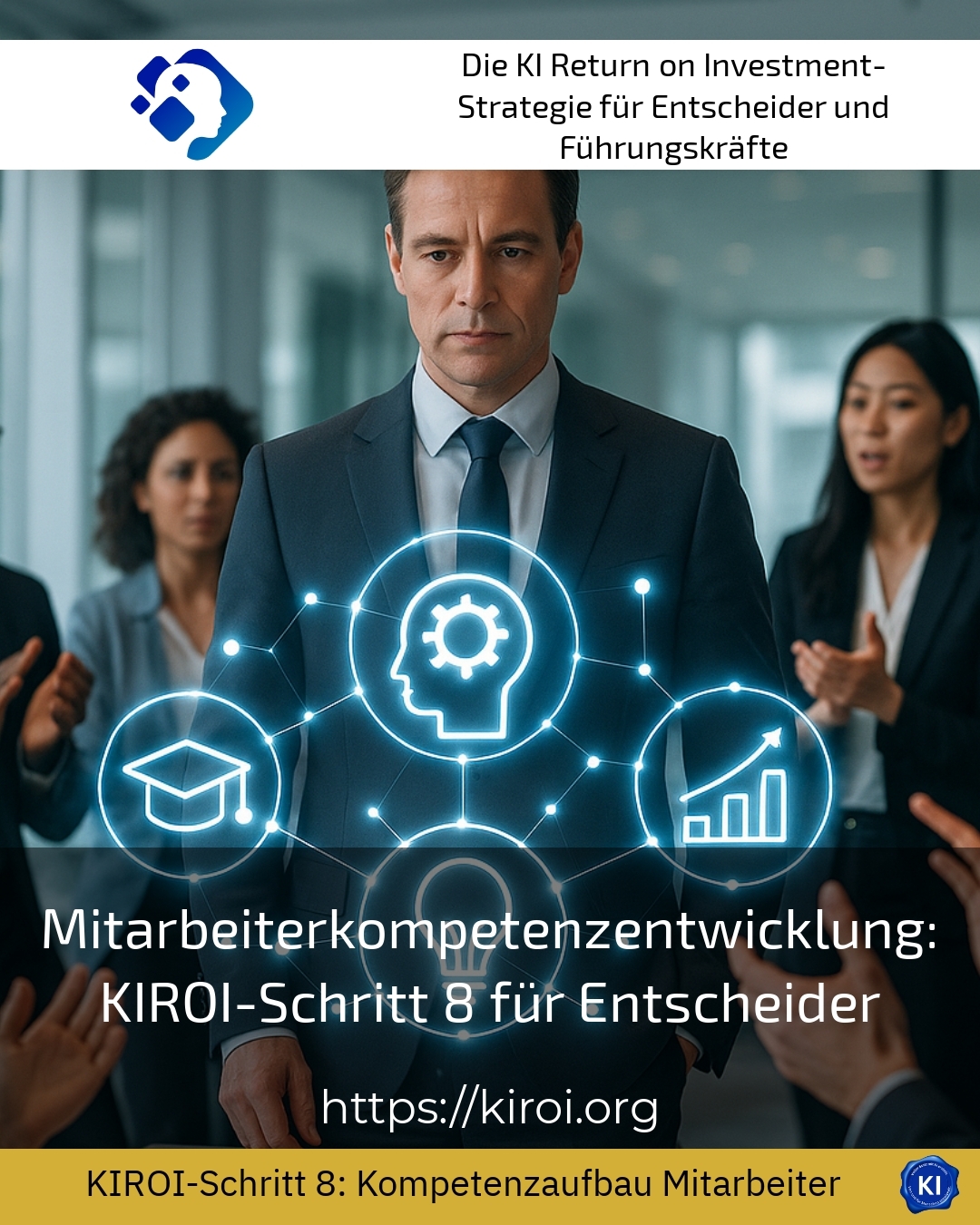
Employee Competence Development: Key to Future-Proof Human Resource Development
Employee competence development plays a central role in modern companies. It supports decision-makers in systematically fostering the individual skills of employees while sustainably securing the organisation's competitiveness. With a clearly structured approach, competencies can be strengthened in a targeted manner and adapted to the demands of dynamic working environments.
Why Employee Competency Development is Indispensable for Decision-Makers
Decision-makers are repeatedly faced with challenges that cannot be fully overcome with existing knowledge and skills. Employee competence development provides valuable impetus here and supports processes for implementing new ways of working. Targeted training measures can identify and close competence gaps, which not only increases the individual performance of employees but also strengthens overall team dynamics.
In the manufacturing sector, it often becomes apparent that the introduction of digital systems without accompanying skills development leads to uncertainty and resistance. In contrast, through systematic skills building, employees are able to adopt and make productive use of new technologies. For example, training in digital quality management demonstrably increases product quality and promotes staff engagement.
Methods of employee competence development as practical support
Various methods can effectively support employee competency development. Coaching offers individual guidance that addresses specific challenges and develops practical solutions. Mentoring is also applied, where experienced specialists or managers pass on their knowledge and foster exchange. Further training and development courses also play a significant role in imparting new skills in a targeted and structured manner.
In the service sector, a company relied on regular workshops to strengthen digital competencies. This enabled the smooth introduction of new software tools and made teams feel more confident in their use of technology, thereby easing the overall change process.
KIROI BEST PRACTICE at company XYZ (name changed due to NDA contract)
As part of a digitalisation project, the methodological competence of employees was systematically developed. Agile working methods were gradually introduced, leading to a significant improvement in collaboration, even in virtual teams. Coaching accompanied the process with regular feedback rounds, helping to successfully establish the culture change.
KIROI BEST PRACTICE at company XYZ (name changed due to NDA contract)
During the digitalisation of customer service, the focus was on promoting social and communicative skills. Employees learned to effectively handle customer concerns and confidently use new communication channels. The support adapted flexibly to the challenges faced by employees and established sustainable skills development.
The importance of leadership in employee competence development
Leaders bear a special responsibility for employee skills development. They themselves require ongoing support to fulfil their role as promoters and initiators. A combination of coaching, mentoring, and practical training enables them to better support the individual development of team members and thus increase team performance.
KIROI BEST PRACTICE at company XYZ (name changed due to NDA contract)
An IT executive was supported over several months through individual coaching. The coaching focused on strengths analysis and improving communication skills within the team. This helped to promote more open feedback in meetings and noticeably improved collaboration.
How decision-makers can meaningfully shape employee skills development
The design of employee competence development requires a holistic approach that encompasses both technical and social skills. Decision-makers should focus on supporting learning processes flexibly and in line with employee needs. Instead of making promises about outcomes, it is primarily important to provide impulses that support self-organisation and personal responsibility.
It is equally important to understand change as a continuous process, characterised by repeated feedback and adjustments. Only in this way can an open learning and feedback culture that motivates employees and makes companies fit for the future emerge sustainably.
My analysis
Employee competence development is a key driver for strengthening companies in a rapidly changing world of work. Decision-makers face the task of systematically fostering individual and collective skills in order to remain value-adding. Accompanying support through methods such as coaching, mentoring and sound training proves to be effective and sustainable. The impact is particularly evident where competencies are expanded in a practical way and communicated openly. Projects with sustainable guidance motivate employees, promote collaboration and facilitate change processes.
Further links from the text above:
Employee Qualification: Strengthening 8 Competencies with KIROI
KIROI Step 8: Executive Leadership Competency Development
SEO in Recruitment: Tips for Better Visibility
For more information and if you have any questions, please contact Contact us on or read further blog posts on the topic Artificial Intelligence Blog here.











 Deutsch
  English (UK)