
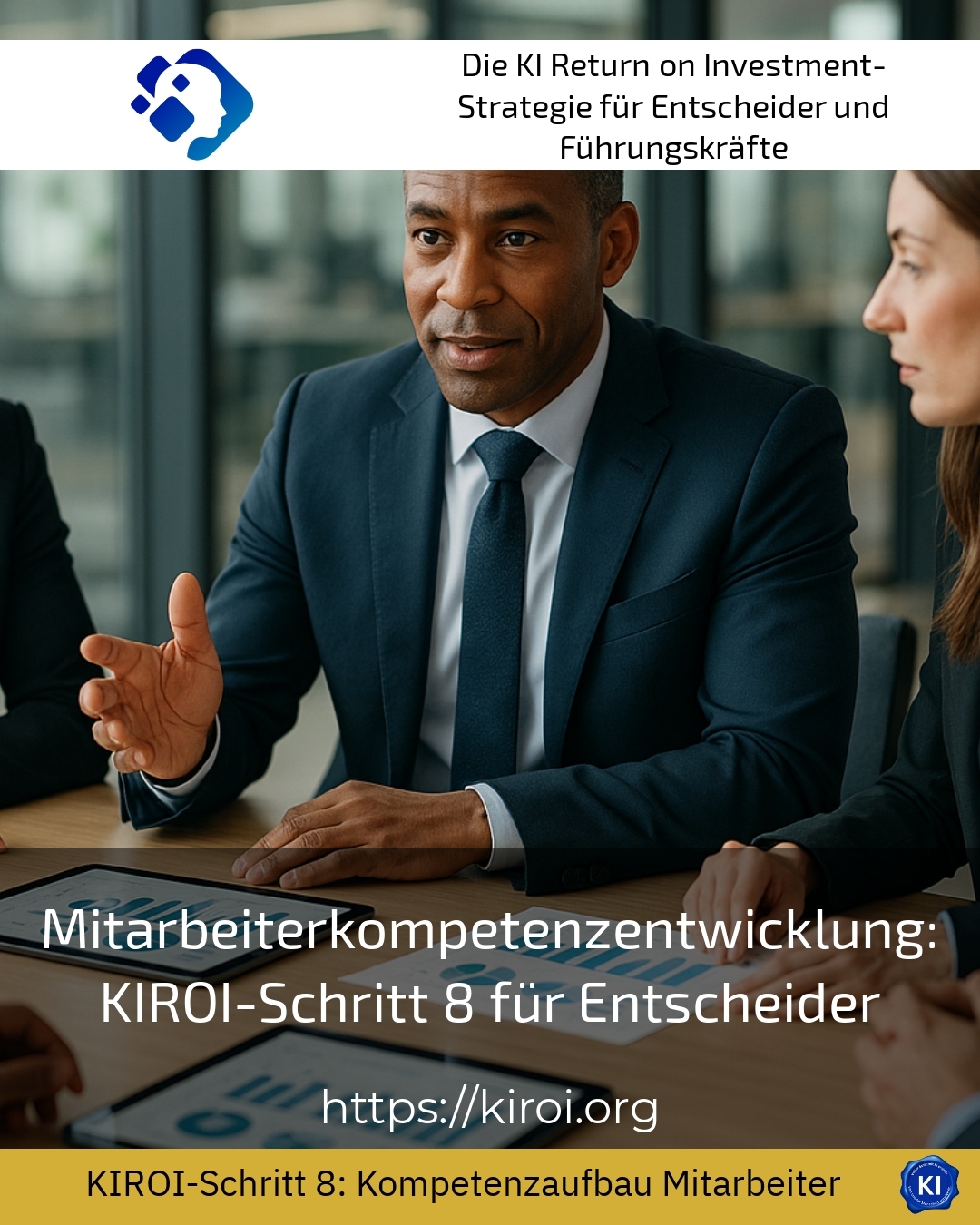
Employee competency development is a crucial factor for business success. It allows for the targeted improvement of employee skills and knowledge, aligning them with the company's strategic objectives. Through focused development, companies can strengthen their competitiveness and boost their innovative capacity. Employee competency development encompasses various approaches, from self-training to coaching and mentoring programmes, which are individually tailored to the needs of the employees.
Steps for implementing sustainable employee skills development
The process of employee competence development consists of several stages. First, existing and required competencies must be analysed to determine the needs. Subsequently, suitable employees are identified and development opportunities are provided. These can be achieved through various methods such as on-the-job training, project work and workshops.
Needs assessment and skills analysis
A central step is the analysis of current and future employee competencies. This is done by evaluating performance reviews and strategic company goals. Based on this analysis, learning objectives are set and suitable development measures are selected.
Use of technologies to promote employee skills development
Modern technologies such as artificial intelligence (AI) offer significant opportunities to support employee competency development. AI-powered systems can create individual learning paths and monitor employee progress. This enables personalised support and optimises skill development[2][6].
Employee Competence Development at Various Levels
Staff competency development takes place on various levels. These include the practical level, the coaching level, and the training level. Each level offers specific methods for employee development. For example, employees learn on the practical level through job rotation or on-the-job training, while on the coaching level they are supported through mentoring and one-on-one coaching [5][7].
Examples from practice
BEST PRACTICE with one customer (name hidden due to NDA contract)An IT company introduced an AI-powered system to analyse employees’ learning needs and recommend tailored further training. This enabled employees to specifically enhance their programming language skills and increase their efficiency[6].
Another example from practiceIn the financial services industry, AI solutions are being used to optimise career paths. HR departments use AI to suggest suitable career options based on employee profiles and objective agreements, thereby strengthening employee retention.
A successful approach also includes the use of interactive learning formats and systematic coaching. These approaches promote not only technical skills but also soft skills and teamwork[2].
Conclusion or My Analysis
Employee competence development is a crucial key factor for business success. By employing innovative technologies and targeted development strategies, companies can strengthen their competitiveness and increase employee satisfaction. The continuous promotion of employee competence development enables companies to react flexibly to changing market conditions and remain successful in the long term[2][6].
Further links from the text above:
– Competence Development: Definition + Successful Examples
– Mastering employee development: the AIROI step for leaders
– Was ist Kompetenzentwicklung?
For more information and if you have any questions, please contact Contact us or read more blog posts on the topic Artificial intelligence here.









 Deutsch
  English (UK)