kiroi.org

KIROI - Artificial Intelligence Return on Invest
The AI strategy for decision-makers and managers

Business excellence for decision-makers & managers by and with Sanjay Sauldie

KIROI - Artificial Intelligence Return on Invest: The AI strategy for decision-makers and managers

KIROI - Artificial Intelligence Return on Invest: The AI strategy for decision-makers and managers

Start » KIROI Step 8: Mastering Employee Competency Development Successfully
28 April 2025

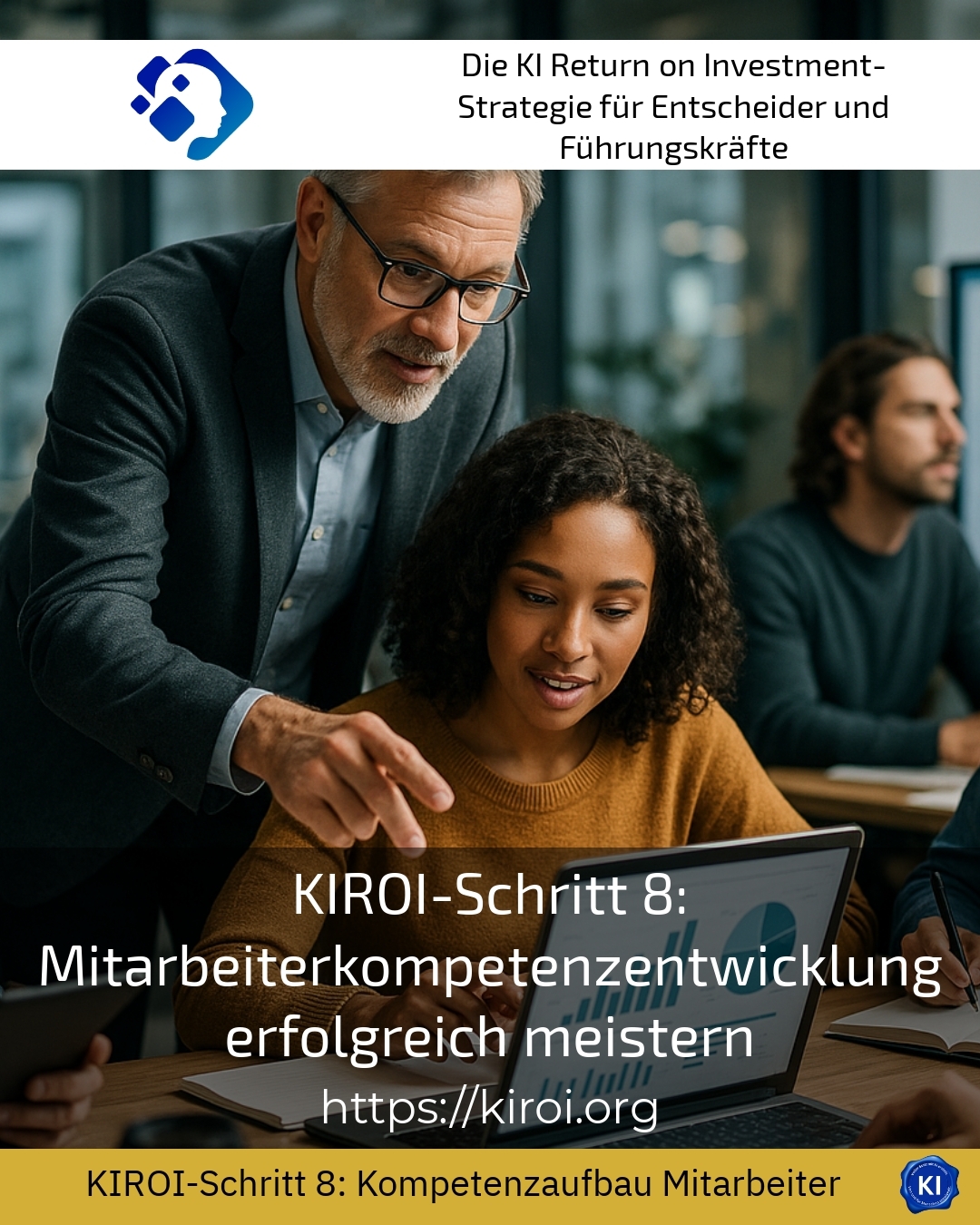
KIROI Step 8: Mastering Employee Competency Development Successfully

4.4
(657)

Mastering Employee Competency Development: A Practical Guide

Employee competency development is a key building block for company success. It supports the targeted enhancement of individual and collective skills and their adaptation to changing requirements. This process encompasses far more than mere further training – it accompanies employees through bespoke development paths, thus ensuring sustainable performance and motivation.

The strategic importance of employee skills development

The targeted promotion of employee skills has direct impacts on productivity, innovation, and competitiveness. Particularly in sectors such as manufacturing, IT, and the service industry, it is evident that companies which take employee competency development seriously are more agile and efficient. For example, a medium-sized mechanical engineering company uses systematic competency models to specifically develop junior staff and equip current employees for digitalisation.

Even in an international advertising agency, soft skills such as communication and problem-solving are specifically developed through teamwork workshops and coaching programmes to bring creative projects to a more successful conclusion. Likewise, an IT service provider benefits from regular on-the-job training, which makes new technologies tangible and prepares employees in a practical way for future tasks.

Cornerstones of effective employee competency development

1. Needs Analysis and Competency Model

The process begins with identifying the specific skills requirements. Companies ascertain which skills are needed today and which will be crucial in the near future. For example, an international logistics service provider defines target competencies to master the challenges of digital supply chain management systems. To this end, the existing skills of employees are systematically compared with the company's objectives.

2. Agreeing individual development plans

Employee skills development is more successful when it is personalised. A large insurance company therefore pursues individual development plans that are flexibly tailored to prior knowledge, goals and career aspirations. These are agreed upon in personal discussions with employees to promote their motivation and enable perfectly suited measures.

3. Practical learning through diverse formats

Learning by doing is essential. Methods such as job rotation, project work or on-the-job training prove to be particularly effective. For example, employees in a pharmaceutical company benefit from versatile experience by rotating between the laboratory, quality control and production. Digital learning platforms also complement traditional seminars and workshops, allowing each employee to develop their skills at their own pace and within their own timeframe.

An IT company combines in-person training with e-learning modules and webinars to efficiently build both technical and social skills.

Supporting employee competency development through specialised coaching

Coaching offers a complementary approach to specifically support employee competence development. Both leaders and specialists benefit from individual guidance from external coaches or internal mentors. For example, a leading automotive supplier supports its team leaders with leadership coaching to manage complex change processes and optimally develop their teams.

Furthermore, employees gain new perspectives through coaching, reflect on their own working methods, and can strengthen their methodological skills, for example, in dealing with conflicts or organising projects. This is often reflected in improved collaboration and greater personal responsibility.

BEST PRACTICE with one customer (name hidden due to NDA contract) In a medium-sized IT company, a programme was established through targeted coaching measures that combines classic specialist training with personal development. Employees reported that this made them feel more confident in taking on new responsibilities. Furthermore, internal communication within the team also significantly improved.

Tips for sustainably implementing employee skills development

For a long-term impact, it is important to design competence development as a continuous process. The following aspects support success:

  • Employee participation: Actively involve employees in the planning and reflection of measures.
  • Diversity of methods: Utilise a combination of in-person training, digital learning formats, practical projects, and coaching.
  • Feedback culture: Regular constructive feedback promotes the learning process and motivates further development.
  • Provide resources: Reserve time and financial means for further training and coaching.
  • Measuring Success: Evaluating the development and impact of skills development with clear criteria.

For example, a leading energy provider integrates routine skills assessments into its staff reviews to make individual development levels transparent and to identify specific areas for support. This allows training measures to be planned precisely and sustainably supports employee skills development.

My analysis

Employee competency development is essential to meet the challenges of a dynamic job market. Companies should focus on a mix of strategic planning, practical learning formats, and individual support through coaching. This approach not only strengthens professional skills but also specifically develops methodological and social competencies. A structured approach with clearly defined development plans and regular evaluation supports sustainable success.

In many industries, successful practical examples demonstrate how employee competence development can be concretely implemented. In particular, the combination of on-the-job learning, individual coaching, and modern digital formats helps to make employees motivated and future-proof.

Further links from the text above:

Competence Development: Definition + Successful Examples [1]

Employee Development: Methods and Benefits [2]

Popular methods for developing employee competencies [3]

Successful Competence Development: Tips and Methods [5]

Meaning and methods of competence development [7]

Employee Development and Competent Development [9]

For more information and if you have any questions, please contact Contact us or read more blog posts on the topic Artificial intelligence here.
How useful was this post?

Click on a star to rate it!

Average rating 4.4 / 5. Vote count: 657

No votes so far! Be the first to rate this post.

Spread the love

transruption.org

The digital toolbox for
the digital winners of today and tomorrow

Business excellence for decision-makers & managers by and with Sanjay Sauldie

transruption
transruption

transruption: The digital toolbox for
the digital winners of today and tomorrow

Start » KIROI Step 8: Mastering Employee Competency Development Successfully
28 April 2025

KIROI Step 8: Mastering Employee Competency Development Successfully

4.4
(657)

Mastering Employee Competency Development: A Practical Guide

Employee competency development is a key building block for company success. It supports the targeted enhancement of individual and collective skills and their adaptation to changing requirements. This process encompasses far more than mere further training – it accompanies employees through bespoke development paths, thus ensuring sustainable performance and motivation.

The strategic importance of employee skills development

The targeted promotion of employee skills has direct impacts on productivity, innovation, and competitiveness. Particularly in sectors such as manufacturing, IT, and the service industry, it is evident that companies which take employee competency development seriously are more agile and efficient. For example, a medium-sized mechanical engineering company uses systematic competency models to specifically develop junior staff and equip current employees for digitalisation.

Even in an international advertising agency, soft skills such as communication and problem-solving are specifically developed through teamwork workshops and coaching programmes to bring creative projects to a more successful conclusion. Likewise, an IT service provider benefits from regular on-the-job training, which makes new technologies tangible and prepares employees in a practical way for future tasks.

Cornerstones of effective employee competency development

1. Needs Analysis and Competency Model

The process begins with identifying the specific skills requirements. Companies ascertain which skills are needed today and which will be crucial in the near future. For example, an international logistics service provider defines target competencies to master the challenges of digital supply chain management systems. To this end, the existing skills of employees are systematically compared with the company's objectives.

2. Agreeing individual development plans

Employee skills development is more successful when it is personalised. A large insurance company therefore pursues individual development plans that are flexibly tailored to prior knowledge, goals and career aspirations. These are agreed upon in personal discussions with employees to promote their motivation and enable perfectly suited measures.

3. Practical learning through diverse formats

Learning by doing is essential. Methods such as job rotation, project work or on-the-job training prove to be particularly effective. For example, employees in a pharmaceutical company benefit from versatile experience by rotating between the laboratory, quality control and production. Digital learning platforms also complement traditional seminars and workshops, allowing each employee to develop their skills at their own pace and within their own timeframe.

An IT company combines in-person training with e-learning modules and webinars to efficiently build both technical and social skills.

Supporting employee competency development through specialised coaching

Coaching offers a complementary approach to specifically support employee competence development. Both leaders and specialists benefit from individual guidance from external coaches or internal mentors. For example, a leading automotive supplier supports its team leaders with leadership coaching to manage complex change processes and optimally develop their teams.

Furthermore, employees gain new perspectives through coaching, reflect on their own working methods, and can strengthen their methodological skills, for example, in dealing with conflicts or organising projects. This is often reflected in improved collaboration and greater personal responsibility.

BEST PRACTICE with one customer (name hidden due to NDA contract) In a medium-sized IT company, a programme was established through targeted coaching measures that combines classic specialist training with personal development. Employees reported that this made them feel more confident in taking on new responsibilities. Furthermore, internal communication within the team also significantly improved.

Tips for sustainably implementing employee skills development

For a long-term impact, it is important to design competence development as a continuous process. The following aspects support success:

  • Employee participation: Actively involve employees in the planning and reflection of measures.
  • Diversity of methods: Utilise a combination of in-person training, digital learning formats, practical projects, and coaching.
  • Feedback culture: Regular constructive feedback promotes the learning process and motivates further development.
  • Provide resources: Reserve time and financial means for further training and coaching.
  • Measuring Success: Evaluating the development and impact of skills development with clear criteria.

For example, a leading energy provider integrates routine skills assessments into its staff reviews to make individual development levels transparent and to identify specific areas for support. This allows training measures to be planned precisely and sustainably supports employee skills development.

My analysis

Employee competency development is essential to meet the challenges of a dynamic job market. Companies should focus on a mix of strategic planning, practical learning formats, and individual support through coaching. This approach not only strengthens professional skills but also specifically develops methodological and social competencies. A structured approach with clearly defined development plans and regular evaluation supports sustainable success.

In many industries, successful practical examples demonstrate how employee competence development can be concretely implemented. In particular, the combination of on-the-job learning, individual coaching, and modern digital formats helps to make employees motivated and future-proof.

Further links from the text above:

Competence Development: Definition + Successful Examples [1]

Employee Development: Methods and Benefits [2]

Popular methods for developing employee competencies [3]

Successful Competence Development: Tips and Methods [5]

Meaning and methods of competence development [7]

Employee Development and Competent Development [9]

For more information and if you have any questions, please contact Contact us or read more blog posts on the topic Artificial intelligence here.
How useful was this post?

Click on a star to rate it!

Average rating 4.4 / 5. Vote count: 657

No votes so far! Be the first to rate this post.

Spread the love

Other content worth reading:

KIROI Step 8: Mastering Employee Competency Development Successfully

written by:

Keywords:

#Big Data #Coaching #compliance #Datenintelligenz #Ethikrichtlinien #InnovationDurchAchtsamkeit #Kompetenzmodelle #artificial intelligence #Mitarbeiterkompetenzentwicklung #Sustainability #PraxisorientiertesLernen #SmartData #Unternehmenskultur #Verantwortungsketten #further training

Follow me on my channels:

Questions on the topic? Contact us now without obligation

Contact us

[wpforms id="331781" title="false"]

More articles worth reading

    Leave a comment