
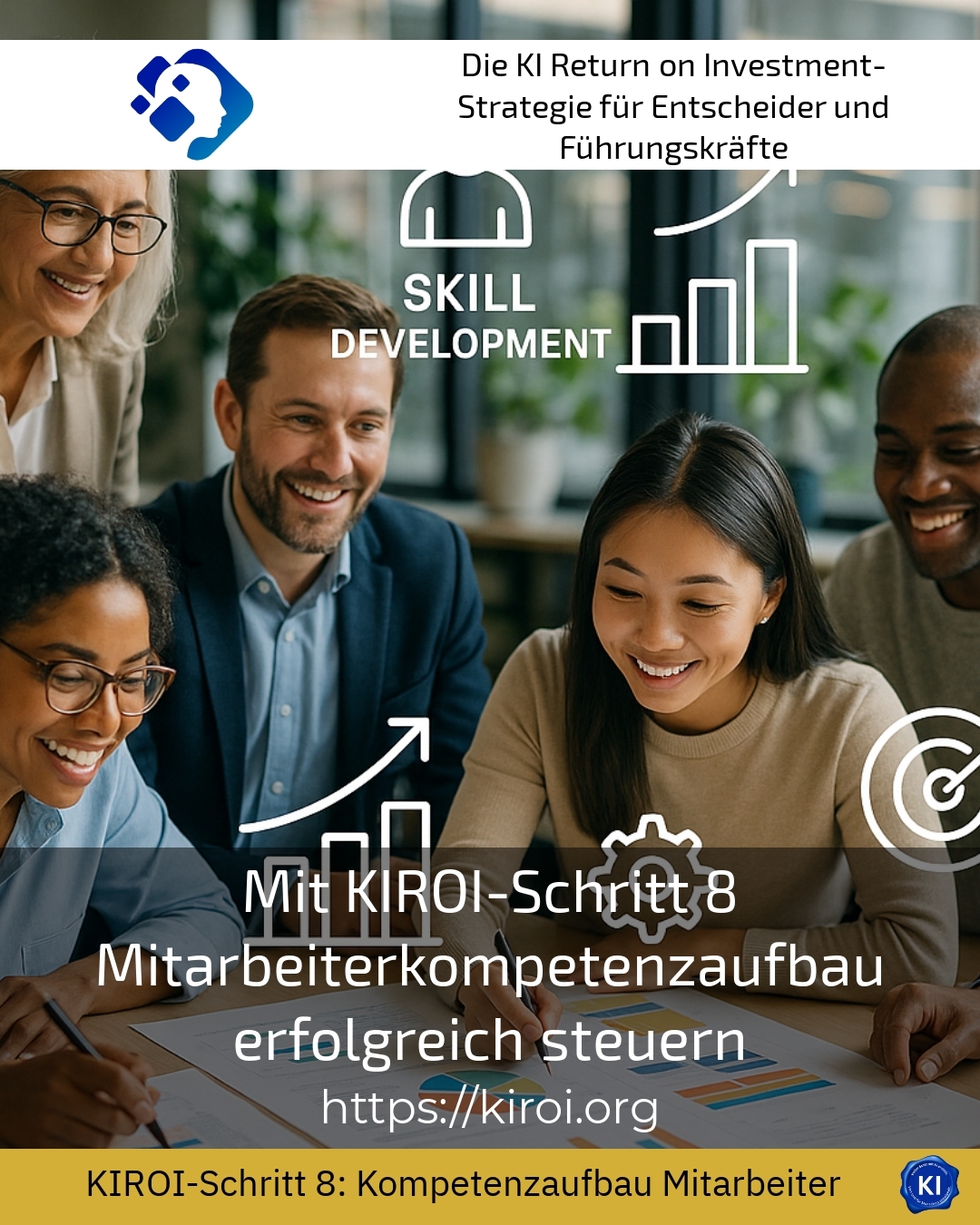
The development and enhancement of employee competencies, referred to as employee competency building, is one of the most crucial tasks in personnel management. Effective methods and strategies are essential to specifically foster the skills and strengths of employees and to ensure the long-term success of a company. In this article, we will examine the most important approaches and industry examples to successfully manage employee competency building.
Fundamentals of Competency Management
Effective competency management begins with the clear definition of objectives and the analysis of current competencies within the company. This includes identifying needs, analysing the requirements of various positions, and developing a suitable competency model [2][4]. Such a model typically differentiates between various competency areas such as specialist, methodological, social, and self-competencies [4].
Methods for skills development
To specifically develop employee competencies, there are several proven methods. These include: on-the-job training, mentoring, coaching, and the use of case studies [3][5]. These methods allow employees to improve their skills in real work contexts or to develop further through feedback and individual support.
Another important aspect is **self-training**, where employees build up and expand their competencies independently. This is often done through the use of constructivism, which encourages employees' self-initiative [5].
Strategies for Employee Skill Development
To make employee competency development successful, several strategic steps are important. These include needs assessment, the identification and nurturing of key employees, and the development of suitable development plans [5].
A central element is the **involvement of all stakeholders** to ensure the acceptance and practicality of the measures. This includes the participation of managers, HR experts, and the employees themselves [2].
Practical examples from the industry
An example of successful employee skills development is the implementation of **job rotation and project work**. These approaches allow employees to take on new roles and improve their skills in various contexts [3].
BEST PRACTICE with one customer (name hidden due to NDA contract) We have supported the introduction of regular **workshops** and **mentoring programmes** in a medium-sized company. These measures have led to employees being able to significantly expand their social and professional competencies. The results were measurable not only in performance but also in increased employee satisfaction.
Effective Instruments for Skills Development
In addition to the methods listed above, **competency models** also play an important role in employee competency development. These models help to identify relevant competencies and group them into meaningful categories in order to systematically develop employees' skills [2][4].
Assessment Centres and 360-degree feedback are also effective tools for assessing and developing employees. They offer comprehensive insights into employees' strengths and weaknesses and enable targeted development measures [2].
My analysis
In summary, employee competency development is a crucial factor for the long-term success of a company. Through the targeted application of competency models, mentoring programmes, and theory-practice methods, companies can effectively support their employees and enhance organisational performance. It is important that all stakeholders are involved in the development process to ensure high acceptance and practical applicability.
Further links from the text above:
For further information, please visit:
Popular methods for skills development
Competency Model for Successful Personnel Development
Successful competence development strategies
For more information and if you have any questions, please contact Contact us or read more blog posts on the topic Artificial intelligence here.









 Deutsch
  English (UK)