kiroi.org

KIROI - Artificial Intelligence Return on Invest
The AI strategy for decision-makers and managers

Business excellence for decision-makers & managers by and with Sanjay Sauldie

KIROI - Artificial Intelligence Return on Invest: The AI strategy for decision-makers and managers

KIROI - Artificial Intelligence Return on Invest: The AI strategy for decision-makers and managers

Start » Employee skills development: KIROI Step 8 for managers
15 August 2024

Employee skills development: KIROI Step 8 for managers

4.4
(1757)

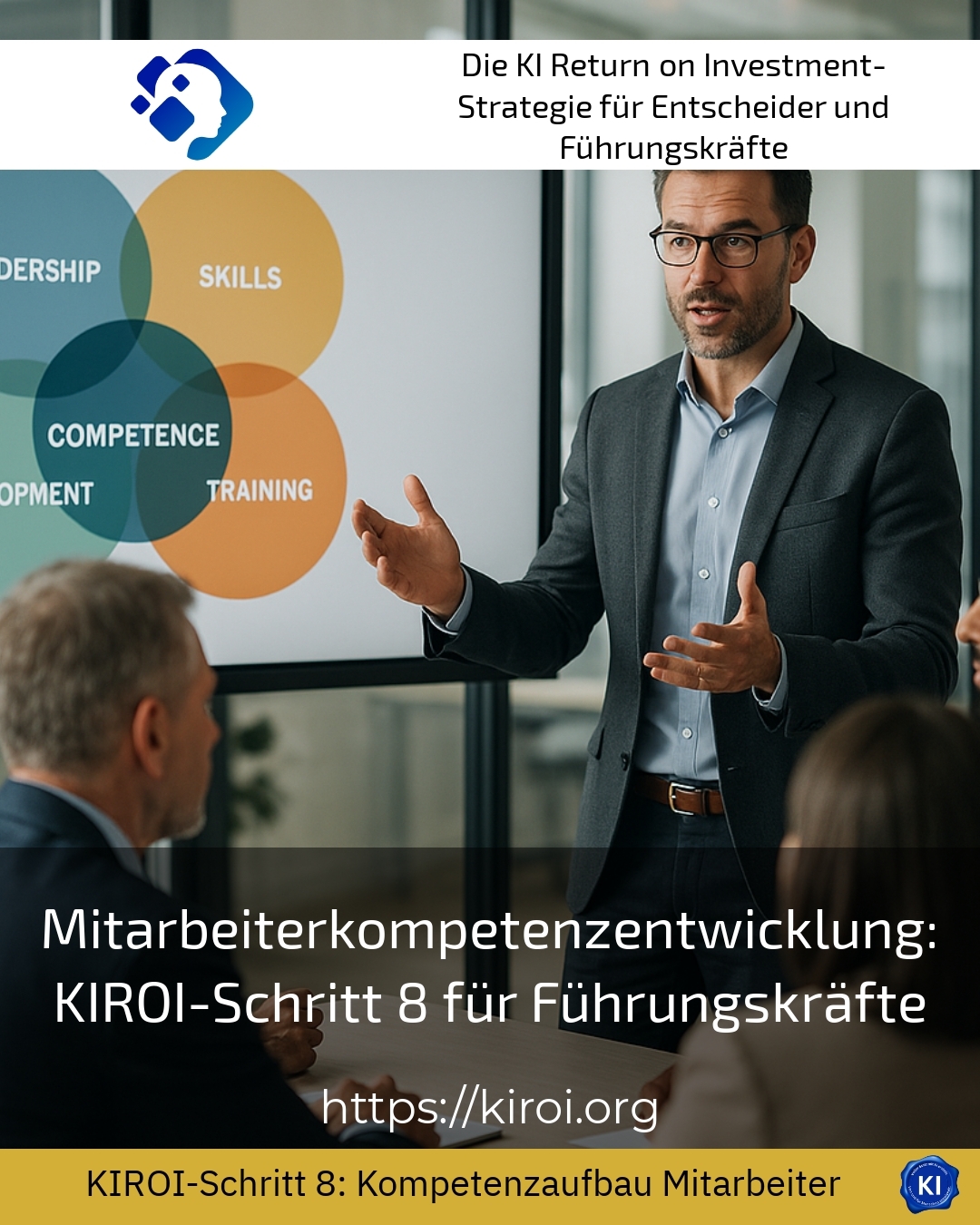
The modern world of work demands ever greater commitment from leaders in employee competency development. Specifically, the KIROI Step 8 illustrates how leaders can specifically recognise and foster the potential within their teams. This concerns not only technical qualifications but also social and methodological competencies, which secure long-term company success. Employee competency development thus becomes a central leadership task that must be strategically supported.

Developing employee skills as a key task for managers

Managers have a special responsibility for the development of their employees. They must not only strengthen existing competencies but also foster new skills that are important for future challenges. In practice, this means creating individual development plans and actively supporting learning processes. Companies from various sectors report that this is often achieved through a combination of coaching, mentoring, and practical projects.

An example from the IT sector demonstrates how leaders in agile teams introduce development cycles that allow for regular reflection on competence development. This provides employees with targeted feedback and enables them to continuously improve their skills. In the manufacturing industry, employees are supported through job rotation and practical training to strengthen both methodological and social competence. In the service sector too, leaders report on successful pilot projects where structured competence profiles have made individual development needs visible.

The role of KIROI Step 8 in employee competency development

KIROI Step 8 focuses on sustainably ensuring and integrating learning successes into daily work. Leaders support their employees in applying and consolidating new skills. This step uses methods that go beyond one-off training sessions. Emphasis is placed on support through coaching and peer feedback.

In the automotive industry, executives use this step to immediately implement innovative manufacturing methods in practice after training. This not only strengthens technical skills but also promotes team communication and problem-solving abilities. An example from the healthcare sector shows how empathy and conflict resolution skills of nursing staff can be improved through continuous coaching, leading to increased patient satisfaction. In banks, mentoring programmes are used to specifically develop leadership skills in junior managers, in order to support the transition to digitised work processes.

Practical tips for implementing employee competence development

Leaders who want to actively promote employee competency development should consider the following aspects:

  • Make use of regular feedback discussions to discuss learning progress and make areas for development transparent.
  • Define individual learning objectives together with employees to ensure targeted competence development.
  • Employ a blended learning approach: alongside traditional seminars, promote practice-oriented learning formats such as job rotation or project work.
  • Using coaching as ongoing support to overcome personal and professional challenges.
  • To create a space for exchange of experience that promotes peer learning and collegial advice.

In the mechanical engineering sector, leaders have found that small, regular learning impulses are more effective than infrequent large events. Startups are increasingly using digital learning platforms, which allow for individual pacing and simultaneously make learning success measurable. In education, blended learning, a combination of in-person and online formats, is increasingly being integrated to develop diverse competency areas simultaneously.

BEST PRACTICE with one customer (name hidden due to NDA contract) The manager of a medium-sized IT company implemented systematic coaching cycles for their department heads. Through regular reflection sessions and targeted practical tasks, not only did professional skills improve, but leadership competencies also became visibly enhanced. Employee motivation increased significantly as a result, and the company reported a more harmonious team atmosphere.

How transruptive coaching supports employee competency development

Transruptions-Coaching supports leaders and teams throughout the entire development of new competencies. It provides impetus for reflection and helps to defuse areas of tension in change processes. Leaders gain a trained perspective to better manage their employees' learning process and unlock individual potential. Particularly with complex projects that require employee competency development, this supportive guidance is often crucial for success.

Companies from the financial sector report that transruption coaching has led to greater acceptance of change measures. Temporary employment agencies report that employees can act more confidently in new roles through targeted coaching. Project managers in the pharmaceutical industry use transruption coaching to support teams in implementing complex process changes.

My analysis

Employee skills development is far more than a series of training sessions. KIROI Step 8 underscores the importance of continuous support and integration of learning processes. Leaders must be actively involved to foster individual strengths and stabilise team dynamics. The use of various methods, from coaching to mentoring and practical projects, proves effective. Companies that strategically anchor employee skills development create the best conditions to remain competitive in a dynamic market environment.

Further links from the text above:

Successful Skill Development: 9 Tips and 3 Strategies

Competence development as a supplement to professional suitability

Competence Development: Definition + Successful Examples

For more information and if you have any questions, please contact Contact us or read more blog posts on the topic Artificial intelligence here.
How useful was this post?

Click on a star to rate it!

Average rating 4.4 / 5. Vote count: 1757

No votes so far! Be the first to rate this post.

Spread the love

transruption.org

The digital toolbox for
the digital winners of today and tomorrow

Business excellence for decision-makers & managers by and with Sanjay Sauldie

transruption
transruption

transruption: The digital toolbox for
the digital winners of today and tomorrow

Start » Employee skills development: KIROI Step 8 for managers
15 August 2024

Employee skills development: KIROI Step 8 for managers

4.4
(1757)

The modern world of work demands ever greater commitment from leaders in employee competency development. Specifically, the KIROI Step 8 illustrates how leaders can specifically recognise and foster the potential within their teams. This concerns not only technical qualifications but also social and methodological competencies, which secure long-term company success. Employee competency development thus becomes a central leadership task that must be strategically supported.

Developing employee skills as a key task for managers

Managers have a special responsibility for the development of their employees. They must not only strengthen existing competencies but also foster new skills that are important for future challenges. In practice, this means creating individual development plans and actively supporting learning processes. Companies from various sectors report that this is often achieved through a combination of coaching, mentoring, and practical projects.

An example from the IT sector demonstrates how leaders in agile teams introduce development cycles that allow for regular reflection on competence development. This provides employees with targeted feedback and enables them to continuously improve their skills. In the manufacturing industry, employees are supported through job rotation and practical training to strengthen both methodological and social competence. In the service sector too, leaders report on successful pilot projects where structured competence profiles have made individual development needs visible.

The role of KIROI Step 8 in employee competency development

KIROI Step 8 focuses on sustainably ensuring and integrating learning successes into daily work. Leaders support their employees in applying and consolidating new skills. This step uses methods that go beyond one-off training sessions. Emphasis is placed on support through coaching and peer feedback.

In the automotive industry, executives use this step to immediately implement innovative manufacturing methods in practice after training. This not only strengthens technical skills but also promotes team communication and problem-solving abilities. An example from the healthcare sector shows how empathy and conflict resolution skills of nursing staff can be improved through continuous coaching, leading to increased patient satisfaction. In banks, mentoring programmes are used to specifically develop leadership skills in junior managers, in order to support the transition to digitised work processes.

Practical tips for implementing employee competence development

Leaders who want to actively promote employee competency development should consider the following aspects:

  • Make use of regular feedback discussions to discuss learning progress and make areas for development transparent.
  • Define individual learning objectives together with employees to ensure targeted competence development.
  • Employ a blended learning approach: alongside traditional seminars, promote practice-oriented learning formats such as job rotation or project work.
  • Using coaching as ongoing support to overcome personal and professional challenges.
  • To create a space for exchange of experience that promotes peer learning and collegial advice.

In the mechanical engineering sector, leaders have found that small, regular learning impulses are more effective than infrequent large events. Startups are increasingly using digital learning platforms, which allow for individual pacing and simultaneously make learning success measurable. In education, blended learning, a combination of in-person and online formats, is increasingly being integrated to develop diverse competency areas simultaneously.

BEST PRACTICE with one customer (name hidden due to NDA contract) The manager of a medium-sized IT company implemented systematic coaching cycles for their department heads. Through regular reflection sessions and targeted practical tasks, not only did professional skills improve, but leadership competencies also became visibly enhanced. Employee motivation increased significantly as a result, and the company reported a more harmonious team atmosphere.

How transruptive coaching supports employee competency development

Transruptions-Coaching supports leaders and teams throughout the entire development of new competencies. It provides impetus for reflection and helps to defuse areas of tension in change processes. Leaders gain a trained perspective to better manage their employees' learning process and unlock individual potential. Particularly with complex projects that require employee competency development, this supportive guidance is often crucial for success.

Companies from the financial sector report that transruption coaching has led to greater acceptance of change measures. Temporary employment agencies report that employees can act more confidently in new roles through targeted coaching. Project managers in the pharmaceutical industry use transruption coaching to support teams in implementing complex process changes.

My analysis

Employee skills development is far more than a series of training sessions. KIROI Step 8 underscores the importance of continuous support and integration of learning processes. Leaders must be actively involved to foster individual strengths and stabilise team dynamics. The use of various methods, from coaching to mentoring and practical projects, proves effective. Companies that strategically anchor employee skills development create the best conditions to remain competitive in a dynamic market environment.

Further links from the text above:

Successful Skill Development: 9 Tips and 3 Strategies

Competence development as a supplement to professional suitability

Competence Development: Definition + Successful Examples

For more information and if you have any questions, please contact Contact us or read more blog posts on the topic Artificial intelligence here.
How useful was this post?

Click on a star to rate it!

Average rating 4.4 / 5. Vote count: 1757

No votes so far! Be the first to rate this post.

Spread the love

Other content worth reading:

Employee skills development: KIROI Step 8 for managers

written by:

Keywords:

#Coaching #compliance #Ethikrichtlinien 1TP5ManagersBalance #yellow #Kompetenzmanagement #Mitarbeiterkompetenzentwicklung #Sustainability #Unternehmenskultur #Verantwortungsketten

Follow me on my channels:

Questions on the topic? Contact us now without obligation

Contact us

[wpforms id="331781" title="false"]

More articles worth reading

    Leave a comment