
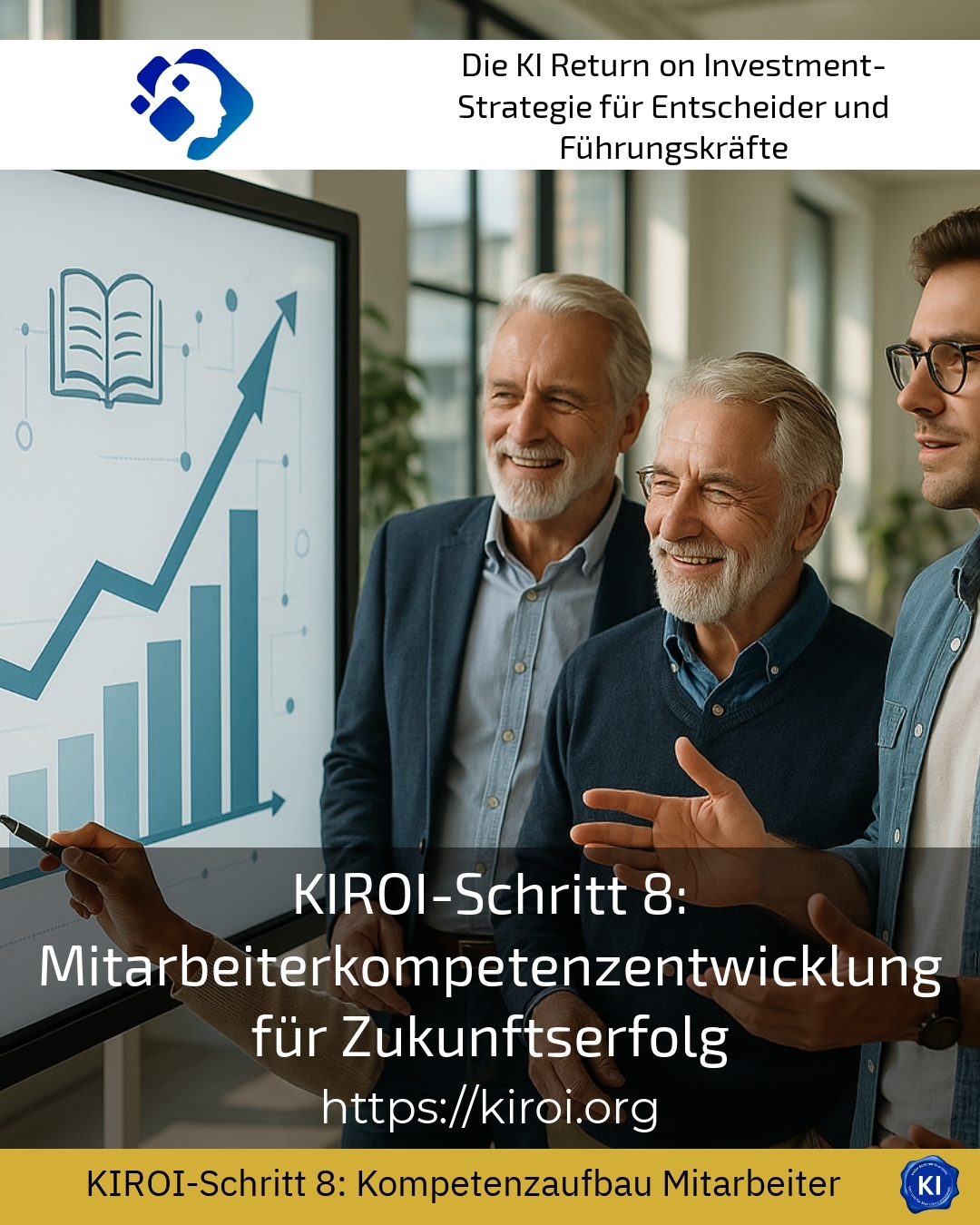
Employee competence development: The key to future viability
Continuous employee skills development plays a central role in enabling companies to thrive in a dynamic world. Time and again, managers approach us and share how challenging it is to keep teams permanently fit for new challenges. This is not just about imparting individual skills. It's about establishing a holistic support concept that empowers employees and provides impetus for sustainable learning.
Why employee skills development is indispensable today
Companies frequently report a constantly growing need for new skills, primarily driven by technological advancements and new working methods. Employee skills development helps to actively manage these changes. It's about specifically supporting employees so they can confidently navigate new areas of responsibility. Only in this way can the workforce remain future-proof and the company remain competitive.
An important aspect here is the individual consideration of employees, as each team member brings different strengths and development needs. An individually tailored development plan helps to specifically unlock potential and expand existing expertise, as competence development is not a one-off project but an ongoing process.
Practical approaches to employee competence development
Competence development is evident in successful companies in a variety of ways. One example of this is companies that place a strong focus on mentoring programmes. Here, experienced employees regularly support new colleagues in order to impart knowledge in a practical way.
AIROI BEST PRACTICE at company XYZ (name changed due to NDA contract) In this case, an internal mentoring programme was introduced, where experienced employees shared their knowledge of complex technologies and agile working methods. Participants reported how valuable the exchange of experience was for them to quickly get to grips with new tasks and gain confidence.
Integrating blended learning approaches is also an effective method. Combinations of in-person training, online further education, and practical exercises enable flexible and sustainable learning. Regular feedback rounds support success here, ensuring that learning impulses are applied in everyday work.
AIROI BEST PRACTICE at ABC (name changed due to NDA contract) A blended learning programme for managers was introduced there, specifically aimed at strengthening digital skills. In addition to online modules, practical workshops were held where managers tried out new tools and developed concrete application scenarios. This combination of theory and practice helped to ensure that what was learned was retained long-term.
Another proven strategy is to foster a corporate culture that promotes and normalises lifelong learning. Leaders can serve as role models here through their own behaviour, by openly communicating their own learning processes and supporting their teams. Such a culture builds trust and motivation to develop further.
AIROI BEST PRACTICE at DEF (name changed due to NDA contract) This company deliberately took steps to position leaders as learning ambassadors. This fostered an atmosphere where further training became a normal part of the work process, and employees regularly acquired new skills that directly fed into their projects.
The right balance between company goals and employee needs
Companies often approach us with the question of how to design employee competence development so that it not only meets individual expectations but also supports strategic goals. This is achieved when development plans are consistently adapted to the future requirements of the market and the industry. The analysis of existing competencies and their alignment with company objectives forms the basis.
An open exchange with employees is important in order to understand their personal goals and potential. Clients often report that this dialogue leads to solutions that benefit both sides and sustainably strengthen motivation.
Impulse through targeted guidance and coaching
Professional support through coaching not only accompanies the learning process but also provides impetus for practical implementation. We see in many places how employee competence development is characterised by moderated coaching that supports individual projects and addresses specific issues.
The focus is not just on making employees fit, but on empowering them to tackle new challenges independently. This is how the development process becomes permanently embedded and part of the company's DNA.
My analysis
Consistency and individual support are essential features of successful employee competency development. Companies that follow this path create a learning-friendly environment in which all participants can flourish. The combination of clear goals, individual guidance, and a lived learning culture ensures that employees are also equipped for future requirements. With the right support, a dynamic process emerges that offers both stability and flexibility.
Further links from the text above:
Successful Competence Development: 9 Tips and 3 Methods [1]
5 tips for building skills in your team [2]
Competence Development: Definition + Successful Examples [4]
For more information and if you have any questions, please contact Contact us on or read further blog posts on the topic Artificial Intelligence Blog here.








 Deutsch
  English (UK)