
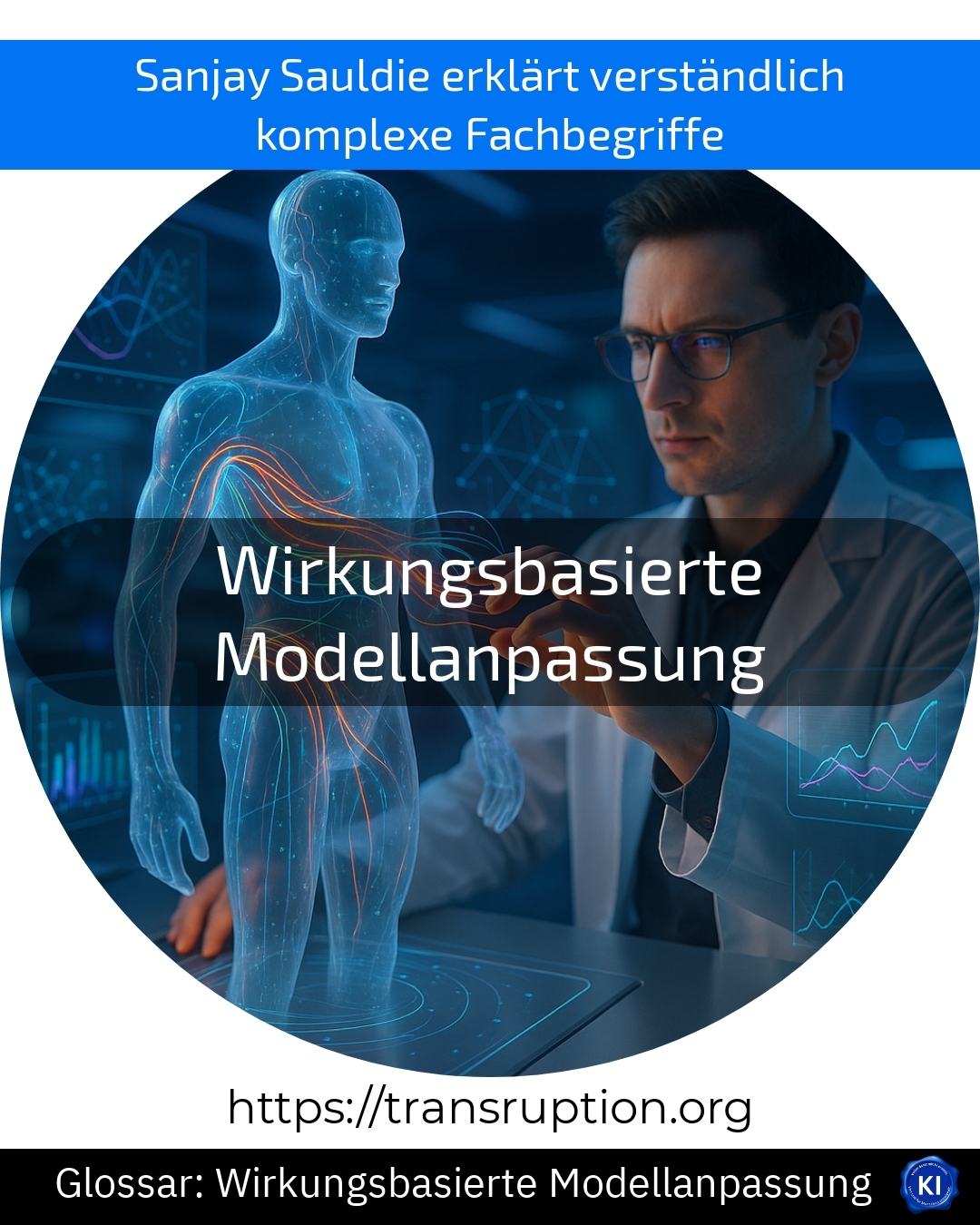
Performance-based model adaptation is particularly relevant in the fields of Artificial Intelligence, Big Data and Smart Data, as well as in Industry and Industry 4.0. The aim is to specifically modify digital models so that they lead to better results. For example, a model could be software that predicts when a machine needs maintenance.
Typically, a company gathers a lot of data about production. With impact-based model calibration, this data is used to improve the model so that predictions become even more accurate. The key is not to change just anything, but to make targeted adjustments in the areas where the greatest impact can be achieved.
A clear example: Suppose a factory uses sensors to monitor machinery. An AI model is intended to predict failures. After initial test runs, it becomes apparent that the model is often incorrect. The developers then specifically examine which data and functions are particularly important and adapt the model in a results-oriented manner. In the end, the predictions are much more reliable, and production runs more smoothly.
With performance-based model adaptation, companies can make their processes more efficient and future-proof.










 Deutsch
  English (UK)