
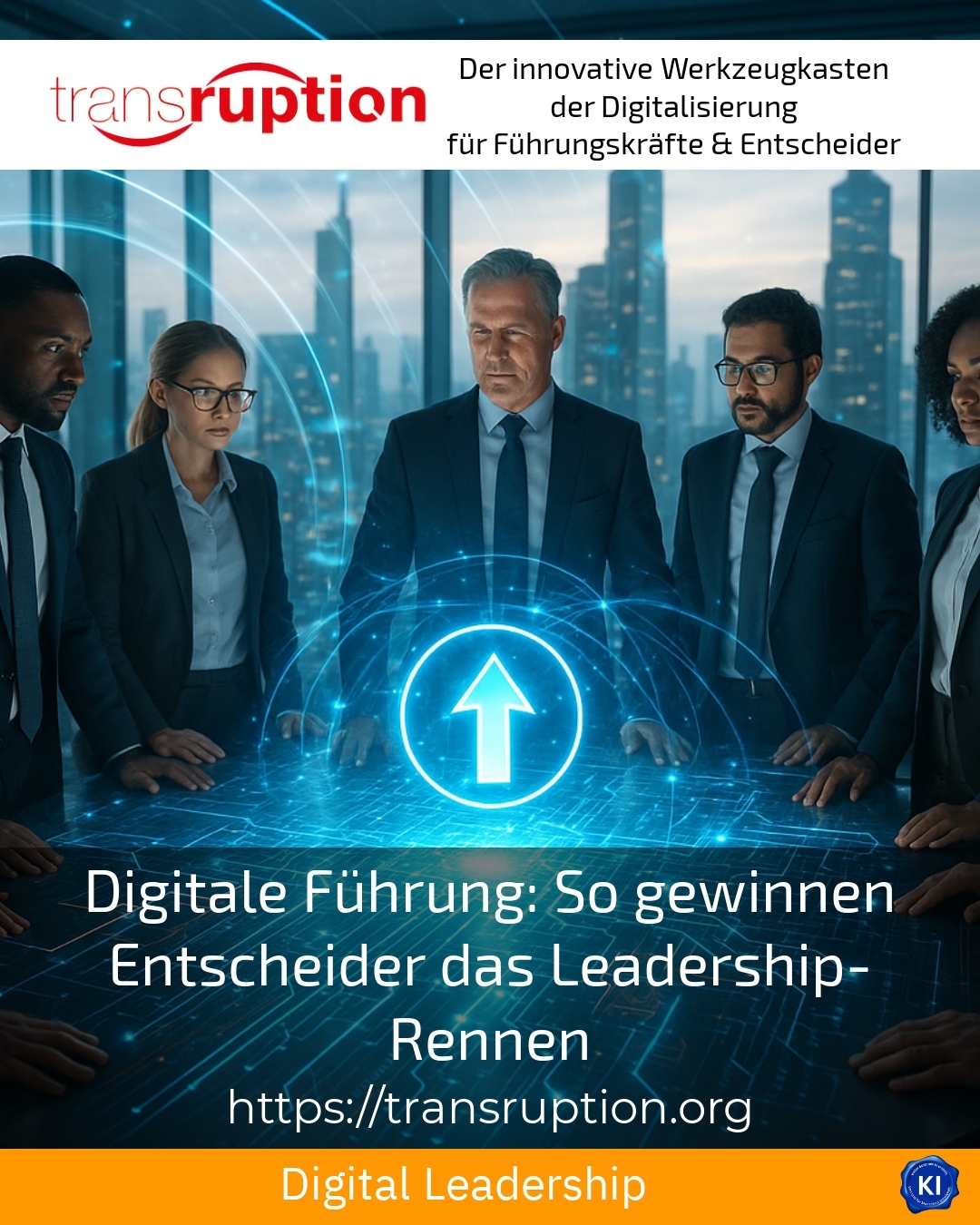
Digital transformation presents leaders with new challenges. Digital leadership is becoming increasingly important as it helps decision-makers succeed in the leadership race. It combines technological expertise with human finesse to provide direction in a dynamic working world. Modern leadership skills can be used to motivate teams, drive innovation and ultimately secure competitive advantages.
Why Digital Leadership is Essential for Decision-Makers Today
Companies in a fast-paced, digitised world are usually under intense competitive pressure. Decision-makers often report that with traditional leadership approaches and rigid structures, they can no longer react with sufficient flexibility. Contemporary leadership is therefore more than just the use of digital tools – it encompasses a holistic understanding of networked processes and new ways of working.
This is exemplified by a medium-sized mechanical engineering company, showing how digital leadership can significantly shorten innovation cycles. Agile methods were introduced and digital collaboration platforms were used to more effectively connect both internal teams and external partners. This combination supported rapid adaptation to new market demands, which significantly strengthened competitiveness.
In a software company from the IT sector, employee engagement was increased through digital leadership by establishing more flexible home-working models. Managers enabled self-directed work with the help of digital workflow tools, which not only increased team satisfaction but also productivity.
BEST PRACTICE with Client (Name withheld due to NDA): In an international service company, transruptions-coaching supported the transformation process in the areas of leadership and communication. This support helped those in charge to reduce resistance and sustainably introduce a digital leadership culture, which had a positive impact on motivation and collaboration.
Core competencies of effective leadership in the digital age
Decision-makers who want to win the leadership race need a bundle of competencies. These particularly include:
- Technological competence Understanding new tools and their sensible integration into processes.
- Agility and flexibility Rapid adaptation to changing framework conditions and promotion of self-determined action.
- Communication skills Transparent and regular communication builds trust and provides direction.
- Employee empowerment Teams are empowered to work in a self-organised and creative manner.
- Collaboration skills Networked collaboration across departments and locations.
In practice, this is shown in an international trading company that trained its managers to make data-driven decisions and establish feedback cultures. This optimised the flow of information and increased the speed of response to market changes.
Another example is a financial services provider that introduced a digital learning platform to continuously train executives and employees. This strengthened the mindset for innovation and the shared understanding of goals in an ever-changing environment.
Digital leadership also has an effect in an energy group, as leaders act as catalysts and create innovation-promoting structures. This includes the targeted use of collaboration tools and transparent information policies that make changes understandable and reduce anxieties.
How Transruption Coaching Supports Decision-Makers in Digital Leadership
Many decision-makers seek guidance in the digital transformation of their leadership culture. transruptions-Coaching supports project teams and leaders by providing impetus for the implementation of modern leadership concepts. This isn't just about technology, but primarily about collaboration and strengthening one's own leadership role in a digital setting.
Individually, thematic priorities are set, for example:
- Developing a clear mission statement for digital leadership
- Training in the use of digital tools to improve communication and collaboration
- Executive coaching to foster agility and a willingness to innovate
- Accompanying change management in transformation processes
Best Practice with Client (Name withheld due to NDA agreement): A medium-sized manufacturing company used transruption coaching to advise executives in the transformation from hierarchical to agile collaboration. Targeted impulses actively shaped the cultural change and reimagined leadership.
Recommendations for decision-makers in the context of digital leadership
To be successful in the race for leadership, several concrete steps are recommended:
- Reflect on your role as a leader: Digital Leadership means being more of a coach and facilitator than purely a decision-maker.
- Promote continuous skills development Invest in training on digital tools and agile methods.
- Set clear goals and values A shared understanding facilitates digital collaboration.
- Utilise digital collaboration platforms. These increase transparency and speed up decision-making processes.
- Actively participate in change processes: Change management is central to sustainable success.
For example, a publishing house implemented a proprietary social intranet that significantly facilitated exchange between editorial, marketing, and sales. Managers organised regular digital feedback rounds, which strengthened cohesion and fostered creative ideas.
Likewise, a logistics provider demonstrates how transparent communication, combined with digitally supported planning processes, integrates employees more strongly and thus increases operational efficiency.
BEST PRACTICE with the client (Name withheld due to NDA agreement): A technology start-up benefited from coaching that specifically imparted agile leadership methods in conjunction with digital tools. This fostered self-organising teams and accelerated product development.
My analysis
Digital leadership stands for a modern, holistic leadership style that combines technical expertise with human leadership skills. Decision-makers who consistently implement this form of leadership gain agility, innovative strength, and employee satisfaction. Digital leadership is not merely a technical necessity, but above all an approach that empowers teams and makes a company future-proof. Support from transruption coaching offers practical assistance that enables decision-makers to successfully shape digital transformation.
Further links from the text above:
Digital leadership: Leading in the digital transformation
Digital Leadership: How to Succeed with Leadership 4.0
Digital leadership: trends & challenges
For more information and if you have any questions, please contact Contact us or read more blog posts on the topic TRANSRUPTION here.












 Deutsch
  English (UK)