

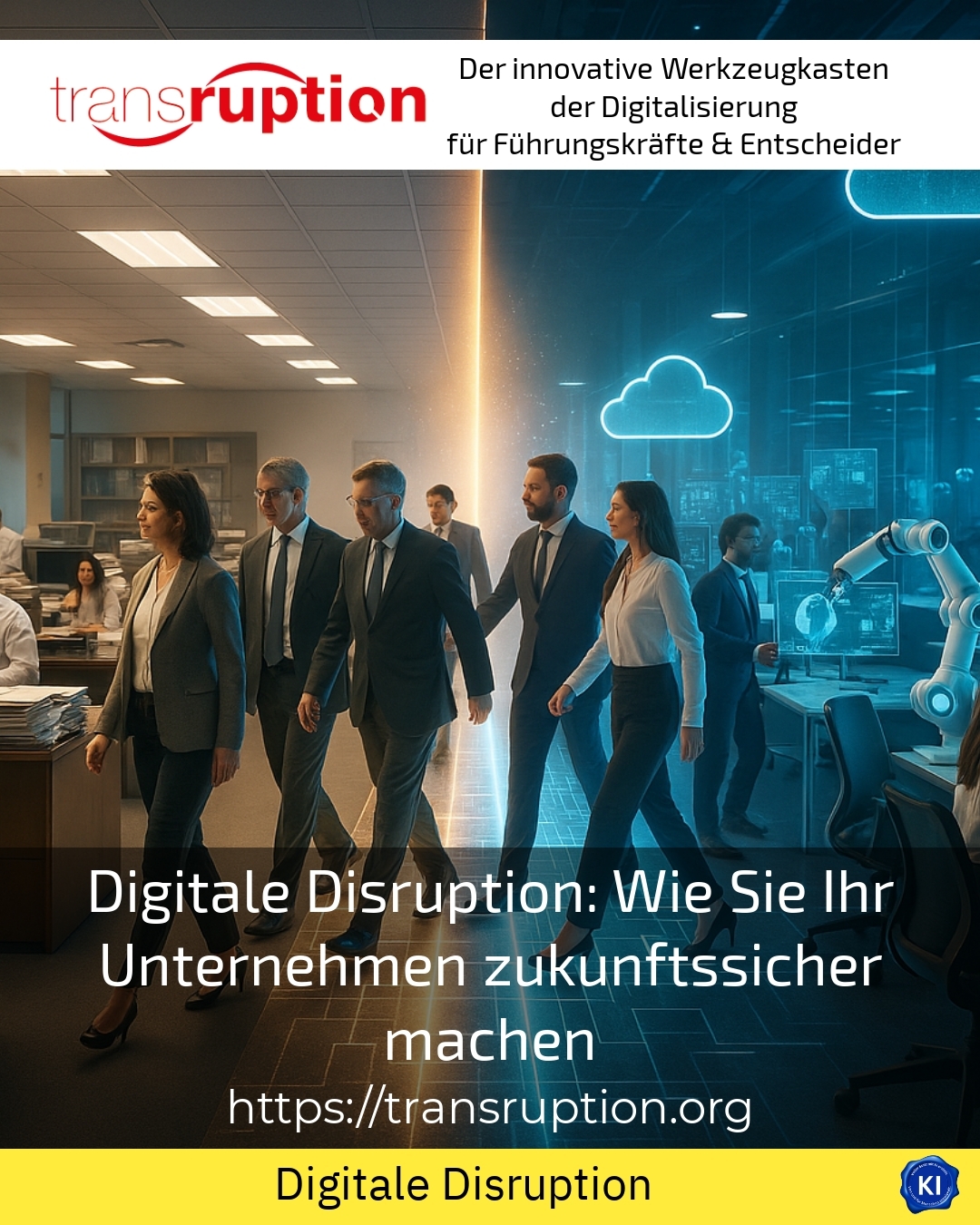
Digital disruption is a central aspect of modern business development. It describes the profound changes that arise from new digital technologies and innovations in various industries. These processes often lead to established companies and business models being replaced by new, more disruptive approaches. A good example of this is the digitalisation of retail through online shopping platforms such as Amazon. Such innovations force companies to adapt to new market conditions and reconsider their strategies.
## What is digital disruption?
Digital disruption refers to the radical transformation of markets and business models through the use of digital technologies. These changes often lead to a complete reordering of the value chain and create new opportunities.
### Examples of Digital Disruption
Netflix, for example, has revolutionised the way we consume television. With its on-demand streaming service, Netflix has significantly impacted traditional TV and DVD models. Uber, again, has disrupted the taxi industry through a platform that directly connects drivers and passengers. Finally, Amazon has disrupted the retail sector with immense selection and anytime shopping availability.
## How companies can react to digital disruption
### Adaptation and Innovation
To respond to the challenges of digital disruption, companies must adapt their business models and embrace new avenues of innovation. This includes reconsidering their traditional approaches and being open to new ideas. One example of this is **Tesla**, which has revolutionised the automotive industry with electric cars and automation technologies[6].
### Corporate culture and flexibility
A flexible corporate culture is crucial in order to be successful in a world of digital disruption. Companies should be prepared to adapt to changing market conditions and actively utilise new technologies. This often requires a culture of experimentation and continuous learning.
### Digital Transformation as an Opportunity
Digital disruption offers companies the opportunity to optimise their processes and open up new markets. By integrating digital technologies, companies can increase their competitiveness and offer more customer-oriented services. For example, **Airbnb** has fundamentally changed the way people travel and book accommodation by enabling homeowners to rent out their rooms[6].
## Practical tips for businesses
Companies should take the following steps to proactively address digital disruption:
1. **Regular Market Analysis**: Companies should continuously monitor developments in their market segment and react to new trends.
Investment in digital technologies: The use of modern technologies such as AI, big data, and cloud solutions can help to increase competitiveness.
3. **Promoting Innovation**: Companies should foster a culture of reinvention and give their employees the freedom to experiment.
## Fazit der Digitale Disruption
Digital disruption is a dynamic process that forces businesses to adapt to changing market conditions. By adopting an open stance towards innovation and investing in digital technologies, companies can strengthen their opportunities in future markets.
My analysis
In summary, digital disruption is a central theme for modern businesses. It offers the opportunity to create new value and revise traditional business models. Companies that embrace this challenge can strengthen their position in the market and remain future-proof.
Further links from the text above:
– Digitalisation Coach
– [Industry Guide](https://industrie-wegweiser.de/disruptive-innovation/)
– [OMR](https://omr.com/de/daily/glossary/digital-disruption)
- Innolytics](https://www.innolytics.de/digitale-disruption/)
– [Dr. Jens-Uwe Meyer](https://jens-uwe-meyer.de/wp-content/uploads/2017/06/Redner_Jens_Uwe_Meyer_Minibook_Digitale_Disruption.pdf)
For more information and if you have any questions, please contact Contact us or read more blog posts on the topic TRANSRUPTION here.















 Deutsch
  English (UK)