
kiroi.org

KIROI - Artificial Intelligence Return on Invest
The AI strategy for decision-makers and managers

Business excellence for decision-makers & managers by and with Sanjay Sauldie

KIROI - Artificial Intelligence Return on Invest: The AI strategy for decision-makers and managers

KIROI - Artificial Intelligence Return on Invest: The AI strategy for decision-makers and managers

Start » Digital disruption: How decision-makers are securing the future now
13 November 2025

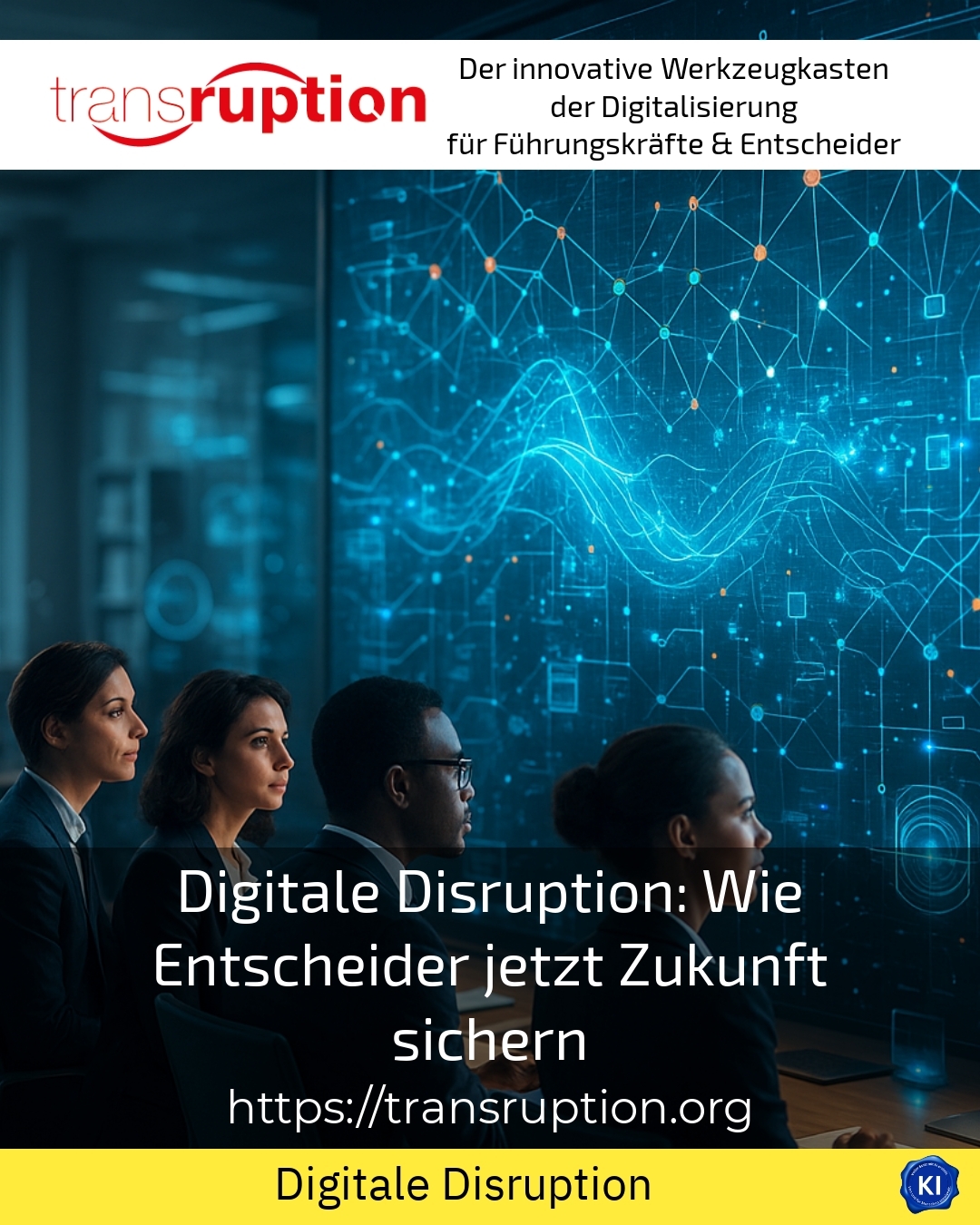
Digital disruption: How decision-makers are securing the future now

4.4
(1054)

Digital disruption presents decision-makers with new challenges. Rapid technological progress is radically changing business models and entire industries. Those who want to secure their future today must actively engage with this change and develop suitable strategies. Digital disruption is more than just digitalisation: it describes a profound transformation that breaks down established structures and gives rise to innovative market participants.

Understanding Digital Disruption: Causes and Consequences

Digital disruption occurs when new technologies replace or fundamentally alter traditional products and business processes. Examples such as Airbnb, which revolutionised the accommodation business, or Uber, which redefined the taxi market, impressively demonstrate this change. Industrial players like Tesla are also driving disruptive processes with electric vehicles and autonomous technology. Decision-makers are confronted with digital innovations and changing customer requirements that demand rapid adaptation.

The spectrum of disruptive technologies ranges from artificial intelligence, which enables personalised customer solutions, to cloud computing, which allows for flexible resource utilisation. Blockchain technologies are also fundamentally changing financial transactions, while virtual and augmented reality applications are opening up new experiential worlds. It is crucial to see these technologies not as isolated tools, but as building blocks of a comprehensive digital strategy.

Seizing the Opportunity of Digital Disruption: Practical Examples from Various Industries

Companies that successfully navigate digital disruption achieve competitive advantages through increased agility and customer focus. In the retail sector, Amazon fundamentally changed purchasing behaviour with its online marketplace. The business of physical bookstores shrank in favour of customer-friendly online orders with fast delivery. In the financial sector, FinTech startups like Revolut are challenging traditional banks by offering mobile payment and investment platforms.

The media industry is also undergoing a paradigm shift due to streaming providers like Netflix. Linear television viewing is losing importance in favour of flexible, on-demand offerings. In the industrial sector, Thyssenkrupp has rethought people transport with its innovative TWIN elevators – two cabins share a single shaft, significantly increasing efficiency. Examples like these illustrate how companies can realign their processes and products through digital disruption, thereby securing market advantages.

BEST PRACTICE at the customer (name hidden due to NDA contract) A leading mechanical engineering company integrated digital sensor technology and artificial intelligence into its production facilities to predict maintenance cycles and drastically reduce downtime. This led to significant cost reductions and more precise customer service offerings, which sustainably increased market competitiveness.

Actionable recommendations for decision-makers in the context of digital disruption

For leaders, it is essential not to see digital disruptions as a threat, but as a catalyst for innovation and change. A clear strategy makes it possible to specifically leverage disruptive technologies and to design internal processes agilely. It is advisable to form interdisciplinary teams that develop new digital business models and question existing structures. Furthermore, dialogue with customers should be intensified in order to recognise their changing expectations early on.

Transruptions coaching can be valuable support during this phase. This coaching helps companies successfully manage digital transformation, minimise risks, and exploit innovation potential. Clients often report that the external perspective from an independent viewpoint is particularly helpful in resolving entrenched viewpoints and showing new paths.

Practical steps that decision-makers can take include:

  • Observing disruptive trends and technologies for early detection
  • Promoting an open company culture for innovation
  • Investment in digital infrastructure and tools
  • Creation of experimental spaces for testing new ideas
  • Cooperation with start-ups and external technology partners

New Business Models through Digital Disruption – Actively Shaping the Future

Digital disruption is changing how businesses create and deliver value. Platforms like Spotify exemplify how a subscription model has transformed the music industry, with traditional sales channels losing their relevance. Similar developments are being observed in the automotive sector, where e-mobility, car-sharing, and digital services are redefining the market.

Manufacturers and service providers are challenged to not only optimise products but also to digitally shape the entire customer journey. The networking of devices in the Internet of Things supports efficient process control and the realisation of user-centric offers. Digital disruption requires a rethink towards flexible and scalable business models that can adapt quickly to market changes.

My analysis

Digital disruption is an unavoidable process that presents businesses with profound changes. The opportunities lie in the targeted use of new technologies and business models that can generate sustainable competitive advantages. Decision-makers should proactively shape this transformation by fostering innovation and accompanying changes with clever strategy. Transruption coaching offers valuable impetus in this regard, enabling businesses to secure their future and successfully enter a digitised business world.

Further links from the text above:

[1] Digital Disruption at IT Portal
[2] Digital Disruption: How to Future-Proof Your Business Now…
[3] Digital Disruption and Megatrends
[4] 7 successful examples of disruptive innovation
[5] Digital Disruption – Glossary
[9] Digital Disruption: Your roadmap to success in change
[10] Disruptive Business Models: Creating New Markets

For more information and if you have any questions, please contact Contact us or read more blog posts on the topic TRANSRUPTION here.

How useful was this post?

Click on a star to rate it!

Average rating 4.4 / 5. Vote count: 1054

No votes so far! Be the first to rate this post.

Spread the love

transruption.org

The digital toolbox for
the digital winners of today and tomorrow

Business excellence for decision-makers & managers by and with Sanjay Sauldie

transruption
transruption

transruption: The digital toolbox for
the digital winners of today and tomorrow

Start » Digital disruption: How decision-makers are securing the future now
13 November 2025

Digital disruption: How decision-makers are securing the future now

4.4
(1054)

Digital disruption presents decision-makers with new challenges. Rapid technological progress is radically changing business models and entire industries. Those who want to secure their future today must actively engage with this change and develop suitable strategies. Digital disruption is more than just digitalisation: it describes a profound transformation that breaks down established structures and gives rise to innovative market participants.

Understanding Digital Disruption: Causes and Consequences

Digital disruption occurs when new technologies replace or fundamentally alter traditional products and business processes. Examples such as Airbnb, which revolutionised the accommodation business, or Uber, which redefined the taxi market, impressively demonstrate this change. Industrial players like Tesla are also driving disruptive processes with electric vehicles and autonomous technology. Decision-makers are confronted with digital innovations and changing customer requirements that demand rapid adaptation.

The spectrum of disruptive technologies ranges from artificial intelligence, which enables personalised customer solutions, to cloud computing, which allows for flexible resource utilisation. Blockchain technologies are also fundamentally changing financial transactions, while virtual and augmented reality applications are opening up new experiential worlds. It is crucial to see these technologies not as isolated tools, but as building blocks of a comprehensive digital strategy.

Seizing the Opportunity of Digital Disruption: Practical Examples from Various Industries

Companies that successfully navigate digital disruption achieve competitive advantages through increased agility and customer focus. In the retail sector, Amazon fundamentally changed purchasing behaviour with its online marketplace. The business of physical bookstores shrank in favour of customer-friendly online orders with fast delivery. In the financial sector, FinTech startups like Revolut are challenging traditional banks by offering mobile payment and investment platforms.

The media industry is also undergoing a paradigm shift due to streaming providers like Netflix. Linear television viewing is losing importance in favour of flexible, on-demand offerings. In the industrial sector, Thyssenkrupp has rethought people transport with its innovative TWIN elevators – two cabins share a single shaft, significantly increasing efficiency. Examples like these illustrate how companies can realign their processes and products through digital disruption, thereby securing market advantages.

BEST PRACTICE at the customer (name hidden due to NDA contract) A leading mechanical engineering company integrated digital sensor technology and artificial intelligence into its production facilities to predict maintenance cycles and drastically reduce downtime. This led to significant cost reductions and more precise customer service offerings, which sustainably increased market competitiveness.

Actionable recommendations for decision-makers in the context of digital disruption

For leaders, it is essential not to see digital disruptions as a threat, but as a catalyst for innovation and change. A clear strategy makes it possible to specifically leverage disruptive technologies and to design internal processes agilely. It is advisable to form interdisciplinary teams that develop new digital business models and question existing structures. Furthermore, dialogue with customers should be intensified in order to recognise their changing expectations early on.

Transruptions coaching can be valuable support during this phase. This coaching helps companies successfully manage digital transformation, minimise risks, and exploit innovation potential. Clients often report that the external perspective from an independent viewpoint is particularly helpful in resolving entrenched viewpoints and showing new paths.

Practical steps that decision-makers can take include:

  • Observing disruptive trends and technologies for early detection
  • Promoting an open company culture for innovation
  • Investment in digital infrastructure and tools
  • Creation of experimental spaces for testing new ideas
  • Cooperation with start-ups and external technology partners

New Business Models through Digital Disruption – Actively Shaping the Future

Digital disruption is changing how businesses create and deliver value. Platforms like Spotify exemplify how a subscription model has transformed the music industry, with traditional sales channels losing their relevance. Similar developments are being observed in the automotive sector, where e-mobility, car-sharing, and digital services are redefining the market.

Manufacturers and service providers are challenged to not only optimise products but also to digitally shape the entire customer journey. The networking of devices in the Internet of Things supports efficient process control and the realisation of user-centric offers. Digital disruption requires a rethink towards flexible and scalable business models that can adapt quickly to market changes.

My analysis

Digital disruption is an unavoidable process that presents businesses with profound changes. The opportunities lie in the targeted use of new technologies and business models that can generate sustainable competitive advantages. Decision-makers should proactively shape this transformation by fostering innovation and accompanying changes with clever strategy. Transruption coaching offers valuable impetus in this regard, enabling businesses to secure their future and successfully enter a digitised business world.

Further links from the text above:

[1] Digital Disruption at IT Portal
[2] Digital Disruption: How to Future-Proof Your Business Now…
[3] Digital Disruption and Megatrends
[4] 7 successful examples of disruptive innovation
[5] Digital Disruption – Glossary
[9] Digital Disruption: Your roadmap to success in change
[10] Disruptive Business Models: Creating New Markets

For more information and if you have any questions, please contact Contact us or read more blog posts on the topic TRANSRUPTION here.

How useful was this post?

Click on a star to rate it!

Average rating 4.4 / 5. Vote count: 1054

No votes so far! Be the first to rate this post.

Spread the love

Other content worth reading:

Digital disruption: How decision-makers are securing the future now

written by:

Keywords:

#3Printing #Additive manufacturing #Cost savings #Sustainability #Innovation #DigitaleDisruption #DigitalisierungSportverein #Business models #TechnologischerWandel

Follow me on my channels:

Questions on the topic? Contact us now without obligation

Contact us

[wpforms id="331781" title="false"]

More articles worth reading

    Leave a comment










