
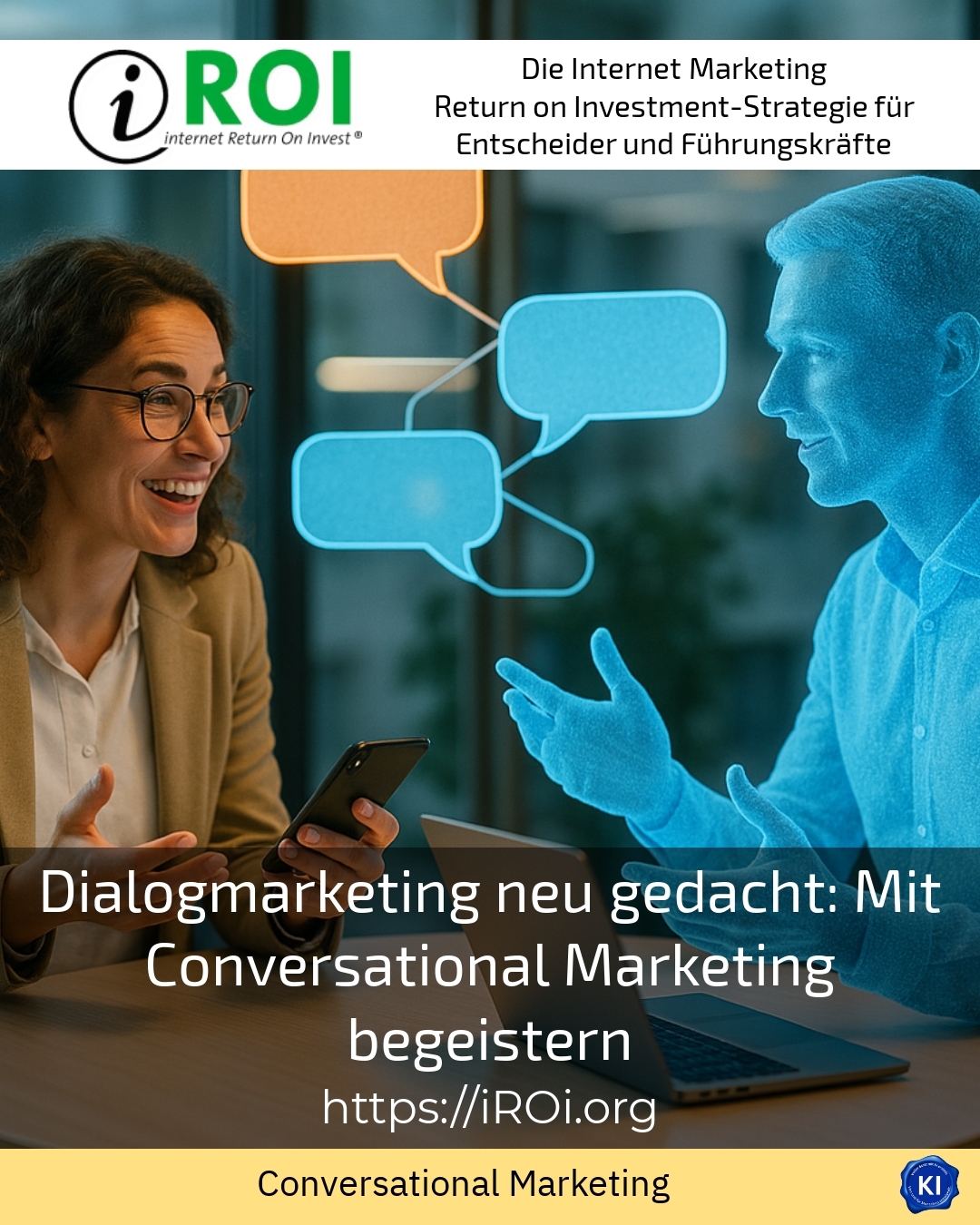
Rethinking dialogue marketing: Delight with Conversational Marketing
Dialog marketing is gaining new momentum through the integration of conversational marketing. More and more companies are relying on direct, personal exchange with customers to inspire them sustainably and effectively support business processes. The foundation lies in engaging customers in real-time, wherever they are, and immediately focusing on their needs.
What characterises modern dialogue marketing?
At its core, dialogue marketing means actively and personally shaping the dialogue with customers. This is no longer happening solely through rigid channels like email or telephone, but increasingly through digital communication routes such as live chats or messaging apps. The conversation is guided by the individual needs, situation, and preferred communication channel of the customer. This creates a genuine exchange that goes beyond one-off transactions.
Companies often report that the ability to start and pause conversations at any time and resume them without repetition significantly increases customer satisfaction. This builds trust and leads to closer customer relationships as well as better sales results.
Conversational Marketing as a driver for dialog marketing
Conversational marketing expands on traditional dialogue marketing by focusing on real-time communication and automation using intelligent technologies. Chatbots and AI-powered tools enable round-the-clock presence while simultaneously conducting personalised conversations. This saves resources and increases response speed.
These methods primarily support companies with complex products or services, as they often accompany customers during critical decision-making phases, providing them with targeted, relevant information. This creates an exceptionally customer-orientated experience that conveys flexibility and proximity.
BEST PRACTICE at company XYZ (name changed due to NDA contract) A provider specialising in B2B services has significantly improved its lead qualification through the use of conversational marketing. Dynamic chatbots are used to automate the initiation of conversations, but are handed over to human employees when necessary. This hybrid model increases conversion rates and offers customers the desired assistance at all times.
Advantages of dialogue marketing with conversational approaches
Companies that are rethinking dialogue marketing and making it conversational benefit from:
The ability to control interactions in a personalised way, thus precisely addressing customer needs. Real-time communication measurably improves customer loyalty.
The construction of a seamless dialogue across multiple channels. Customers no longer have to repeat their concerns multiple times, which significantly enhances the user experience.
To higher efficiency through automation and intelligent conversation management. This will relieve employees and free them up for more demanding tasks.
BEST PRACTICE at ABC (name changed due to NDA contract) A retailer is using chatbots in their online shop to provide visitors with targeted support for product selection and shipping queries. This offers customers real-time advice, which leads to a reduction in abandoned purchases while also significantly improving the shopping experience.
The role of technology and humanity in dialogue marketing
Modern dialogue marketing strategies combine technological innovation with interpersonal skills. Automated systems handle routine conversations, check customer data in the background and hand over to trained employees for more complex queries. This ensures that communication remains authentic and solution-oriented.
Clients often report how valuable this combination of efficiency and personal connection is in practice. They feel taken seriously and well-supported, which is also reflected in their loyalty.
BEST PRACTICE at DEF (name changed due to NDA contract) A service provider in the healthcare sector uses a combination of chatbots and personal support to make appointment enquiries and consultation meetings more efficient. The digital pre-selection relieves staff, allowing them to focus more intensively on individual queries. Customers report a noticeable reduction in workload and improved service.
What companies should consider when switching
The transition to a reimagined dialogue marketing with conversational elements requires care and planning. In addition to technical implementation, the training of employees is the focus. Only when technology and human skills are closely interlinked will a real conversation culture emerge.
Equally important is continuous evaluation and optimisation. Feedback loops help to improve dialogue processes and to respond better and better to customers' needs. This is how dialogue marketing becomes a valuable long-term asset.
Compliance with data protection policies should also be observed so as not to jeopardise customer trust. Clear communication and transparency are crucial in this regard.
My analysis
Rethinking dialogue marketing combines the strengths of real-time communication, personal exchange, and technological support. Those who take this path can elevate customer relationships to a new level. Companies should see this as support for their marketing projects and draw inspiration from it to shape the dialogue with their customers authentically, flexibly, and effectively. Numerous industries are already benefiting from approaches that incorporate conversational marketing to engage with customers on an equal footing and find better solutions together.
Further links from the text above:
[1] What Is Conversational Marketing? Your Ultimate Guide
[2] Website optimisation for better ranking and usability
[4] What is Conversational Marketing? A Beginner's Guide
For more information and if you have any questions, please contact Contact us or read more blog posts on the topic TRANSRUPTION here.











 Deutsch
  English (UK)