
Departmental optimisation: specifically fostering creative impulses
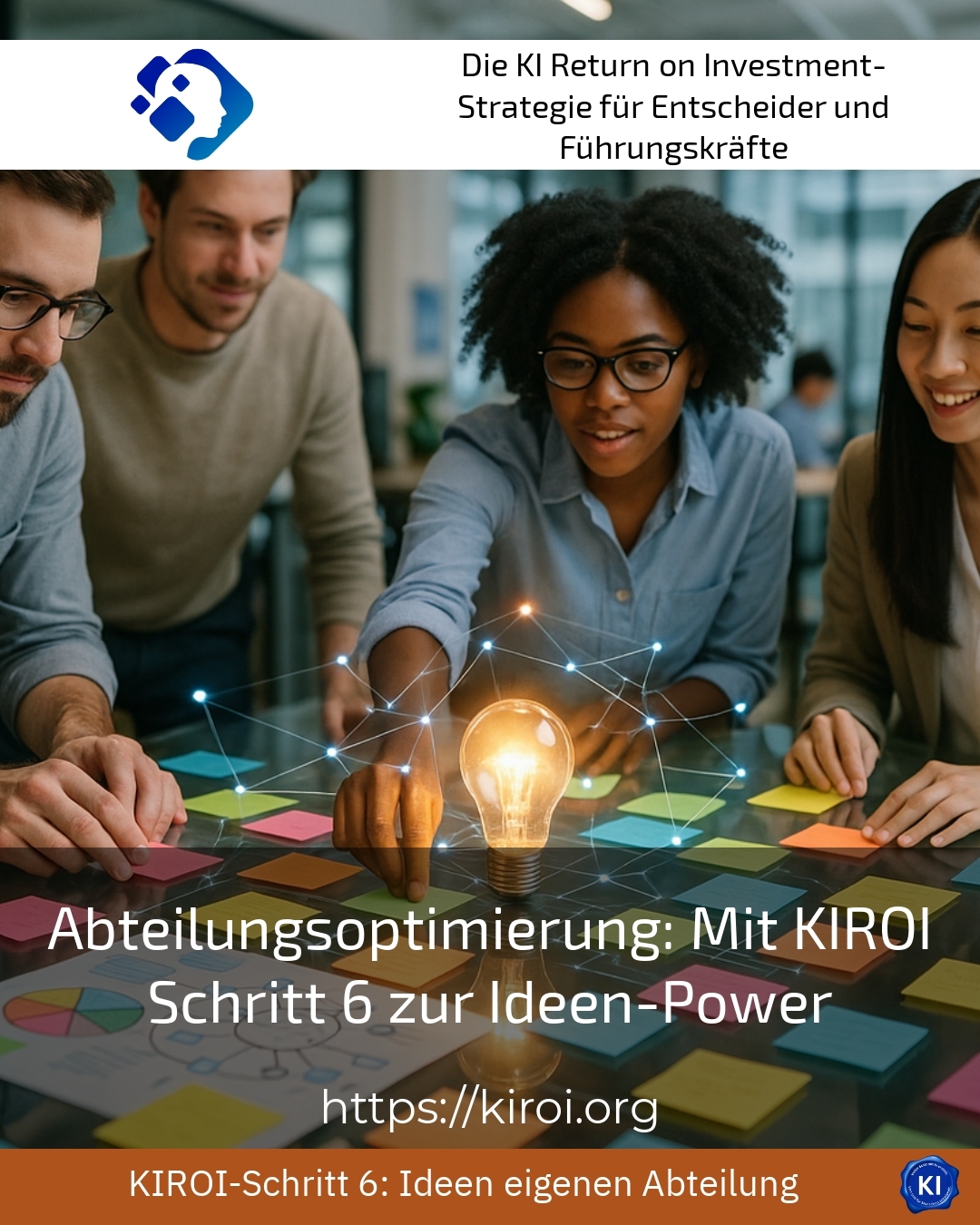
Efficient departmental optimisation relies on teams finding space for creative ideas and being able to develop them in a structured way. It is important not only to rely on spontaneous inspiration, but to support creativity using clear methods and processes. In this way, KIROI Step 6 creates a balance between open brainstorming and pragmatic implementation, enabling departments to achieve sustainable improvements.
How to strategically foster creativity in departments
As part of departmental optimisation, classic creativity techniques need to be applied which are simultaneously embedded within a process. Methods such as brainstorming or the morphological box invite employees to develop innovative approaches to thinking. These approaches are then examined for causes and structured using tools like the Ishikawa diagram. For example, an IT department can analyse technical challenges in a differentiated way and simultaneously develop innovative solutions. The combination of creative techniques and an analytical approach increases the quality of ideas and facilitates their implementation.
Practical examples from various industries
Department optimisation through creative guidance proves effective across a wide range of industries. In a production department, for example, weaknesses in material usage were identified. An interdisciplinary team used KIROI Step 6 to develop creative solutions, which were then tested and optimised in the form of several prototypes. This led to a reduction in both costs and material resources.
KIROI BEST PRACTICE at company XYZ (name changed due to NDA contract) In a finance department, the application of KIROI Step 6 enabled employees to systematically gather their suggestions for process simplification. Through targeted moderation, an action plan was created that facilitated the capture, evaluation, and subsequent implementation of ideas, which significantly increased processing speed.
In a marketing team, KIROI's step 6, in turn, helped to structure a variety of campaign ideas. Possible variations were organised and prioritised using a morphological box. This allowed the team to react flexibly to market changes and integrate new impetus into the marketing strategy.
KIROI BEST PRACTICE at company XYZ (name changed due to NDA contract) In a logistics department, the exchange between the warehouse and planning teams was promoted through KIROI Step 6. The employees collaboratively developed new approaches to route optimisation, which were tested and iteratively improved based on data analyses. This led to a measurable increase in efficiency.
Departmental optimisation as a continuous accompanying process
An important part of departmental optimisation is that changes are not imposed, but are understood as accompaniment and impetus. KIROI Step 6 supports teams in systematically developing their innovative strength and thinking in a solution-oriented way. Many report that the structured approach increases employee motivation and facilitates the implementation of ideas. The integration of cross-departmental collaboration also helps to better utilise synergies.
Concrete support in the daily life of departments
In the daily optimisation of a department, it is often apparent that employees seek coaching when facing challenges in overcoming creative blocks or connecting different perspectives. Here, the KIROI approach, as a companion, offers valuable support in providing impetus for new ways of thinking and demonstrating pragmatic paths to implementation. The focus remains on the individual needs of the department and its projects.
KIROI BEST PRACTICE at company XYZ (name changed due to NDA contract) Within a development department, individual project teams were supported with KIROI. The coaching helped to align departmental goals and innovative ideas without losing focus on daily operational business. Employees learned to prioritise their ideas and integrate them step-by-step into the innovation process.
My analysis
Department optimisation with a targeted support approach such as KIROI Step 6 sustainably promotes innovative strength. It is crucial that creative processes are not only stimulated but also combined with pragmatic tools and a transparent procedure. Various examples from production, IT, marketing, and logistics show that this approach often strengthens collaboration and delivers measurable improvements. Coaching, which serves as support for projects involving artificial intelligence, can provide valuable momentum and assist teams in implementation.
Further links from the text above:
Department optimisation: With KIROI Step 6 to innovative ideas [1]
Establishing an in-house SEO department – OMT [2]
For more information and if you have any questions, please contact Contact us on or read further blog posts on the topic Artificial Intelligence Blog here.











 Deutsch
  English (UK)