
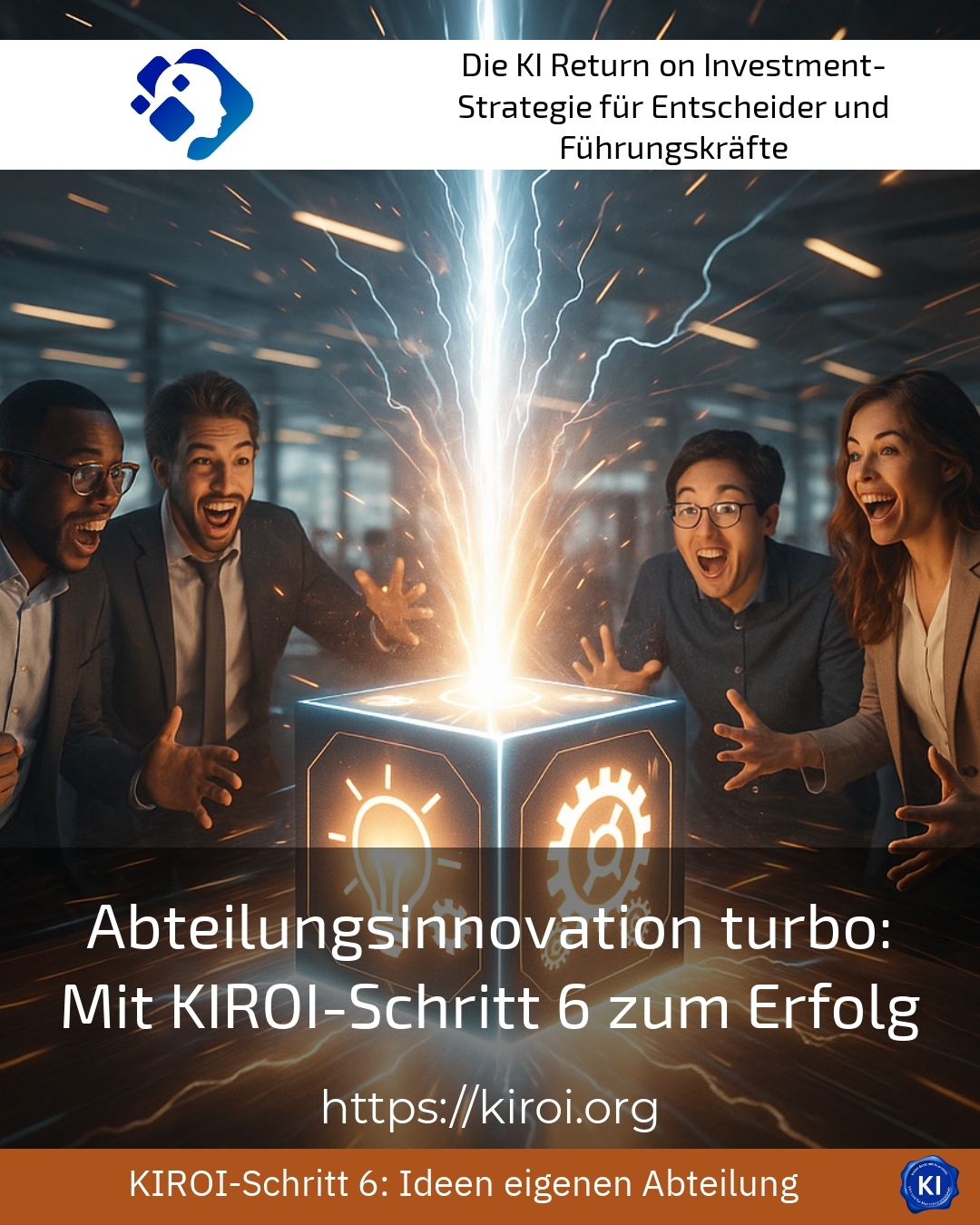
How departmental innovation creates new impetus
The desire for more efficient and creativity-boosting processes is driving many teams. Departmental innovation plays a central role in developing tailor-made solutions for specific challenges. Teams often seek support in identifying existing potential and integrating innovative ideas into their day-to-day work.
Getting started on innovative projects often begins with each department recognising its individual potential for change. This can be achieved, for example, through the use of modern tools that automate routine tasks, thereby creating scope for new initiatives. Such impulses often emerge from intensive workshops or targeted guidance from experienced coaches who manage and support the process.
Concrete application possibilities for departments
Departmental innovation is demonstrated in practical terms by how different areas benefit from new technologies and ways of thinking. In marketing, for instance, data-driven tools can be used to target campaigns more precisely and measurably increase success. In customer service, the potential lies in more automated support combined with more personalised care through intelligent assistance systems.
New avenues are opening up in the training area through individual programmes that cater to the needs of individual users, thus enabling tailored further training. This shows how departmental innovation directly links in to make processes not only more efficient but also more engaging.
AIROI BEST PRACTICE at company XYZ (name changed due to NDA contract) As part of a targeted support initiative, the Customer Service department developed a project using AI-based chatbots to filter simple enquiries. This led to a noticeable reduction in workload for employees and improved customer accessibility, without completely losing the personal touch.
Innovations promote interdepartmental exchange
Departmental innovation is often driven by better collaboration between different areas. For example, if the IT department and sales team work together on solutions, digital tools can be created that improve customer engagement. Such synergies help to ensure that ideas do not falter at the boundaries of individual teams, but are made usable jointly.
AIROI BEST PRACTICE at company XYZ (name changed due to NDA contract) Here, a coaching phase supported this, where employees from different departments came together to jointly develop a platform for internal knowledge sharing. This project not only fostered communication but also a culture of openness to new approaches.
Competence development as a key to departmental innovation
For innovative projects to have a lasting impact, staff must develop appropriate skills. Training helps to learn how to use new tools and overcome reservations about change. Managers play an important role by emotionally preparing teams for change and providing the necessary resources.
Regular further training also promotes an understanding of how new technologies can be integrated meaningfully – not as an end in themselves, but as helpful tools to support everyday tasks. This achieves a balance between technology and people, making departmental innovation successful.
AIROI BEST PRACTICE at company XYZ (name changed due to NDA contract) Within a larger company, a coaching programme was introduced over several months to support female employees from various departments in learning new digital tools. The programme made it possible to consider individual learning curves and increase acceptance of technical innovations.
Support instead of promises
Many teams are asking for methods on how they can remain innovative sustainably. It has become apparent that no magic formulas exist that work universally. The value rather lies in receiving the right support, setting impulses, and providing guidance on projects involving new technologies.
Through continuous exchange and adaptations to specific needs, each department learns how to pragmatically implement innovation. Clients frequently report how a structured process provided them with guidance and focused on actionable steps without making unrealistic promises.
My analysis
Departmental innovation can support companies in rethinking and effectively developing internal processes. Targeted guidance, which is tailored to the specific requirements of the departments, helps teams to recognise opportunities and transform them into sustainable solutions. Continuous skills development and cross-departmental exchange are crucial in this regard. This avoids unrealistic expectations and creates space for genuine progress.
Further links from the text above:
[1] AI as a threat or opportunity in times of skilled labour shortage
For more information and if you have any questions, please contact Contact us on or read further blog posts on the topic Artificial Intelligence Blog here.










 Deutsch
  English (UK)