
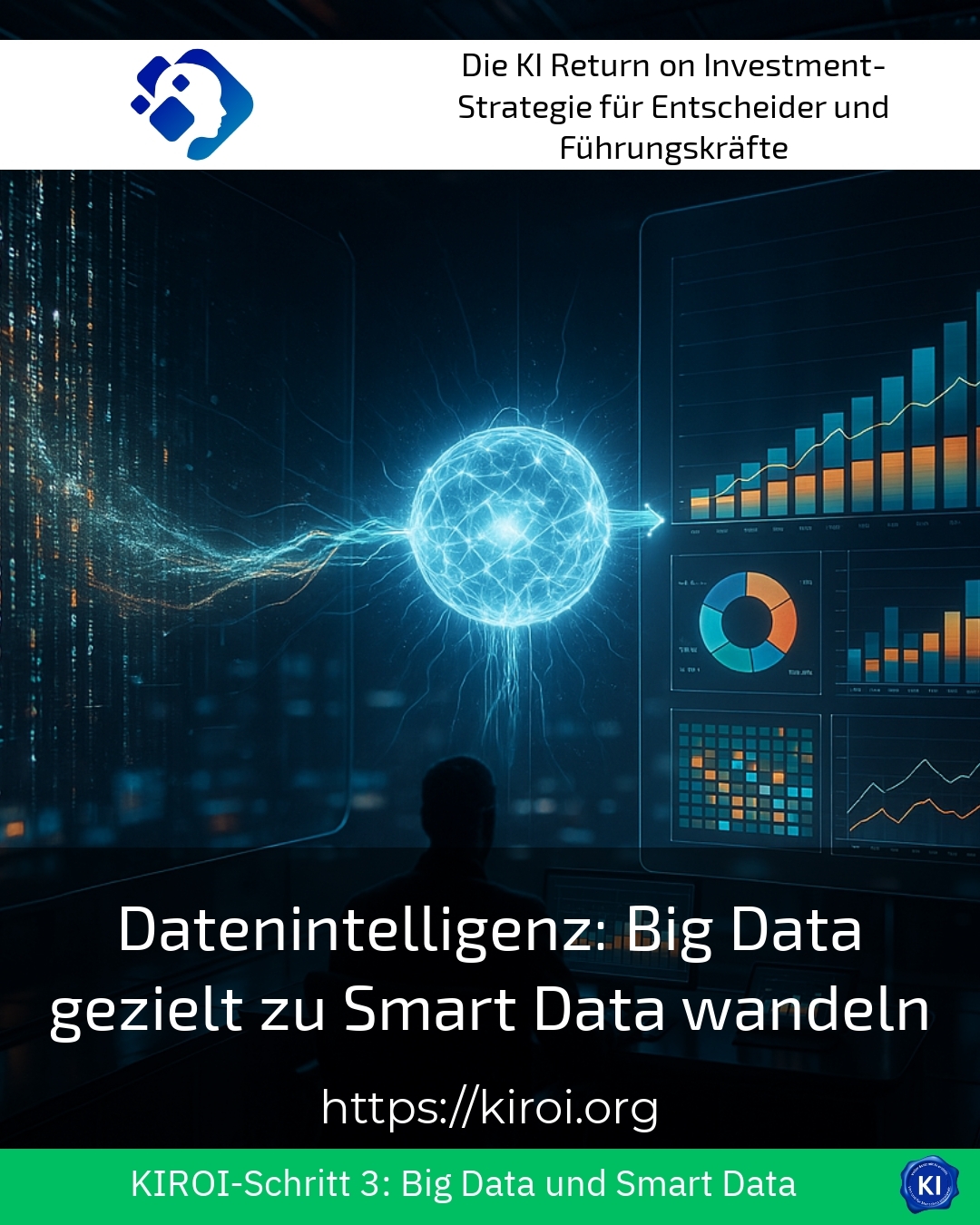
Imagine your company swimming in an ocean of information, but the real treasure lies hidden beneath the surface. The ability to Data intelligence decides today whether organisations will drown in this sea or be able to selectively retrieve valuable pearls. Many decision-makers know the feeling of being overwhelmed by columns of numbers, while the truly relevant insights are lost in the noise. In the world of insurance, banking and financial services, this paradox is particularly evident because millions of transactions, customer interactions and risk assessments occur daily. The transformation of mass raw information into actionable insights therefore represents one of the most pressing challenges of our time.
The challenge of information overload in the financial sector
Financial institutions generate enormous amounts of structured and unstructured information daily. Customer queries, loan applications, and claims reports create continuous data streams. This flood is growing exponentially and is increasingly overwhelming traditional analysis methods. A medium-sized insurance company processes several hundred thousand policies simultaneously on average. Each individual policy contains dozens of data points. Information accumulates from the start of the contract, through claims history, to payment behaviour.
Banks face similar challenges because account movements, credit card transactions and investment decisions are permanently documented. An average current account produces between fifty and two hundred transaction records per month. Multiplied by millions of customers, this creates unimaginable amounts of information. At the same time, regulatory authorities such as BaFin or the ECB expect detailed reports on risk exposures. These regulatory requirements compel institutions to systematically record and evaluate their holdings.
Wealth managers experience complexity on another level. Market data from global exchanges, economic indicators and geopolitical events feed into investment decisions. The art lies in filtering out relevant signals from this information jungle. Fund managers often report spending more time on data preparation than on strategic analysis. This inefficiency not only costs resources but also jeopardises competitiveness.
Data intelligence as a strategic competitive advantage
The systematic consolidation of raw information into usable findings creates measurable benefits. For example, insurance companies use intelligent analysis methods for more precise risk assessment for motor vehicle policies. Telematics tariffs analyse driving behaviour in real-time and adjust premiums individually. This benefits cautious drivers with more favourable terms, while riskier drivers are classified appropriately. This differentiated pricing strengthens customer loyalty and optimises the claims portfolio.
Financial institutions rely on sophisticated scoring models for credit assessment. Traditional methods primarily consider historical payment data and proof of income. Modern approaches integrate additional sources of information, such as transaction patterns or regional economic indicators. This allows banks to offer fair terms to applicants without a classic credit history. At the same time, default rates measurably decrease due to more precise risk assessments.
In asset management, intelligent information processing enables faster reactions to market changes. Algorithms scan news sources and social media channels for relevant signals. A sudden accumulation of negative reports about a company can trigger automatic alerts. This provides portfolio managers with valuable early warnings that would be difficult to detect in a timely manner manually.
Best practice with a AIROI customer
A medium-sized insurance broker with a focus on commercial clients faced a typical challenge in the area of Data intelligence. The company managed over twelve thousand contracts from various insurers across different systems. The portfolio analysis to identify cross-selling potential took several weeks and required significant staff resources. As part of the transruption coaching, we supported the project team in developing an integrated analysis platform. Initially, we jointly identified the relevant data sources and defined uniform quality standards for data capture. The team then implemented automated import routines for the different insurer systems. The newly created transparency revealed surprising insights into customer structures and product preferences. For example, it became clear that tradespeople with business liability insurance also showed above-average interest in cyber insurance. This insight enabled targeted marketing campaigns with significantly higher conversion rates than before. The broker now reports a threefold increase in cross-selling success within one year. At the same time, the time required for portfolio analyses has been reduced to a few hours per quarter.
Quality over quantity: The path to actionable insights
The mere accumulation of information does not create added value; instead, it initially causes storage costs and complexity [1]. What is crucial is the systematic filtering, structuring, and contextualisation of existing holdings. Insurance companies therefore often begin by cleaning up their customer databases. Duplicates, outdated addresses, and inconsistent spellings make any further analysis considerably more difficult. During such a cleanup, a health insurer discovered that almost eight percent of its customer data records were incorrect or outdated.
Banks are investing considerable sums in improving their data quality. Know Your Customer processes require up-to-date and verified information about business relationships. Incomplete details can lead to regulatory sanctions. At the same time, high-quality customer data enables personalised offers and more effective customer service. For example, a private client advisor can make relevant investment proposals if a client's life situation and goals are systematically recorded.
Investment companies pay particular attention to the quality of their market data [2]. Incorrect price information can lead to wrong investment decisions. Therefore, professional providers establish multi-layered validation processes for incoming market information. Plausibility checks, comparisons with alternative sources, and historical comparisons ensure the reliability of the analysis basis.
Practical Application Areas of Data Intelligence
Fraud detection is one of the most important areas of application in the financial sector. Insurance companies are continuously battling fictitious claims and organised fraud networks. Intelligent analysis systems detect suspicious patterns in claims data that often escape human reviewers. Unusual clusters of claims in specific regions or striking time intervals between policy inception and claim notification can be flagged automatically. A major property insurer reports savings in the double-digit millions through improved fraud prevention.
Banks use similar technologies to detect money laundering and the financing of terrorism. Transaction monitoring systems analyse payment flows in real-time for suspicious activities. Unusual transfer patterns, transactions involving high-risk countries, or sudden changes in account behaviour trigger automatic alerts. The challenge lies in maximising the detection rate while minimising false positives.
Intelligent use of information in customer service enables proactive service offerings. For example, a bank can recognise from account movements that a customer might be planning to buy a property. Frequent transfers to notaries, estate agents or DIY stores provide relevant clues. The customer advisor can then specifically offer financing options. This forward-looking approach increases both customer satisfaction and business transactions.
Best practice with a AIROI customer
A regional cooperative bank wanted to sustainably improve the quality of its advisory services for corporate clients. Previously, corporate client managers spent a significant amount of time manually compiling customer information before meetings. Balance sheet data, account movements, existing credit lines, and previous meeting notes were scattered across different systems. As part of the transruption coaching, we worked with the IT team to develop an integrated customer overview. This overview automatically aggregates all relevant information about a corporate client on a single screen. Additionally, the project team implemented an early warning system for potential at-risk customers. Deteriorating key figures, delayed incoming payments, or unusual account movements are automatically identified and prioritised. Corporate client managers report a significantly improved meeting preparation process. On average, they save about thirty minutes of preparation time per customer visit. At the same time, meeting quality measurably increases due to a better information base. Customer satisfaction scores in the corporate client segment improved by twelve percentage points within eighteen months.
Technological Foundations for Successful Data Intelligence
The technical infrastructure forms the foundation of any successful information strategy [3]. Modern data warehouse solutions enable the central storage and linking of various data sources. For example, insurance companies integrate policy systems, claims systems, and sales information into a unified analysis platform. This integration is what creates the prerequisite for holistic customer analyses and cross-product evaluations.
Cloud technologies are increasingly gaining importance, even in the conservative financial sector. They enable flexible scaling of computing capacities as needed. For example, an insurance company can temporarily use additional analytical capacity during the financial year-end closing phase. After the intensive analysis phase is complete, the resource requirement drops back to normal levels. This flexibility reduces investment costs and increases operational agility.
Machine learning methods open up entirely new analytical possibilities. Algorithms recognise complex patterns in large quantities of data that remain hidden from human analysts. For example, a credit card provider uses neural networks to identify fraudulent transactions. The system continuously learns from confirmed fraud cases and steadily improves its detection performance. At the same time, such methods place high demands on data quality and model maintenance.
Organisational success factors of transformation
Technology alone does not guarantee success in information transformation. Organisational embedding and cultural acceptance play an at least equally important role. Insurers are therefore increasingly establishing central data governance structures with clear responsibilities. Data stewards look after quality assurance in their respective specialist areas. An overarching body coordinates company-wide standards and priorities.
The qualifications of employees require continuous attention. Not every actuary automatically masters modern analytical tools. Banks therefore invest considerably in training programmes and further education opportunities. At the same time, they specifically recruit specialists in data science and business intelligence. The combination of industry expertise and analytical competence creates a special added value.
Data protection and regulatory compliance form indispensable frameworks within the financial sector. The GDPR imposes strict limits on the processing of personal information. For example, insurance companies must meticulously document which customer data they use and for what purposes. Banks are subject to additional supervisory requirements regarding information security and traceability. These provisions necessitate careful planning and continuous monitoring of all data processing activities.
Best practice with a AIROI customer
A financial service provider specialising in retirement planning recognised the potential of predictive analytics for its sales management. The company wanted to be able to predict which existing customers would be particularly receptive to certain product offerings. Previously, customer acquisition had primarily been based on demographic criteria such as age and income. In transruption coaching, we supported the project team in developing a data-driven approach. Together, we identified behaviour-based indicators of purchase readiness for retirement products. Life events such as starting a family, buying property or career changes, for example, indicate increased interest in protection solutions. The developed model takes into account over fifty different customer characteristics and their interactions. Sales representatives now receive prioritised contact lists with the most promising contacts for specific product categories. The closing rate for telephone contact subsequently increased by a considerable twenty-five percent. At the same time, the annoyance of uninterested customers due to unsuitable offers has significantly decreased.
My AIROI Analysis
The transformation of vast amounts of raw data into actionable insights represents a strategic necessity for the financial sector. My observations from numerous support projects reveal clear patterns of successful implementations. Companies that Data intelligence seen as a holistic task, achieve significantly better results than purely technology-driven approaches.
The biggest hurdles rarely lie in the technology, but rather in organisational and cultural factors. Siloed thinking between departments often prevents the necessary integration of different information sources. Leaders frequently underestimate the effort required for data quality assurance and change management. Successful projects invest at least as much in training and communication as they do in software and hardware.
My clients' experiences show that a step-by-step approach is more sustainable than large-scale, revolutionary projects. Small pilot projects with quickly visible successes create acceptance and enthusiasm. These successes lead to further initiatives and establish positive momentum. Continuous support from experienced sparring partners helps to focus on key success factors.
For the coming years, I expect a further intensification of the competition for Data intelligence in the financial sector. Regulatory requirements are becoming more complex, customer expectations are rising and technological possibilities are continuously expanding. Institutions that lay the groundwork for systematic information utilisation today will secure lasting competitive advantages. Investing in competence building and infrastructure pays off many times over in the long term.
Further links from the text above:
[1] Bitkom – Information on Big Data and Data Management
[2] BaFin – Supervision of Banks and Financial Services Providers
[3] GDV – Digitalisation in the insurance industry
For more information and if you have any questions, please contact Contact us or read more blog posts on the topic Artificial intelligence here.










 Deutsch
  English (UK)