
Why are so many businesses drowning in their own data volumes, while others seemingly effortlessly gain decisive competitive advantages from them?
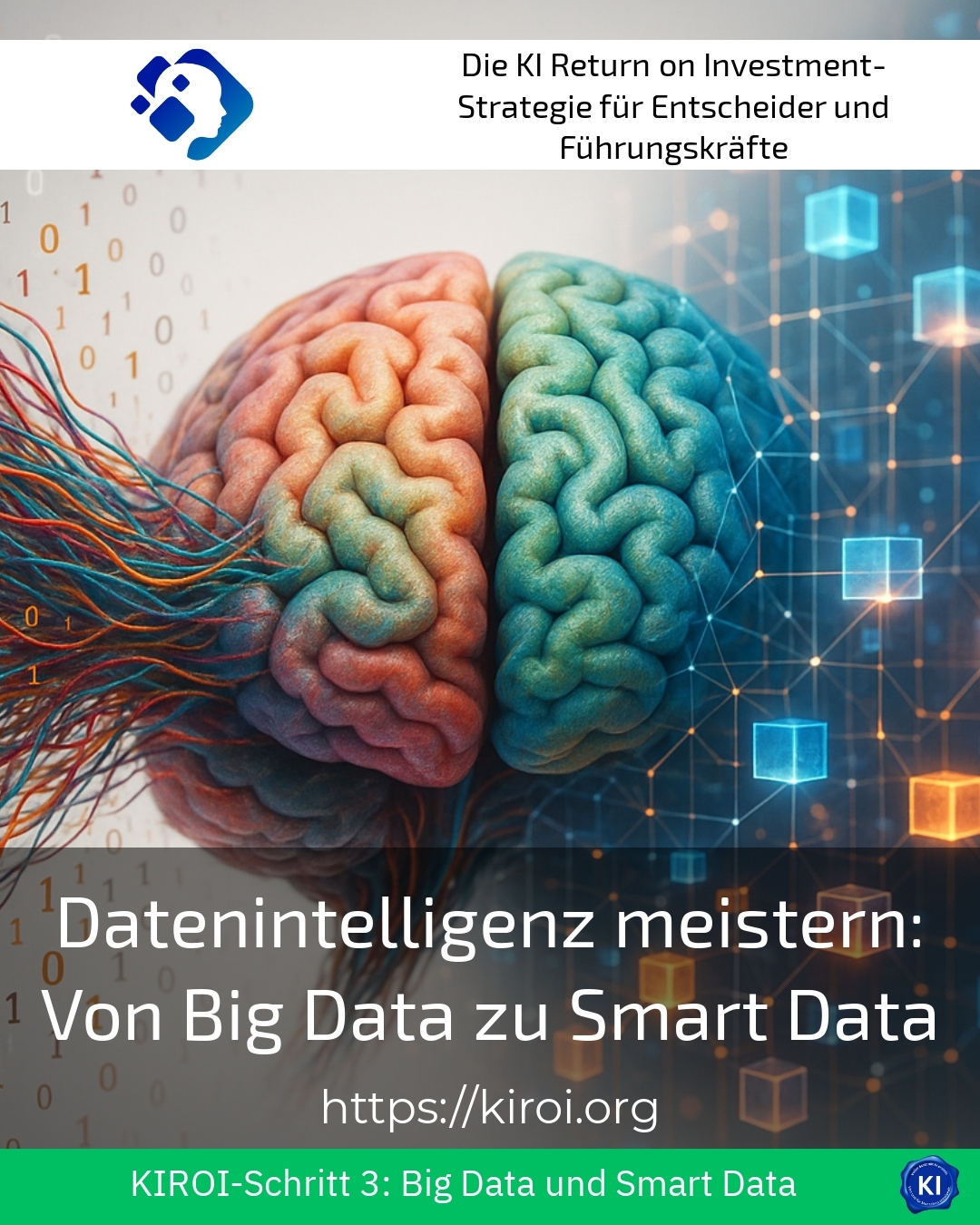
The answer does not lie in the quantity of information gathered. It lies in the ability to distil actionable insights from raw columns of figures. Mastering Data Intelligence: From Big Data to Smart Data describes precisely this transformation process. Companies today are gathering more information than ever before. At the same time, many decision-makers feel more directionless than ever. This paradox characterises the current business world. It affects almost all industries and company sizes. However, the good news is: with the right approach, this challenge can be mastered. Transruption coaching supports organisations in fundamentally rethinking their data strategy.
Understanding the challenge of information overload
Every day, unimaginable quantities of digital information are created worldwide. Sensors in production facilities record millions of measurement points. Customer interactions leave digital traces in numerous systems. Social networks continuously generate opinions and sentiment profiles. This data explosion presents companies with fundamental questions. How can the relevant be separated from the irrelevant? Which information actually deserves attention? When does more analysis lead to better decisions?
A medium-sized engineering company is a prime example of this challenge. Its production facilities generate terabytes of sensor data every day. Temperatures, vibrations, power consumption and flow rates are recorded without exception. But what happens to this information? Frequently, it ends up in massive storage systems. There, it waits for an analysis that rarely takes place. The investment in sensor technology and storage then appears to be a costly misinvestment.
Similar patterns can be seen in retail companies with extensive customer databases. They know their customers' purchase histories, returns and browsing behaviour in detail. Despite this, personalised offers are often only partially successful. The data exists in isolation across different systems. Comprehensive linkage does not take place. This creates data silos that obscure the overall view.
Logistics companies are also struggling with similar problems. GPS trackers provide real-time position data. Weather services predict traffic disruptions. Customers report their availability via various channels. Bringing these information streams together requires well-thought-out architectures. Without them, valuable potential for optimisation remains untapped.
Mastering data intelligence through quality rather than quantity
The transition to intelligent data utilisation requires a radical rethink. It is not the quantity of information collected that determines success. The quality of insights determines the actual business value. Many organisations find this shift in perspective difficult. They have invested substantial sums in storage systems and capture technologies. The thought of collecting less initially seems counter-intuitive.
An energy supplier is demonstrating this transformation impressively. In the past, it collected all available consumption data from its customers. Analysis was limited to monthly billing. Today, it focuses on meaningful consumption patterns. These enable precise load forecasting and optimised grid control. The volume of data has fallen, while the benefit has increased significantly.
Pharmaceutical companies are experiencing similar transformations in their research departments. Clinical trials generate mountains of patient data. Not all information contributes equally to insights. Intelligent filtering algorithms identify relevant correlations automatically. Researchers can focus on the essential findings. Development times are noticeably shortened as a result.
The automotive sector illustrates the transformation in connected vehicles. Modern cars capture hundreds of data points per second. Not all of this information merits transmission to central systems. Edge computing pre-filters relevant events directly within the vehicle. Thus, only usable insights reach the manufacturers' analysis platforms.
Best practice with a AIROI customerAn internationally active manufacturer of precision tools faced a complex challenge in its quality assurance. Over the years, the company had collected all production measurement data and stored it in a data lake. The volume of data grew continuously, yet scrap rates remained constantly high. As part of a transruption coaching project, we jointly analysed the actual information needs of the quality managers. It turned out that less than ten percent of the collected data was relevant to quality decisions at all. We developed a focused data model that monitors precisely these critical parameters in real time. Since then, the remaining data is only recorded on a sampling basis. The result is thoroughly convincing: the scrap rate fell by almost a third within six months. At the same time, storage costs were significantly reduced. Employees report a markedly improved clarity in their analysis tools. This example shows how less can sometimes genuinely mean more.
Technological foundations for change
The transformation of raw data into actionable insights requires well-conceived technological architectures. This is less about individual tools than about their meaningful interaction. Modern data platforms combine various components into powerful ecosystems. Streaming technologies process information in real time. Algorithmic models automatically detect patterns and anomalies. Visualisation tools make complex relationships understandable [1].
Financial services providers are already making intensive use of these technologies for their risk assessments. Transaction data flows through analysis systems in real time. Suspicious patterns trigger automatic alerts. Compliance teams can concentrate on genuinely critical cases. The accuracy of fraud detection is thus continuously increasing.
Telecommunications providers use similar architectures for network optimisation. Millions of connection data points are continuously evaluated. Algorithms identify bottlenecks before they lead to noticeable disruptions. Maintenance teams receive precise recommendations for action for their deployments. Customer satisfaction benefits from this predictive network maintenance.
Insurance companies are revolutionising their claims processing through intelligent data processing. Claims reports are automatically categorised and prioritised. Image recognition systems independently assess damage photos beforehand. Claims handlers receive prepared dossiers for their decisions. Processing times are thus significantly reduced [2].
Mastering data intelligence through cultural change
Technology alone does not guarantee success in data transformation. The cultural shift within organisations appears at least as important. Employees must learn to make data-driven decisions. Leaders should embody an evidence-based corporate culture. This process requires time, patience and continuous guidance.
Clients frequently report resistance within their organisations. Long-standing employees trust their experience more than algorithms. This scepticism deserves respect and serious engagement. Data analyses do not replace human expertise. They complement and support experienced professionals in their decision-making. This message must be communicated credibly.
A chemical company is demonstrating a successful culture change particularly impressively. The management started with small, manageable pilot projects. Successes were widely communicated and celebrated together. Employees received training in data interpretation. Trust in analytical decision-making aids gradually grew. Today, data-driven working is considered a matter of course there.
We observe similar developments in hospitals and clinics. Doctors were initially sceptical of algorithmic diagnostic support. Pilot projects demonstrated the tangible benefits in daily practice. The systems took over routine analyses and relieved the pressure on specialist staff. Medical professionals gained time for complex cases. Acceptance increased with every successful deployment [3].
Best practice with a AIROI customerA regional savings bank wanted to improve its customer advisory services through the intelligent use of data. The institution had extensive customer data from decades of business relationships. However, advisors hardly ever used this information systematically in their discussions. In a joint transruption coaching session, we developed a concept for the context-related provision of information. Before every advisory meeting, advisors now receive compact customer profiles on their screens. These clearly display relevant life events, product usage and potential areas of need. These profiles are generated fully automatically by intelligent algorithms. A key factor here was the close involvement of the advisors in the development process. Their experience flowed directly into the design of the information presentation. The result is impressive due to its practical relevance and high level of acceptance. Advisors report noticeably more targeted discussions with their customers. Customer satisfaction scores increased measurably. At the same time, conversion rates for suitable financial products improved significantly.
Ethical Dimensions of Data Use
With growing analytical capability, the responsibility of data-using organisations also increases. Data protection and informational self-determination deserve the utmost attention. Transparency towards affected individuals should be a matter of course. Algorithms must not make discriminatory decisions. These ethical principles require continuous attention.
Employment agencies are particularly in the spotlight of ethical debates. Applicant selection systems are increasingly operating algorithmically. The fairness of these systems must be regularly reviewed. Hidden biases in training data can lead to unfair outcomes. Responsible companies establish auditing mechanisms for their analysis systems.
Insurance companies must also reflect ethically on their data usage. Precise risk profiles can lead to the exclusion of certain groups of people. The principle of solidarity within the insured community must not be undermined. Regulatory frameworks set important boundaries here. Companies should not view these as an obstacle, but as guidance.
In healthcare, ethical tensions are particularly evident. Genetic data enables precise disease prognoses. Handling this knowledge requires the utmost sensitivity. Patients deserve self-determination regarding their personal health information. Transparent consent processes must be standard [4].
From Big Data to Smart Data: Practical steps
The path to intelligent data utilisation begins with an honest inventory. What data actually exists within the organisation? What is the quality of this information? Who is currently using it and for what purposes? These questions form the starting point of any transformation.
Clear business objectives should then be defined. Data analysis as an end in itself rarely leads to sustainable results. Specific questions give the analysis direction and focus. A retailer might ask about optimal order quantities. A manufacturer is interested in failure forecasts for their machines. These objectives determine the required analytical methods.
Pilot projects enable initial practical experience without excessive risk. Successful pilots demonstrate tangible benefits for sceptical stakeholders. Failures provide valuable lessons for subsequent endeavours. Scaling takes place gradually based on insights gained.
Building materials manufacturers, textile producers and food processors go through similar stages of development. Initially, reactive analyses of past events dominate. This is followed by descriptive evaluations of current states. Advanced organisations finally develop predictive and prescriptive capabilities. This maturation process typically requires several years of consistent work.
My AIROI Analysis
The transformation from mere data collection to genuine data intelligence represents one of the central management tasks of our time. Companies that successfully shape this transition gain significant competitive advantages in their markets. They make more informed decisions, react more quickly to changes, and utilise their resources more efficiently. However, the path there requires more than technological investments. Cultural changes, ethical reflection, and strategic patience are equally part of the recipe for success.
From my consulting practice, I know that many organisations fail because their initial projects are too ambitious. They want everything at the same time and consequently achieve very little. A step-by-step approach with manageable projects appears more successful. Each undertaking should pursue a clear business benefit. The experience gained is incorporated into subsequent initiatives. In this way, a data-driven corporate culture emerges organically.
Transruptions-Coaching accompanies organisations on this demanding path. We provide impetus for strategic alignment and support practical implementation. In doing so, we always take into account the individual initial conditions of each organisation. Standard solutions do not exist, but proven principles and methods do. Mastering Data Intelligence: From Big Data to Smart Data is significantly easier with the right guidance. The investment in external expertise typically pays off quickly through accelerated learning curves and avoided mistakes. Take the first step today.
Further links from the text above:
[1] Gartner: Big Data definition and trends
[2] McKinsey: The Data-Driven Enterprise
[3] Bitkom: Artificial Intelligence in Companies
[4] Federal Commissioner for Data Protection: principles of data processing
For more information and if you have any questions, please contact Contact us or read more blog posts on the topic Artificial intelligence here.









 Deutsch
 English (UK)