
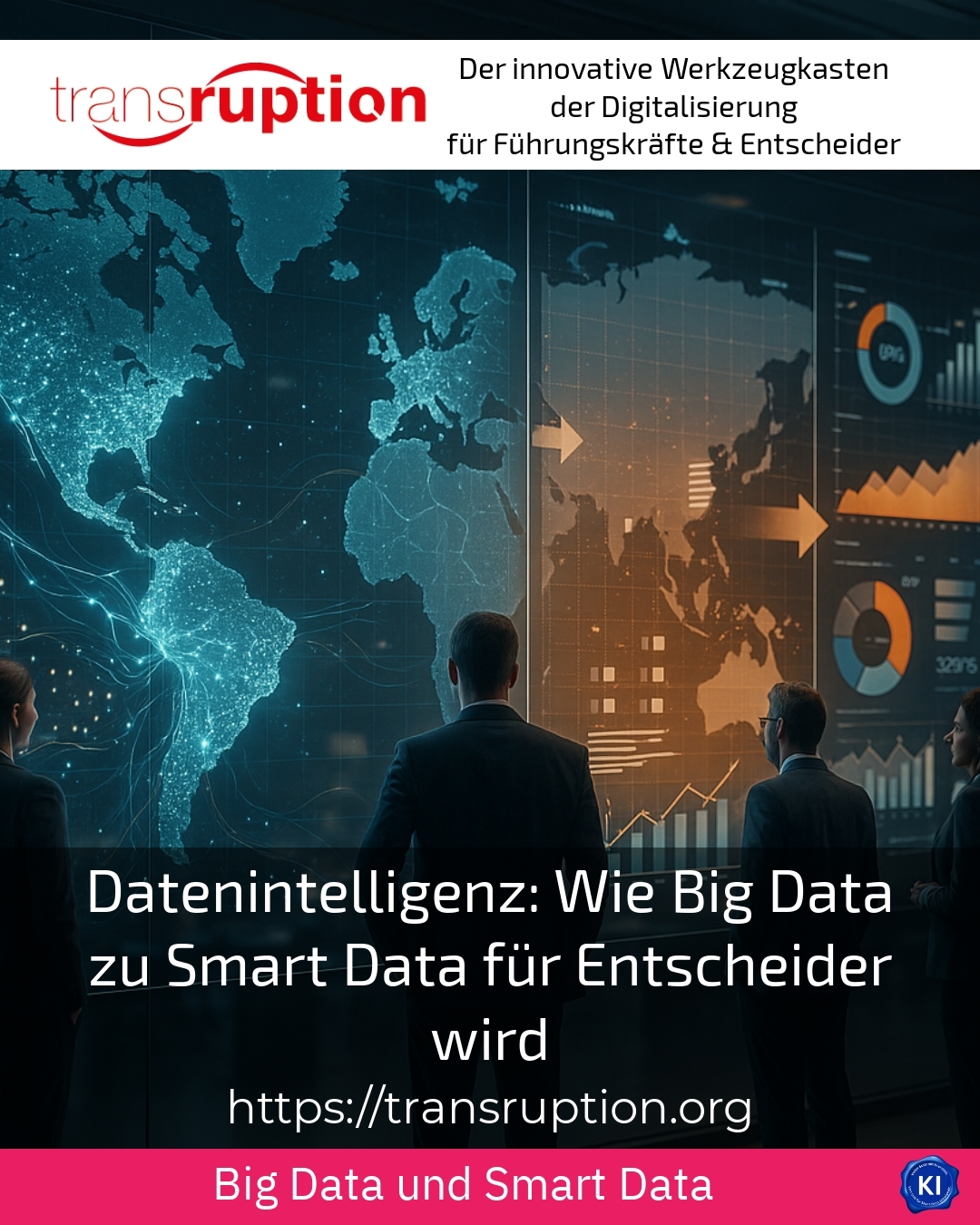
In today's dynamic business world, Data intelligence is playing an increasingly important role. Companies are confronted with extensive, often confusing amounts of data, so-called big data. However, only those who manage to transform these huge amounts of data into high-quality, targeted and relevant information will benefit from the competition. This transformation of raw data into Smart Data is the core of data intelligence. It helps decision-makers to make informed, fast, and robust decisions.
Data intelligence: From data deluge to actionable insights
Companies are often overwhelmed by the sheer volume of data alone. Big data comprises unstructured and complex data from various sources - from machine sensors in industry to financial data and customer data from retail. Data intelligence starts right here: It enables useful patterns and correlations to be filtered out.
For example, manufacturers can use sensor data to precisely plan maintenance cycles and thus avoid expensive breakdowns. In the financial sector, data-intelligent algorithms identify suspicious transactions at an early stage, which minimises fraud attempts. In marketing, intelligent data analyses help to target customers by better identifying potential needs and increasing customer loyalty.
BEST PRACTICE at the customer (name hidden due to NDA contract) A production company was able to significantly reduce the downtime of its machines through data-intelligent monitoring. Real-time data made it possible to carry out maintenance exactly when it was actually necessary. This not only increased efficiency but also sustainably improved product quality.
How Data Intelligence Enables Smart Data
The difference between Big Data and Smart Data is crucial. Big Data describes the mass of diverse and rapidly accumulating raw data. The challenge lies in filtering, verifying, and contextualising this data. Smart Data, then, refers to data that is provided in a high-quality, relevant, and data protection-compliant manner.
The creation of smart data through data intelligence follows several steps:
- Data integration Different sources are connected, such as CRM systems, IoT sensors or external market data.
- Data cleansing Incomplete or faulty data will be removed or corrected.
- Data analysis Artificial intelligence and machine learning recognise patterns and create forecasts.
- Visualisation Prepared data is clearly presented to facilitate decision-making processes.
- Governance & Data Protection: Rules ensure the responsible handling of sensitive information.
This approach has many applications. For example, a logistics company uses smart data to enable dynamic route planning and shorten delivery times. In the field of medical technology, intelligent analyses of large image data sets help with more precise diagnoses. In retail, too, data intelligence is used to create comprehensive customer segments in order to design customised offers.
Practical examples from various industries
Data intelligence shows its strengths in numerous sectors:
- Industry Predictive maintenance reduces downtimes. Sensors provide real-time data that enables faults to be predicted.
- Financial sector Fraud detection systems analyse transaction patterns and detect anomalies early on.
- Retail Customer behaviour is analysed to create personalised offers and optimise the customer journey.
These examples show that data intelligence not only provides better information, but also creates practical benefits in efficiency, quality, and customer loyalty.
Tips for the implementation of data intelligence projects
Anyone overseeing projects involving data intelligence should consider the following aspects:
- Clear objective Define what insights or improvements are to be achieved.
- Quality over quantity The data must be reliable, up-to-date, and clean in order to deliver meaningful results.
- Interdisciplinary team Expert knowledge from IT, data science, and specialised fields ensures sustainable success.
- Phased introduction Small pilot projects help to make the benefits tangible and build trust.
- Please observe data protection. Compliance with legal requirements is a basic prerequisite for sustainable projects.
Many companies report that the key is not only to use technology, but also to promote the internal culture for data-driven decisions.
My analysis
Data intelligence is more than just a technical trend. It creates decisive added value by transforming large and complex amounts of data into usable insights. This is the only way to turn pure raw data into valuable smart data that actively supports decision-makers. Data-intelligent approaches enable better planning, risk minimisation and customer orientation across all industries. Investing in well thought-out data intelligence processes pays off in the long term through increased efficiency and competitive advantages.
Further links from the text above:
What is Smart Data - B2B Smart Data
Data intelligence and its application - SAULDIE
Smart Data: Definition and Application – O2 Business
Smart data and intelligent data utilisation - Appvizer
Big Data: Definition and Tips – MFR Germany
Data intelligence: Big data to smart data - SAULDIE
Guide to Big Data – Pipedrive Blog
What is Smart Data? – Kobold AI
For more information and if you have any questions, please contact Contact us or read more blog posts on the topic TRANSRUPTION here.











 Deutsch
  English (UK)