
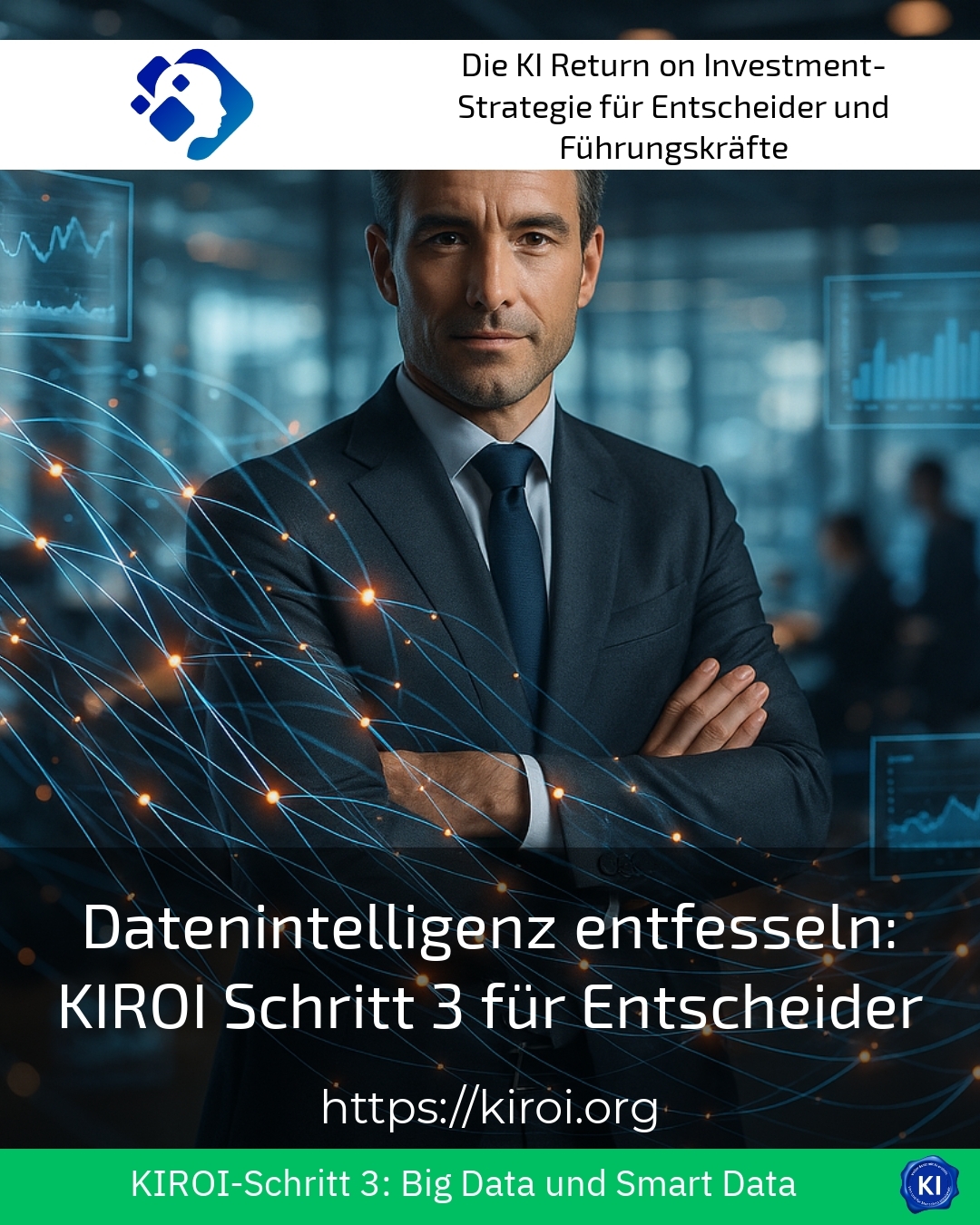
Data intelligence is unleashed through the strategic management of data volumes to make business decisions more efficient and well-founded. It forms the basis for gaining real insights from the multitude of available information. Particularly within the scope of KIROI Step 3, the aim is to specifically combine Big Data and Smart Data, thereby establishing a data-intelligent strategy in companies.
Why data intelligence is indispensable today
Data intelligence allows companies to analyse high data volumes in a structured way and transform them into valuable knowledge. This capability supports decision-makers in better reducing risks and ensuring agile responses to market changes. Many companies report that, through data intelligence approaches, they can noticeably accelerate decision-making processes while simultaneously minimising error sources. This way, the company gains not only time but also competitiveness.
An example from industry illustrates this: production data is analysed in real-time to plan maintenance work in advance. This significantly reduces downtime, which in turn lowers costs. In the service sector, data-driven intelligent systems are used to answer customer enquiries in an automated and targeted manner. At the same time, financial institutions are using predictive models to reliably assess credit risks and optimise financial decisions.
KIROI Step 3: Optimally connecting Big Data and Smart Data
In the third step of KIROI, the focus is on the connection of Big Data and Smart Data. Big Data describes the gigantic amount of unstructured data generated daily, while Smart Data specifically filters, structures, and prepares this data for practical use. Only in combination does true data intelligence emerge, which goes far beyond merely collecting information.
BEST PRACTICE with a client (name withheld due to NDA): A leading online retailer used KIROI Step 3 to develop personalised marketing measures from the combination of sales and usage data. This led to a noticeable increase in customer loyalty and a higher conversion rate, as campaigns were precisely tailored to individual preferences.
In the energy sector, utility companies are deploying data-intelligent systems to better manage energy flows and prevent downtime. Similarly, large banks use data intelligence to meet compliance requirements and detect fraud attempts early on. These examples demonstrate how data intelligence contributes to sustainable success across industries.
The right technologies and processes for data-driven decisions
Technologies such as artificial intelligence and machine learning are revolutionising the use of data intelligence. They enable the recognition of hidden patterns and trends in large datasets and the proactive improvement of business processes. Equally important is the dismantling of data silos through centralised data platforms. This facilitates access to relevant information for all stakeholders and promotes collaboration.
For example, in the financial sector, data intelligence helps with rapid and precise risk assessment. Those in charge here often report that data-driven processes significantly contribute to avoiding financial losses. At the same time, the logistics industry uses data-intelligent technologies to plan supply chains more efficiently and identify bottlenecks early on.
Tips for the successful use of data intelligence
To successfully unlock data intelligence, companies should develop a clear roadmap and ensure data quality. This involves standardising data formats, eliminating duplicates, and establishing consistent data maintenance. Only then can a foundation for reliable analysis processes be created.
Another important point is fostering a data-friendly mindset. Employee buy-in directly impacts success, as data-driven applications struggle to reach their full potential without the involvement of all departments. Best practice shows that close collaboration between IT and business departments is essential.
Furthermore, investments in scalable infrastructures, which can encompass both on-premise and cloud solutions, are recommended. The flexible use of state-of-the-art technologies such as containers and automated data pipelines ensures efficiency and agility.
My analysis
Data intelligence offers valuable support to businesses in harnessing the enormous potential of collected data. In particular, KIROI Step 3 demonstrates how the intelligent combination of Big Data and Smart Data not only optimises processes but also opens up new strategic opportunities. Decision-makers benefit from accelerated workflows, reduced risks, and improved cost control.
The examples from various sectors illustrate how data-intelligent approaches can be used in diverse and yet effective ways. It is important to choose the right technologies, ensure high-quality data, and foster an open corporate culture. In this way, data intelligence can be established as a key driver for sustainable business success.
Further links from the text above:
What is data intelligence and what does it mean?
Data Intelligence – With KIROI Step 3 to Big & Smart Data
Practical examples of data-intelligent applications (non-confidential)
For more information and if you have any questions, please contact Contact us or read more blog posts on the topic Artificial intelligence here.











 Deutsch
  English (UK)