
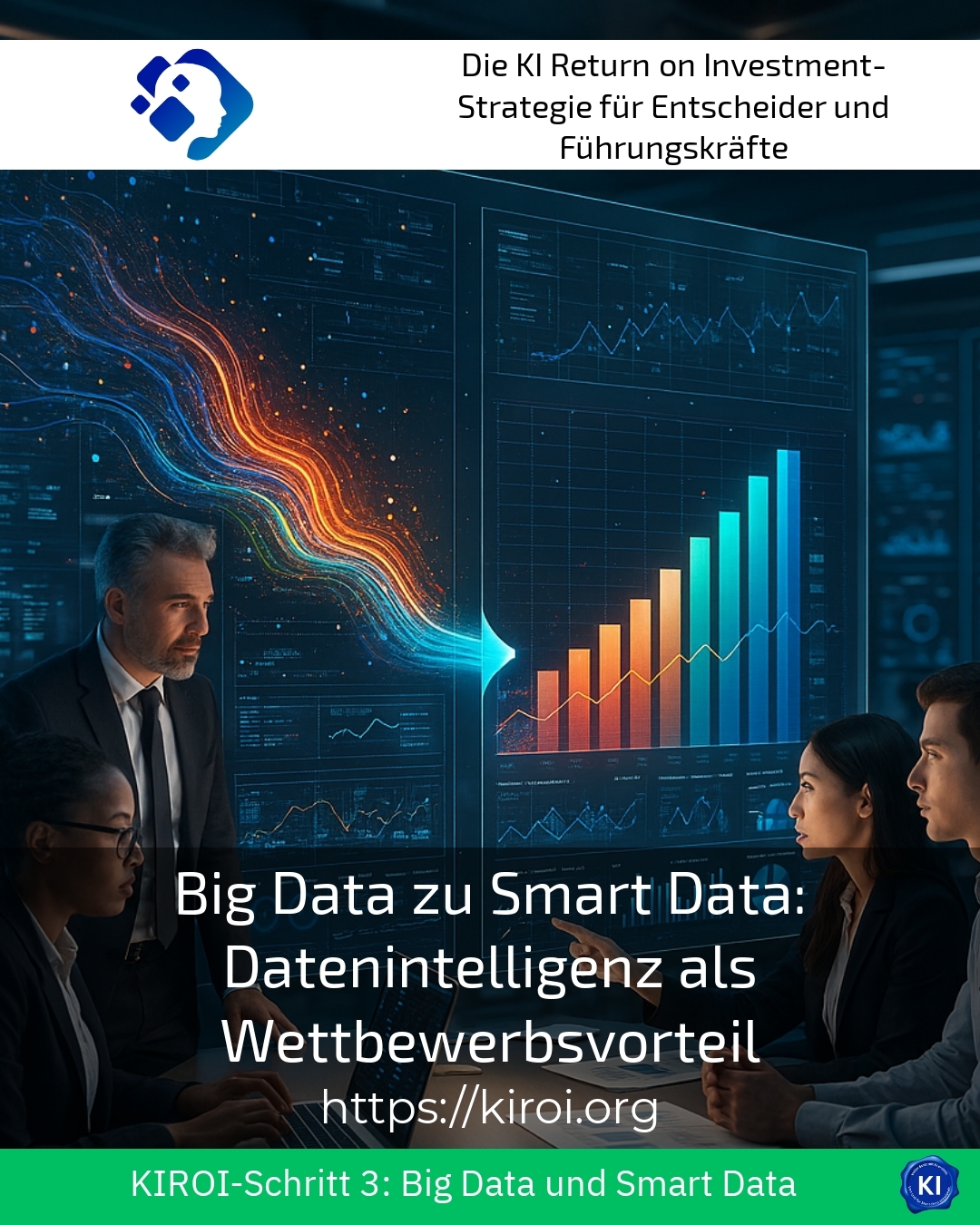
Imagine your company swimming in an ocean of information, yet only a fraction of it actually leads to wise decisions. The transformation from Big Data to Smart Data: Data intelligence as a competitive advantage describes precisely this critical transition. Many organisations today collect more data than ever before. However, the sheer volume of information does not create added value. Only intelligent processing and analysis transform raw data into strategic resources. In this article, you will learn how this development fundamentally changes business models. You will discover practical approaches for implementation. Furthermore, you will learn what support is available to assist you on this journey.
The Evolution of Information Processing in Modern Organisations
The digital landscape has changed dramatically in recent years. Companies generate enormous amounts of information daily from a wide variety of sources. Customer interactions, production processes, and market movements continuously generate new data points. This abundance of information holds enormous potential. At the same time, it presents organisations with significant challenges. The mere storage of large amounts of data does not automatically lead to better business results. Rather, it depends on qualitative preparation and context-related analysis [1]. Only then do actionable insights emerge for strategic decisions.
For example, a medium-sized logistics company collected telemetry data from its vehicle fleet over several years. However, the sheer volume of information overwhelmed the existing analysis capabilities. Only through targeted filtering and intelligent algorithms could patterns be recognised. These patterns enabled predictive maintenance and optimised route planning. Another example comes from the retail sector. Here, companies analyse customer purchasing behaviour data. They identify seasonal trends and individual preferences. This allows them to create personalised offers. In the healthcare sector, clinics use patient data for more precise diagnoses. They combine historical treatment outcomes with current symptoms. This integration of different data sources significantly improves treatment quality.
Quality over quantity: the paradigm shift in Big Data to Smart Data
The transition from mass data collection to intelligent data utilisation requires a fundamental rethink. Organisations must first define which information is actually relevant to the business. This focus enables more efficient resource utilisation. It also reduces complexity and accelerates analysis processes. Concentrating on relevant datasets significantly improves decision quality [2]. Companies often report faster response times to market changes. They can identify trends earlier and act accordingly.
In the manufacturing industry, companies rely on sensor data from production. They monitor machine parameters in real-time. Deviations from normal values are detected immediately. This enables preventive interventions before costly failures. Financial service providers use similar approaches for fraud detection. They analyse transaction patterns and identify suspicious activities. Energy suppliers optimise their grid control through intelligent data analysis. They forecast peak loads and adjust generation accordingly. These examples show the diverse application possibilities of intelligent data usage.
Best practice with a KIROI customer
An internationally operating trading company faced the challenge of managing its inventory more efficiently. The company had extensive historical sales data from several years, along with information on delivery times and seasonal fluctuations. However, previous analysis was manual and time-consuming. As part of a transruptions coaching support, we developed a new data strategy together. We first identified the most relevant data points for inventory decisions. Subsequently, we implemented automated analysis processes for these core data. The result was a significant percentage reduction in inventory costs. At the same time, product availability for end customers noticeably improved. Employees were able to concentrate on strategic tasks. Data preparation was now automated and reliable. This transformation took several months of intensive collaboration. It required both technical adjustments and cultural changes within the company. The project team learned to make and trust data-based decisions. Today, the company is significantly more agile in its inventory planning.
Technological Foundations for Intelligent Data Utilisation
The transformation of raw data into actionable insights requires modern technological infrastructures. Cloud-based platforms now enable scalable storage and processing of large amounts of data. Machine learning methods assist in the automatic recognition of patterns in complex datasets. However, these technologies do not work in isolation from each other. They must be integrated into existing enterprise systems. Successful implementation therefore requires both technical expertise and strategic planning [3]. Many companies underestimate the effort required for this integration.
Telecommunications providers use network data to optimise their services. They analyse the connection quality and usage behaviour of their customers, allowing them to selectively expand network capacities. Insurance companies rely on data analysis for personalised tariff design, evaluating individual customer risk factors more precisely. Car manufacturers collect vehicle data for product development, identifying which functions customers actually use. This knowledge is incorporated into future model generations.
Big Data to Smart Data: Data intelligence as a competitive advantage through strategic support
Technical implementation alone does not guarantee project success. Many organisations fail due to cultural hurdles or a lack of strategic alignment. External support can provide valuable impetus here. An experienced coach assists in identifying relevant use cases. They accompany teams in developing a data-driven corporate culture. This doesn't involve off-the-shelf standard solutions. Rather, the company's individual situation is the focus. Transruptions-Coaching clearly positions itself as a support for such complex transformation projects [4]. The consulting covers both technical and organisational aspects.
Clients often report difficulties with internal communication. Specialist departments and IT teams speak different languages. Strategic goals are not clearly translated into technical requirements. This is where professional support comes in. It builds bridges between different company areas. In pharmaceutical research, for example, scientists and data analysts must collaborate. They combine laboratory results with statistical models. Media companies analyse user behaviour on their platforms. They optimise content based on engagement data. Real estate companies use market data for investment decisions. They evaluate locations based on a variety of factors.
Best practice with a KIROI customer
A financial services company wanted to improve its customer advisory services. The advisors had access to extensive customer data from various systems, but this information was fragmented and difficult to access, meaning a unified view of the customer did not exist. As part of our support, we initially conducted a thorough analysis of the existing data landscape, identifying redundancies and inconsistencies across the different data sources. Together with the project team, we developed a central customer analysis dashboard. This dashboard automatically aggregates relevant information from all connected systems. Advisors can now respond more quickly to individual customer needs, identify cross-selling opportunities, and proactively present offers. Customer satisfaction has demonstrably improved since the system was introduced. Employee satisfaction also increased due to a reduction in administrative tasks. The project spanned several quarters of intensive collaboration, encompassing technical development, training, and change management measures. According to the project management, the close support provided by transruptions-coaching was crucial to its success.
Challenges and solutions in data transformation
The transition to intelligent data utilisation presents various challenges. Data protection requirements must be carefully observed. The GDPR sets clear boundaries for the processing of personal data. Companies must balance compliance and innovation. Legacy IT systems often make the integration of new systems difficult. Evolved IT landscapes cannot be modernised overnight [5]. The quality of existing data frequently presents another obstacle. Incomplete or erroneous datasets lead to unreliable analysis results.
In the banking sector, data protection and customer trust are paramount. Financial institutions must protect sensitive customer data with particular care. At the same time, customers expect personalised services and recommendations. This balancing act requires well-thought-out data strategies and transparent communication. Public administrations use data for more efficient citizen services. They must adhere to strict data security regulations in the process. Educational institutions analyse learning data to improve their offerings. They personalise educational paths based on individual learning progress.
The human factor in Big Data to Smart Data projects
Technology alone does not create a sustainable competitive advantage. The people in the company must understand and use the new opportunities. Data literacy is becoming a core competency in modern organisations. Employees need training and continuous professional development. Leaders must exemplify and promote a data-driven decision-making culture. Resistance to change is normal and must be managed professionally. External coaching can offer valuable support here. It helps to reduce fears and generate enthusiasm for new ways of working.
HR managers use data analytics for strategic workforce planning. They identify skills gaps and plan targeted development measures. Marketing teams analyse campaign data for optimized customer engagement. They test different messages and systematically measure their effectiveness. Sales representatives use sales forecasts for better planning. They prioritise leads based on data-driven probability of success. These examples illustrate the broad scope of intelligent data utilisation.
My KIROI Analysis
The transformation from mass data collection to intelligent data utilisation represents a crucial step in development for modern organisations. My analysis clearly shows that merely possessing large amounts of data does not create an automatic competitive advantage. Only the qualitative preparation and context-specific analysis transform raw data into strategic resources. Companies that successfully manage this transition report improved decision-making processes and faster response times. They can identify market trends earlier and act accordingly. The technological foundations for this transformation are now largely available and affordable.
The biggest challenges often lie in the organisational and cultural spheres. Teams need to learn to trust and utilise data-driven insights. Siloed thinking between specialist departments and IT must be overcome. Managers play a central role in establishing a data-driven corporate culture. External support can provide valuable impetus during this complex transformation. It helps to avoid typical pitfalls and identify success factors. Transruptions Coaching supports companies precisely with these demanding change processes. The examples presented in this article show the enormous potential of intelligent data utilisation. At the same time, they make it clear that every organisation must find its own individual path. Standard solutions do not exist, but proven procedures can point the way.
Further links from the text above:
[1] Bitkom Guide Data Analysis and Digital Transformation
[2] McKinsey Insights on Data Analytics and Smart Data
[3] Gartner Definition and Analysis of Big Data Technologies
[4] transruptions-Coaching Methodology and Approach
[5] General Data Protection Regulation Information Portal
For more information and if you have any questions, please contact Contact us or read more blog posts on the topic Artificial intelligence here.











 Deutsch
  English (UK)