
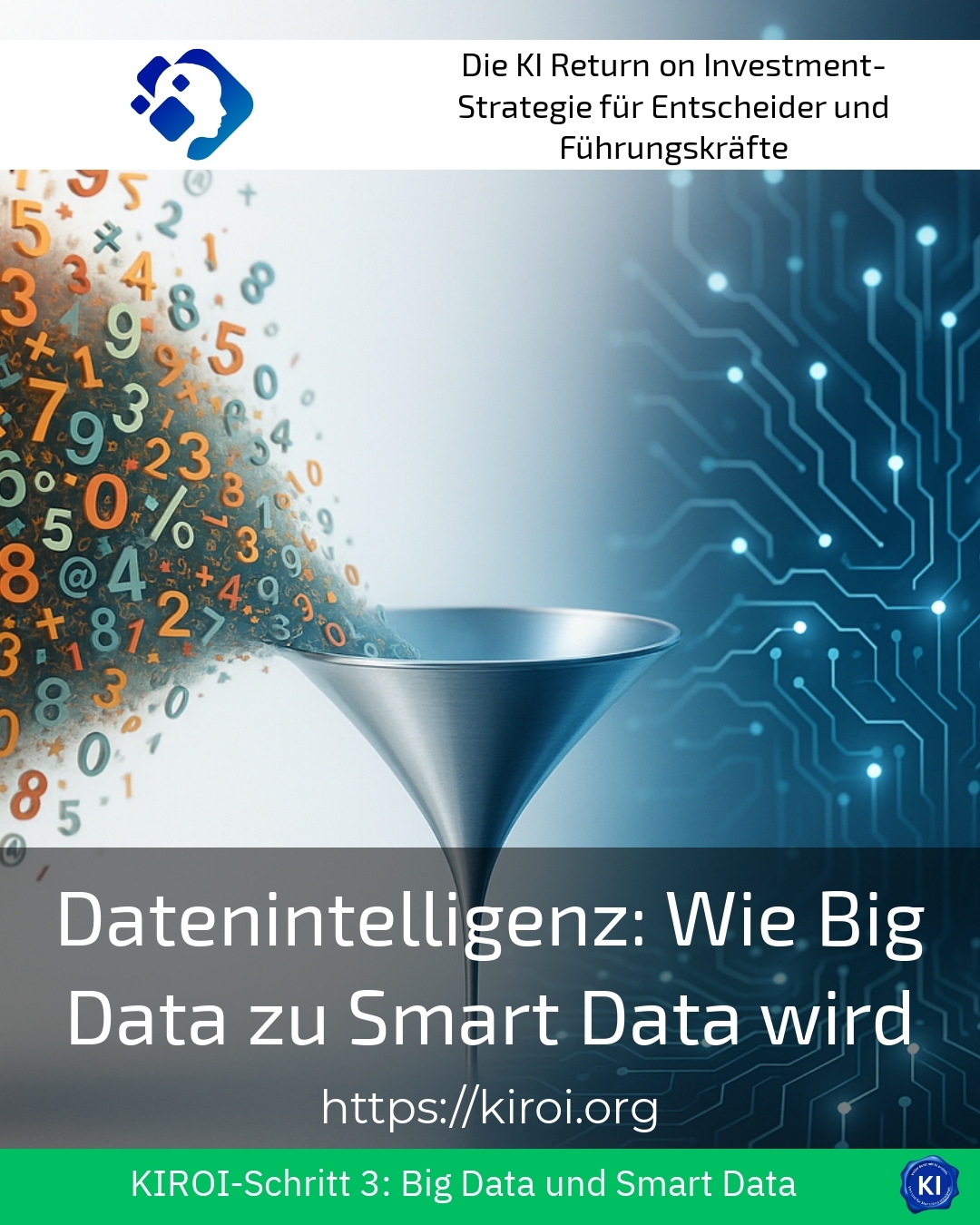
Imagine your company sits on a veritable treasure trove of data, yet no one knows how to unearth it. This is precisely where the concept of Data Intelligence: How Big Data Becomes Smart Data and opens up entirely new perspectives for strategic decisions. Unimaginable amounts of information are generated daily, slumbering in databases and awaiting evaluation. However, the real challenge lies not in collecting, but in intelligently filtering and interpreting this flood of data. Companies that master this transformation process gain a crucial competitive advantage. They recognise patterns where others see only chaos, and make informed decisions while competitors are still fumbling in the dark.
Understanding the Fundamentals of Data Intelligence
The journey from pure data collection to genuine value creation is akin to an alchemical transformation, where base material is turned into precious gold. Raw data initially has no inherent value because it is unstructured, fragmented, and often contradictory. Only through intelligent analysis do these quantities of information unlock their true potential. Algorithms sift through millions of data points and identify relevant connections. Machine learning makes it possible to make predictions and derive recommendations for action. In this way, a qualitative essence emerges from the quantitative mass, supporting concrete business decisions.
For example, a logistics company uses sensor data from its vehicle fleet to detect maintenance needs early on. Retail chains analyse purchasing behaviour in real time, thereby continuously optimising their inventories. Financial service providers, in turn, rely on pattern recognition to identify fraudulent transactions within milliseconds [1]. These application examples illustrate how diverse the areas of use can be and what added value intelligent data processing generates.
Data intelligence as a strategic compass
Leaders today face the challenge of making complex decisions under time pressure. Intuition alone is no longer sufficient in many cases because market dynamics have increased enormously. Data-driven analysis serves as a reliable compass, offering direction in challenging territory. An energy provider can optimise its grid utilisation and avoid bottlenecks with the help of consumption forecasts. Insurance companies calculate risks more precisely by linking historical claims data with current environmental factors. Pharmaceutical companies are accelerating their research processes by analysing clinical studies and patient data [2].
However, transforming raw data into actionable insights requires more than just technical infrastructure. People need to be able to ask the right questions and interpret the results. Therefore, the combination of technological competence and strategic thinking is gaining increasing importance.
Best practice with a KIROI customer
A medium-sized manufacturing company in the mechanical engineering sector approached transruptions-coaching because, despite extensive data collection, it was unable to gain any usable insights. The initial situation was typical for many organisations: sensors on production facilities continuously supplied measurement data, but this data disappeared unused into databases. Together, we first analysed the existing infrastructure and identified critical weaknesses in the data architecture. In the next step, we defined concrete use cases that promised measurable business benefits. The focus was on predictive maintenance for critical machine components. Within six months, the company developed an early warning system that reliably predicts impending failures. Unplanned downtime was significantly reduced by a remarkable forty percent, and maintenance costs decreased noticeably. This success motivated management to explore further application areas and strengthen the data culture throughout the company. Today, the company uses its data strategically and makes decisions on a solid analytical basis.
Challenges on the Path to Data Intelligence
The transformation process rarely runs smoothly, as numerous obstacles can make progress difficult. Data silos represent one of the most persistent problems, as information is isolated within different departments. A telecommunications provider, for example, may have customer data in sales, technical data in network management, and financial data in accounting. This fragmentation prevents a holistic view of the customer and significantly limits analytical capabilities. Banks often struggle with legacy systems that hinder the integration of modern analytics tools. Healthcare facilities, in turn, must comply with strict data protection regulations, which limit the use of sensitive patient data [3].
Furthermore, many organisations lack qualified specialists who can perform complex data analyses. Data scientists are in high demand on the job market and consequently difficult to recruit. The acceptance of data-driven decisions within the workforce also presents a hurdle that should not be underestimated. Long-serving employees often trust their experience more than algorithmic recommendations.
Cultural change as a success factor for data intelligence
Technology alone does not guarantee success, as people are the driving force behind every transformation. A data-driven corporate culture does not emerge overnight but requires continuous effort at all levels. Leaders must act as role models and actively demonstrate data-based decision-making processes. For example, a car manufacturer established regular data workshops to raise awareness among its employees. Retailers train their store managers in using sales analyses so they can independently optimise local product ranges. Media companies promote exchange between editorial teams and data teams to make content more targeted to specific audiences.
transruptions-Coaching supports companies in this cultural shift and provides impetus for sustainable changes. Clients often report that initial scepticism turns into enthusiasm as soon as the first successes become visible. The key lies in gradual implementation and consistent communication of added value.
Best practice with a KIROI customer
A regional utility company sought support in developing a data strategy because previous digitalisation initiatives had yielded no discernible benefits. Employees were sceptical of new technologies and feared their work performance would be monitored. In intensive workshops, we collaboratively developed concrete use cases designed to simplify daily work. One example was the automated detection of leaks in the water network based on consumption patterns. This provided fitters with more precise information, allowing them to carry out repairs more efficiently. This positive experience fundamentally changed the staff's attitude and opened doors for further projects. Today, data analysis is perceived as helpful support rather than a threat. Management continuously invests in further training and actively promotes internal knowledge sharing. The transformation was successful because the focus was on people, not technology.
Practical fields of application and industry examples
The applications of intelligent data utilisation extend across almost all economic sectors and business functions. In the area of customer analysis, behavioural data enables personalised outreach, significantly increasing conversion rates. Airlines dynamically optimise their pricing by evaluating demand patterns and competitor prices in real time. Hotel chains forecast occupancy rates and adjust their marketing activities accordingly [4]. Agricultural operations use satellite data and soil analyses to maximise crop yields and use resources efficiently.
In the manufacturing sector, the analysis of machine data is fundamentally revolutionising quality assurance. Deviations are detected before scrap occurs, and production processes are continuously optimised. Chemical corporations monitor their plants around the clock, thereby significantly minimising safety risks. Automotive suppliers synchronise their supply chains more precisely and reduce warehousing costs through demand-driven production.
Data intelligence in the public sector
Authorities and public institutions are also increasingly discovering the potential of data-driven decision-making for their tasks. Transport companies optimise timetables based on passenger flows, thereby improving services for citizens. Municipal administrations analyse the energy consumption of public buildings and systematically identify savings potential. Police authorities use crime statistics to plan patrol routes more efficiently and to deploy prevention measures more effectively [5].
However, the challenges in the public sector differ significantly from those in private companies. Transparency requirements, political frameworks, and bureaucratic structures necessitate tailored approaches. Therefore, transruptions-Coaching also supports organisations in the public sector, taking their specific requirements into account.
Technological Foundations and Tools
The technical infrastructure forms the foundation for any successful data initiative and deserves appropriate attention. Cloud platforms enable scalable storage and processing of large amounts of data without high upfront investments. Visualisation tools make complex relationships understandable for decision-makers and promote data-driven discussions. Artificial intelligence and machine learning automate analysis processes and uncover patterns that would remain hidden from human analysts.
For example, an insurance group implemented a central data platform that consolidates information from various sources. Retailers are relying on real-time dashboards that inform branch managers about current sales figures. Logistics companies are using GPS tracking and telematics data to dynamically optimise routes and reduce delivery times.
My KIROI Analysis
The transformation of raw data into actionable insights represents one of the central challenges of our time and affects organisations of all sizes. In my experience, many projects fail not due to technical hurdles, but to a lack of strategic alignment and insufficient employee engagement. The key to success lies in the clear definition of use cases that promise measurable business benefit. Technology should always remain a means to an end and never become an end in itself.
Companies that dare to make the leap to intelligent data usage frequently report surprising insights and new business opportunities. At the same time, this path requires patience, as sustainable changes take time and setbacks are part of the learning process. transruptions-coaching supports organisations in this transformation and provides impetus for pragmatic solutions. The focus is always on people, as technology only unfolds its potential through competent users. The future belongs to those companies that understand their data as a strategic resource and invest accordingly. Those who set the right course today will benefit from the fruits of this decision tomorrow and be able to realise competitive advantages.
Further links from the text above:
[1] McKinsey: The Data-Driven Enterprise
[2] Harvard Business Review: Insights from Data Analytics
[3] Gartner: Big Data Definition and Trends
[4] Forbes: Big Data and Business Intelligence
[5] Bitkom: Big Data in Germany
For more information and if you have any questions, please contact Contact us or read more blog posts on the topic Artificial intelligence here.











 Deutsch
  English (UK)