
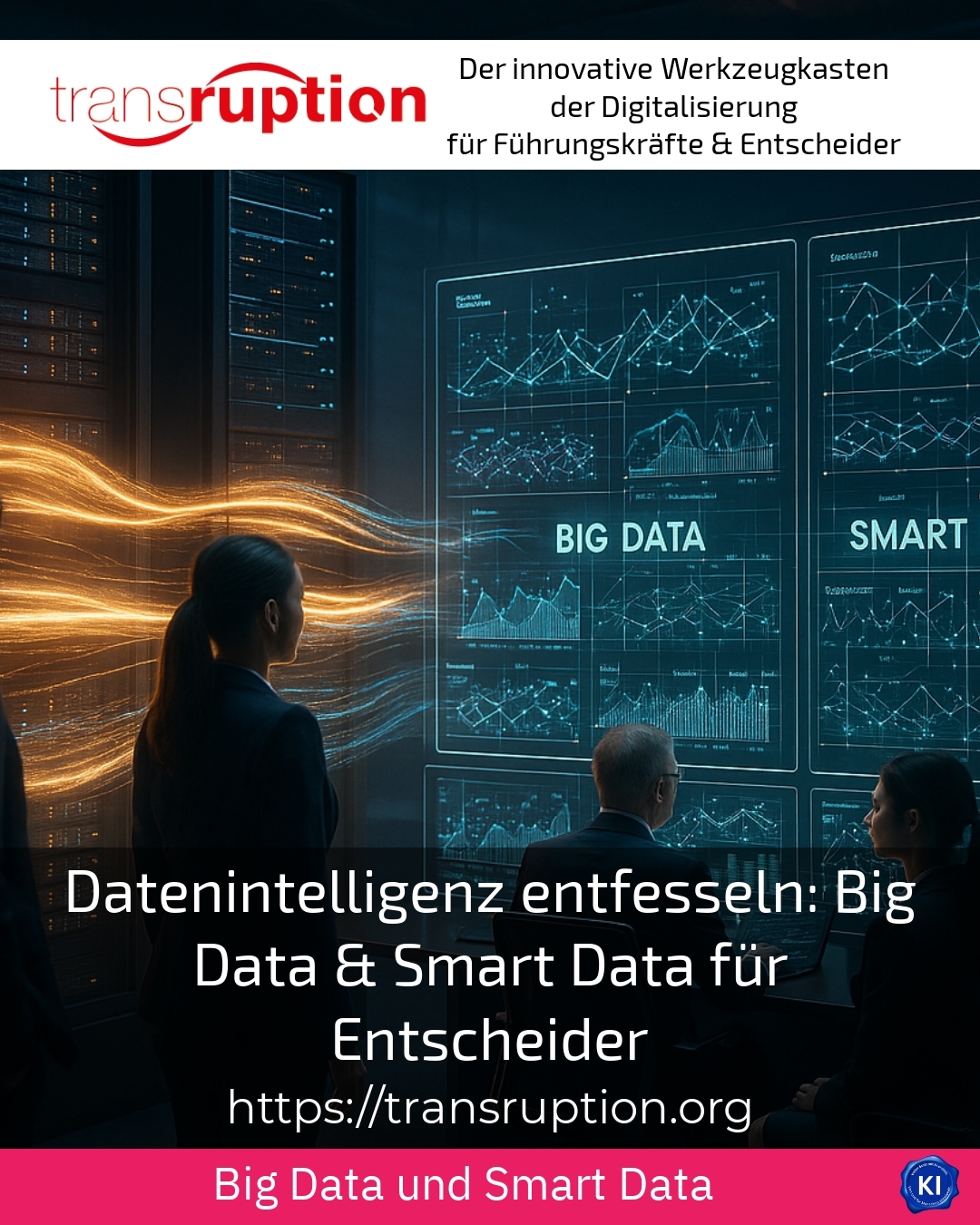
In today's digital world, the term Data intelligence increasingly important. Companies across all industries are focusing not only on collecting large amounts of data – so-called Big Data – but also on processing it intelligently. The aim is to filter out high-quality, relevant information, which is referred to as Smart Data. Data intelligence supports decision-makers in making better, more informed choices. The following outlines how this shift increases efficiency in companies and the practical examples arising from it.
From abundance to clarity: Big Data and Smart Data at a glance
Many companies possess vast quantities of data generated daily from a multitude of sources. These include both structured and unstructured data: from customer interactions and sensors to social media posts. Big Data describes precisely this immense volume, which even exceeds the scope of conventional data processing[9][8].
However, the abundance of data can quickly become a challenge. This is where the Smart Data component comes into play: it refers to carefully filtered and quality-checked information within this data volume. Smart Data is error-free, relevant, and tailored to the respective context, enabling precise and efficient utilisation.
For example, a retail company can use Smart Data to filter from its sales figures (Big Data) which products are particularly attractive to specific customer groups – and thus create more targeted marketing campaigns.
How Data intelligence Supports decision-making processes
A key advantage of the Data intelligence is that they enable decision-makers to meaningfully channel the flood of information and derive immediate recommendations for action. Not only the quantity, but above all the quality and expressiveness of the data are crucial for sustainable management of business processes.
In the automotive industry, for example, the condition of machinery is monitored in real-time using smart data. Only relevant sensor data is analysed, allowing maintenance to be planned in good time and breakdowns to be minimised. This significantly increases productivity and reduces costs.
Also in the financial sector, it enables Data intelligence better risk assessments. Banks and insurance companies only analyse large amounts of data selectively to assess creditworthiness or to specifically uncover cases of fraud.
BEST PRACTICE with Client (Name withheld due to NDA): In a medium-sized technology company, we supported the project to introduce a data-driven decision-making model. Through active filtering and contextualisation of Big Data, concrete Smart Data insights were generated, which significantly accelerated product development and reduced time-to-market.
Concrete action impulses for leaders
Um Data intelligence to use effectively, it is recommended to observe the following steps:
- Clear definition of objectives: Only when it is clear which decisions are to be supported can the data focus be precisely set.
- Quality control and data selection: Not all information is relevant. Early filtering avoids overwhelm and misinvestments.
- Integration of Analytical Tools: The use of AI and Machine Learning supports the recognition of patterns and the creation of forecasts.
For example, in healthcare, patient data is analysed in this way to develop personalised therapy recommendations. At the same time, such systems ensure data quality and data protection.
Smart Data as a Milestone in Corporate Transformation
The transition from the mere collection of large amounts of data (Big Data) to the targeted use of Smart Data is a crucial step for many companies. While consumers in retail often benefit from personalised recommendations, manufacturers use Smart Data to optimise production processes and make resource-efficient decisions.
A global logistics company reports that Smart Data has made route management more dynamic and cost-effective. Only relevant information on weather, traffic volume, and vehicle condition is processed in real time.
This allows even medium-sized companies to understand their own data not as a burden, but as a valuable raw material. However, this development requires cultural openness towards digitalisation and data analysis, as well as appropriate training for employees.
BEST PRACTICE at the customer (name hidden due to NDA contract)
A service provider in the renewable energy sector used data-intelligent systems to make wind farm yield forecasts more precise. This led to better investment decisions and a sustainable increase in performance.
BEST PRACTICE at the customer (name hidden due to NDA contract)
An international retailer implemented smart data analytics to analyse customer behaviour in detail. This enabled the creation of tailor-made offers, which increased customer satisfaction and improved the repeat purchase rate.
My analysis
The targeted use of Data intelligence enables companies to extract precisely the insights from the wealth of information that are crucial. The combination of Big Data and Smart Data creates a new quality of decision support. Decision-makers benefit from clear, relevant, and timely available data that both increase efficiency and support innovation processes. Projects involving Data intelligence We will gladly accompany you to provide lasting support and guidance on this path.
Further links from the text above:
Difference Between Big Data and Smart Data - Esa Automation
Big Data vs Smart Data: the steps of the winning strategy
Big Data vs. Smart Data: Key Insights for Operational Optimisation
Big Data vs. Smart Data: Valuable Insights to Optimise… – MaintainX
Big Data vs. Smart Data: Is More Always Better? – Netconomy
Big Data vs. Smart Data – Dataversity
For more information and if you have any questions, please contact Contact us or read more blog posts on the topic TRANSRUPTION here.











 Deutsch
  English (UK)