
kiroi.org

KIROI - Artificial Intelligence Return on Invest
The AI strategy for decision-makers and managers

Business excellence for decision-makers & managers by and with Sanjay Sauldie

KIROI - Artificial Intelligence Return on Invest: The AI strategy for decision-makers and managers

KIROI - Artificial Intelligence Return on Invest: The AI strategy for decision-makers and managers

Start » Mastering cultural transformation: KIROI step 4 for leaders
8 August 2025

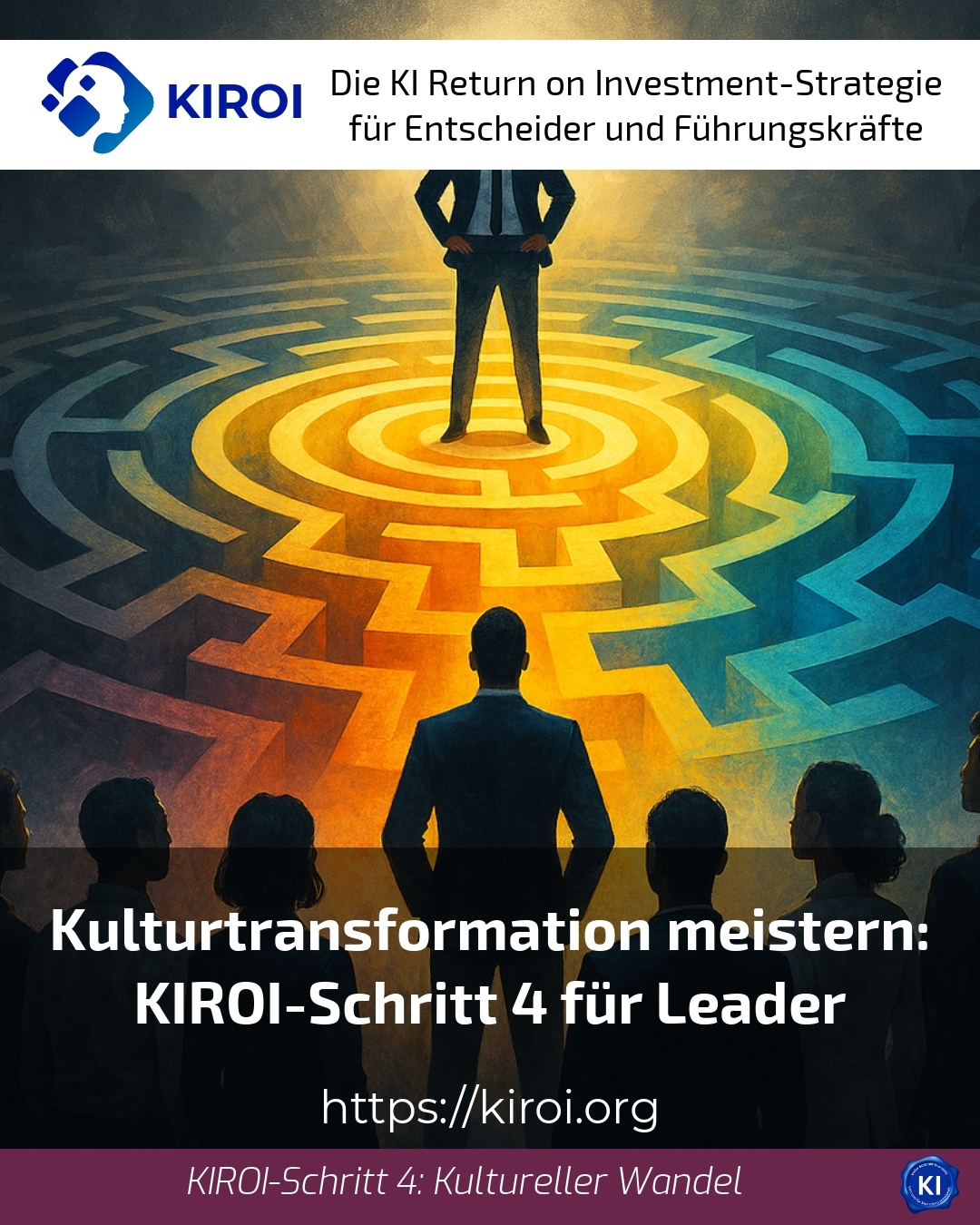
Mastering cultural transformation: KIROI step 4 for leaders

4.3
(1325)

The Significance of Active Control in Cultural Transformation

A cultural transformation is a complex process that requires continuous attention. The fourth step involves actively managing the change processes and regularly measuring them. Only in this way can sustainable changes in corporate culture be ensured and supported. Leaders in particular face the challenge of establishing suitable instruments for measuring cultural development and using them consistently.

How leaders successfully accompany cultural transformation

Leaders are particularly challenged in their role as drivers of cultural change. They must provide impetus to support employees on the path to new values. It is crucial to understand culture not as a short-term project, but as a long-term development process. Many report their teams' need to receive clear indicators and concrete feedback on progress. Active management here means defining suitable metrics and reflecting on them regularly with employees.

Defining measurable indicators for cultural development

Various indicators can be used to measure cultural transformation and can be collected regularly. For instance, the frequency of desired values in the perceptions of managers and employees can be recorded. Equally important is the identification of limiting values that are still holding the culture back. Another indicator is the alignment of the current culture with the desired target culture. This way, leaders create transparency about how far the journey to the new culture has progressed and where further impetus is needed.

Practical examples from various industries

KIROI BEST PRACTICE at company XYZ (name changed due to NDA contract) In a medium-sized technology company, cultural management was implemented through annual surveys on corporate values, followed by workshops. Managers and employees reflected together on how well the lived values aligned with the desired culture and developed concrete measures for further embedding them. This continuous support led to increased motivation and more open dialogue within the team.

KIROI BEST PRACTICE at ABC (name changed due to NDA contract) A service company implemented a measurement system that tracked the number of identified and addressed limiting factors semi-annually. Furthermore, managers were trained to actively foster a feedback culture. This approach supported the targeted management of cultural transformation and led to an increased willingness to change across various departments.

KIROI BEST PRACTICE at DEF (name changed due to NDA contract) In a manufacturing company, coaching helped to link the control of cultural transformation with clear responsibilities. By defining cultural elements as measurable control variables and through transparent monitoring, leaders were empowered to actively support the cultural change and make the transformations visible. This increased acceptance and commitment throughout the entire company.

The role of communication and feedback loops

Alongside measurement, active steering requires a consistent communication strategy. Leaders are called upon to provide ongoing feedback and to highlight the importance of cultural transformation in everyday work. Clients often report that open dialogue about successes and challenges accelerates the acceptance of change. This creates a culture of dialogue that stabilises change and allows for adjustments.

Ensuring cultural sustainability through continuous support

The challenge with active management also lies in keeping the process alive until the desired goals are achieved. Culture changes slowly, but leaders can support this process through persistent commitment. KIROI coaching offers practical support by providing inspiration, introducing suitable management tools, and connecting project participants. This creates a framework within which cultural transformation can be effectively shaped and established.

My analysis

Active management is an indispensable component of successful cultural transformations. Here, leaders gain agency through targeted measurements and open communication. Thus, they can support cultural change without making unrealistic promises. The KIROI methodology supports this step by considering individual situations and offering practice-oriented guidance. Cultural transformation is not a sprint, but a continuous process that can be sustainably shaped through committed leadership and suitable management tools.

Further links from the text above:

[1] Cultural change - cultural change step by step

[4] Culture transformation – 4 steps and 4 interconnections

[7] Cultural transformation in 5 steps

For more information and if you have any questions, please do not hesitate to contact us regarding the topic. Culture transformation or read more blog posts on the topic Culture transformation here.

How useful was this post?

Click on a star to rate it!

Average rating 4.3 / 5. Vote count: 1325

No votes so far! Be the first to rate this post.

Spread the love

transruption.org

The digital toolbox for
the digital winners of today and tomorrow

Business excellence for decision-makers & managers by and with Sanjay Sauldie

transruption
transruption

transruption: The digital toolbox for
the digital winners of today and tomorrow

Start » Mastering cultural transformation: KIROI step 4 for leaders
8 August 2025

Mastering cultural transformation: KIROI step 4 for leaders

4.3
(1325)

The Significance of Active Control in Cultural Transformation

A cultural transformation is a complex process that requires continuous attention. The fourth step involves actively managing the change processes and regularly measuring them. Only in this way can sustainable changes in corporate culture be ensured and supported. Leaders in particular face the challenge of establishing suitable instruments for measuring cultural development and using them consistently.

How leaders successfully accompany cultural transformation

Leaders are particularly challenged in their role as drivers of cultural change. They must provide impetus to support employees on the path to new values. It is crucial to understand culture not as a short-term project, but as a long-term development process. Many report their teams' need to receive clear indicators and concrete feedback on progress. Active management here means defining suitable metrics and reflecting on them regularly with employees.

Defining measurable indicators for cultural development

Various indicators can be used to measure cultural transformation and can be collected regularly. For instance, the frequency of desired values in the perceptions of managers and employees can be recorded. Equally important is the identification of limiting values that are still holding the culture back. Another indicator is the alignment of the current culture with the desired target culture. This way, leaders create transparency about how far the journey to the new culture has progressed and where further impetus is needed.

Practical examples from various industries

KIROI BEST PRACTICE at company XYZ (name changed due to NDA contract) In a medium-sized technology company, cultural management was implemented through annual surveys on corporate values, followed by workshops. Managers and employees reflected together on how well the lived values aligned with the desired culture and developed concrete measures for further embedding them. This continuous support led to increased motivation and more open dialogue within the team.

KIROI BEST PRACTICE at ABC (name changed due to NDA contract) A service company implemented a measurement system that tracked the number of identified and addressed limiting factors semi-annually. Furthermore, managers were trained to actively foster a feedback culture. This approach supported the targeted management of cultural transformation and led to an increased willingness to change across various departments.

KIROI BEST PRACTICE at DEF (name changed due to NDA contract) In a manufacturing company, coaching helped to link the control of cultural transformation with clear responsibilities. By defining cultural elements as measurable control variables and through transparent monitoring, leaders were empowered to actively support the cultural change and make the transformations visible. This increased acceptance and commitment throughout the entire company.

The role of communication and feedback loops

Alongside measurement, active steering requires a consistent communication strategy. Leaders are called upon to provide ongoing feedback and to highlight the importance of cultural transformation in everyday work. Clients often report that open dialogue about successes and challenges accelerates the acceptance of change. This creates a culture of dialogue that stabilises change and allows for adjustments.

Ensuring cultural sustainability through continuous support

The challenge with active management also lies in keeping the process alive until the desired goals are achieved. Culture changes slowly, but leaders can support this process through persistent commitment. KIROI coaching offers practical support by providing inspiration, introducing suitable management tools, and connecting project participants. This creates a framework within which cultural transformation can be effectively shaped and established.

My analysis

Active management is an indispensable component of successful cultural transformations. Here, leaders gain agency through targeted measurements and open communication. Thus, they can support cultural change without making unrealistic promises. The KIROI methodology supports this step by considering individual situations and offering practice-oriented guidance. Cultural transformation is not a sprint, but a continuous process that can be sustainably shaped through committed leadership and suitable management tools.

Further links from the text above:

[1] Cultural change - cultural change step by step

[4] Culture transformation – 4 steps and 4 interconnections

[7] Cultural transformation in 5 steps

For more information and if you have any questions, please do not hesitate to contact us regarding the topic. Culture transformation or read more blog posts on the topic Culture transformation here.

How useful was this post?

Click on a star to rate it!

Average rating 4.3 / 5. Vote count: 1325

No votes so far! Be the first to rate this post.

Spread the love

Other content worth reading:

Mastering cultural transformation: KIROI step 4 for leaders

written by:

Keywords:

1TP5ManagersBalance #Kulturtransformation #Unternehmenskultur #Change management

Follow me on my channels:

Questions on the topic? Contact us now without obligation

Contact us

[wpforms id="331781" title="false"]

More articles worth reading

    Leave a comment










