
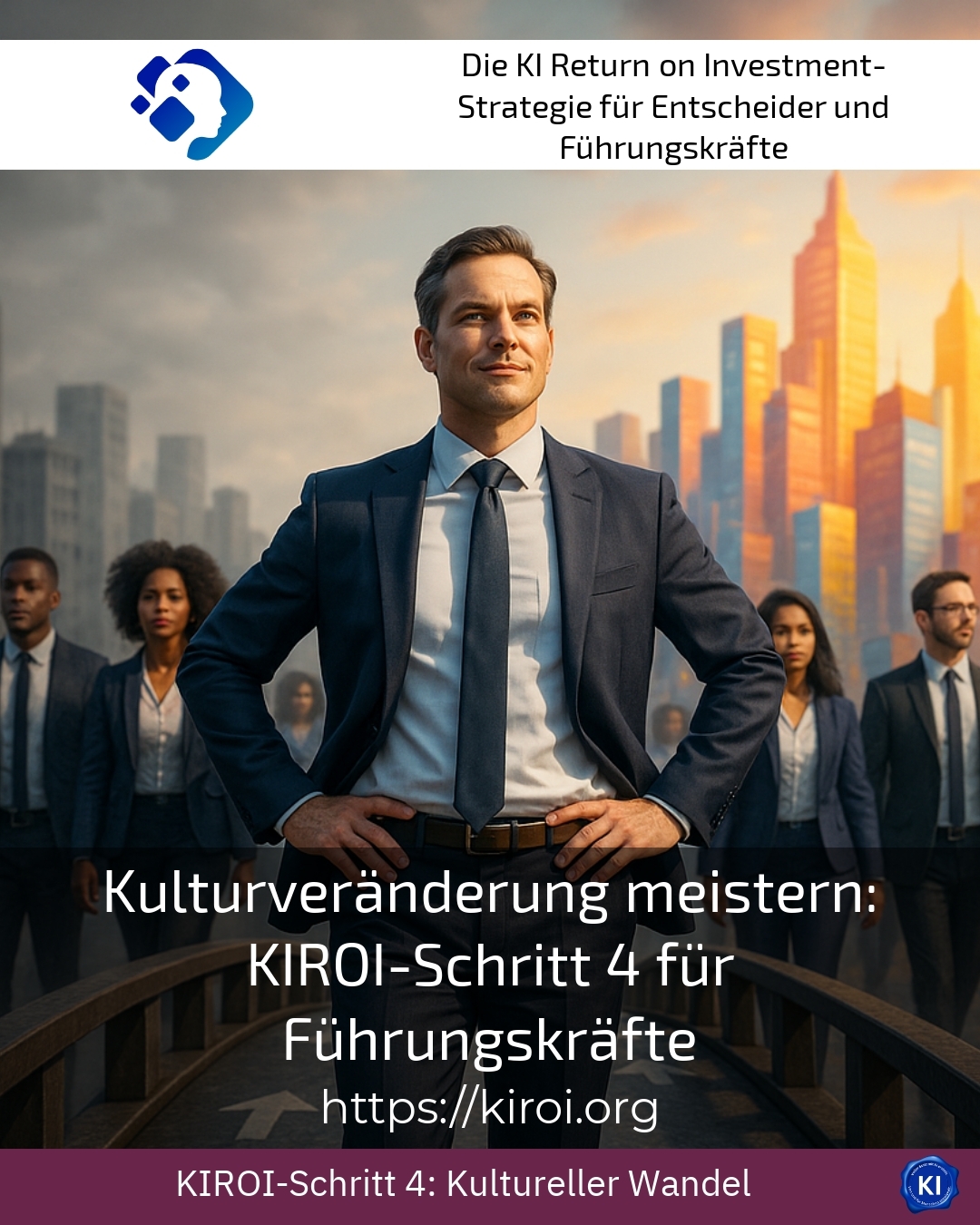
Successful cultural change often begins at the leadership level. Leaders significantly contribute to how values, behaviour, and a shared spirit are lived and experienced within the organisation. Within the scope of transruption coaching, AIROI step 4 plays a particularly central role when it comes to purposefully guiding cultural change and establishing it sustainably.
Culture change as a leadership task: Setting impulses at the top
The core of any cultural change is the awareness and active shaping by leaders. They are role models who not only define leadership values but also live them authentically. An example from the IT sector shows how uncertainties were reduced during phases of digitalisation through transparent communication. Leaders regularly informed their teams about the changes and each individual's role within them. This fostered trust and openness – essential foundations for an innovation-friendly work culture.
In production, we often experience teams wanting to avoid mistakes early on. Leaders who today recognise and encourage mistakes as a learning opportunity create a culture of continuous improvement. This gives employees more security and engagement, which in turn has positive effects on product quality.
Even in the service sector, leaders are drivers of a culture-changing orientation towards customer focus. They promote values such as empathy and partnership, which are directly reflected in customer contact and shape the entire company sustainably.
BEST PRACTICE with one customer (name hidden due to NDA contract) Senior management at a medium-sized engineering company focused on developing shared values with their teams. Through regular workshops, a new mission statement was created, emphasising openness and collaboration. This cultural change supported the introduction of more flexible working models and sustainably improved internal communication.
AIROI Step 4: Effectively involve leaders
A crucial impetus in the cultural change process is to involve and empower all leaders. The AIROI concept specifically supports this through coaching tailored to the role and challenges of managers. The aim is to create spaces for reflection, enabling managers to clarify and consciously embody their own leadership values.
An example from the healthcare sector shows how targeted leadership coaching improved communication between different hierarchical levels. Managers learned to communicate more empathetically and clearly, which strengthened collaboration, especially in challenging situations. This led to a noticeable improvement in the working atmosphere and, consequently, in patient satisfaction.
In business, a large company has supported its leaders through a multi-stage process to embed culture-specific topics such as customer centricity and digitised work processes. Through coaching and workshops, leaders developed a shared understanding of the necessary cultural change and have since acted confidently as cultural ambassadors.
The AIROI approach also supports leaders in public administration in understanding change as an opportunity and fostering innovation. Through coaching, a space was created where fears and uncertainties were addressed, while at the same time a clear stance on new values and behaviours emerged.
Practical tips for involving senior management in cultural change
Leaders are the central multipliers of cultural values. That's why it's important:
- To involve them early in the change process so they can help shape it.
- To foster transparency and regular communication in order to build trust.
- To create opportunities for exchange and joint reflection.
- To offer individual support through coaching, strengthening role understanding and leadership values.
These measures help to shape cultural change as a living process and to lead authentically and effectively as a leader.
Embedding cultural change sustainably through lived leadership
The sustainable anchoring of a new culture only succeeds if leaders understand and utilise their impact. They significantly shape daily collaboration through their attitude and behaviour. Positive leadership creates a working environment in which employees are motivated and can contribute.
In the tech industry, it's evident that leaders foster a culture of willingness to learn and change through constant dialogue and feedback sessions. This supports teams in reacting to market demands with agility and efficiency.
In skilled trades, leadership teams are often pioneers of a culture that combines pragmatism and team spirit. Clear communication and appreciation create strong bonds that not only improve the quality of work but also strengthen cohesion.
A recruitment consultancy reports that it has been able to support cultural change in numerous client companies by focusing on meaningful leadership. Employees gain new inspiration and a sense of purpose through leadership, which often leads to increased engagement and reduced turnover.
My analysis
Cultural change is a dynamic process primarily driven by leadership. AIROI Step 4 exemplifies the importance of targeted support and empowerment for leaders in their roles. Their leadership values, behaviour, and communication have a lasting impact on the company culture. Through coaching and conscious involvement, leaders can actively shape cultural change and act as multipliers. Examples from various sectors demonstrate that cultural change can succeed when leadership acts authentically and involves employees.
Further links from the text above:
Cultural Change – AIROI Step 4 for Leaders
Cultural change starts at the top.
Cultural change: 6 effective steps to transform company culture
Leadership and Corporate Culture – The Role of Managers
Company Culture: Definition and Positive Examples
Company Culture & Cultural Change
Leadership in Cultural Change: The Role of the Leader
For more information and if you have any questions, please contact Contact us or read more blog posts on the topic Artificial intelligence here.










 Deutsch
  English (UK)