
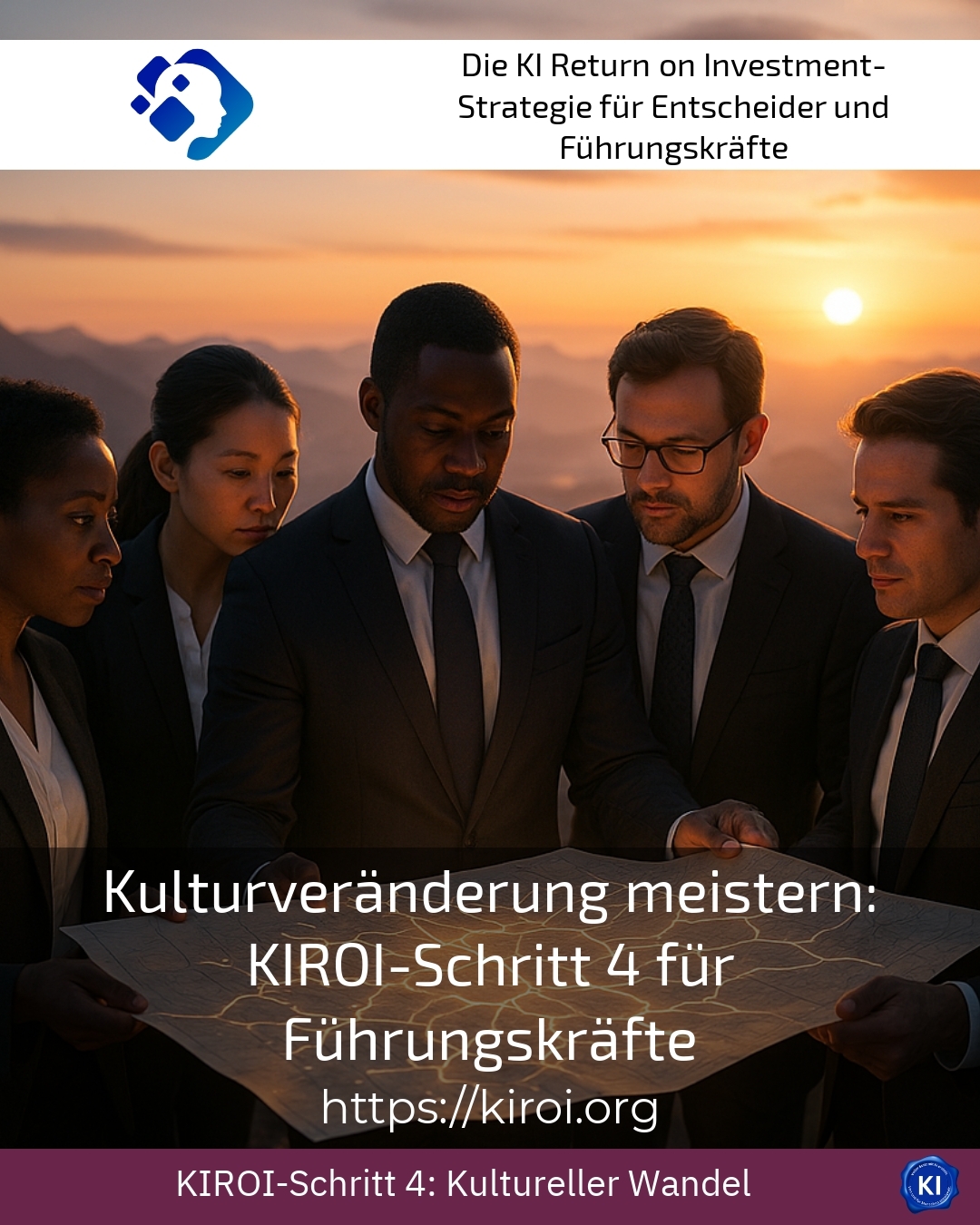
A sustainable culture within a company or organisation does not arise on its own. Mastering the challenge of cultural change requires conscious reflection and active shaping, especially from leaders. This is because culture is significantly influenced by leadership: the behaviour, values, and decisions of the leadership level set impulses for the entire team. Successfully guiding cultural change processes is therefore one of the core tasks of modern leaders and is part of transruption coaching, which supports and accompanies leaders in these projects.
Cultural change – Responsibility at leadership level
Cultural change begins at the top, as leadership values shape the lived company culture. Leaders are not just decision-makers, but role models who make values visible and demonstrate them through their behaviour. For example, a leader who actively embodies openness and trust shows that these values are important within the team. This shapes a culture in which employees feel safe to express their opinions and work more creatively.
A practical example from the IT industry: there, managers have helped to reduce uncertainty during periods of digital change through regular, transparent communication. Employees thus learned how the transformation improves their daily work and what role they play in the process. By modelling this transparency, the culture became more open and innovative.
In the manufacturing industry, cultural change is often reflected in how errors are handled. While error tolerance used to be low, modern leadership teams are succeeding in viewing mistakes as learning opportunities, thereby fostering a culture of continuous improvement. This relieves pressure on employees while simultaneously enhancing product quality.
In the service sector, leaders often focus on customer centricity as a cultural shift. Leaders drive impulses for new values such as empathy and partnership, which are reflected in customer contact and have a lasting impact on the entire organisation.
AIROI Step 4: Leaders as key culture bearers
The fourth step in the AIROI process for guiding cultural change focuses on leadership. This is because cultural changes are difficult to implement without their full commitment and clear role-modelling. Here are some core elements that leaders should consider:
- Develop awareness of one's own role as a cultural carrier
- Living authentic values, rather than just communicating them
- Engaging employees through open dialogue and participation opportunities
- Provide an impetus for change, for example through altered leadership behaviour
- Show constancy to build trust
An example from a medium-sized company shows how targeted leadership workshops empowered managers to actively drive cultural change. The participants reflected on their leadership styles, exchanged ideas about challenges, and developed concrete measures to break established patterns. In this way, the hierarchical structure evolved into a cooperative leadership style, which sustainably led to a more open company culture.
In the healthcare sector, leaders regularly reported improved staff retention after they had started introducing regular feedback rounds. Employees felt valued and more motivated to actively contribute suggestions—a clear impetus for positive cultural change.
BEST PRACTICE with one customer (name hidden due to NDA contract) was the introduction of a transparent communication format that management established to make the changes in the context of the culture change understandable. Employees were regularly involved, which promoted acceptance of the change and strengthened cohesion.
Challenges for leaders during cultural change
Leaders often encounter resistance when implementing cultural changes. For example, long-serving employees may be hesitant or sceptical because they value long-term security and stability. In such cases, it is important to be patient while also consistently driving forward the new values.
Another stumbling block is inconsistent leadership behaviour: when leaders act differently, it creates uncertainty and distrust. Transruption coaching therefore supports leaders in achieving more unity and consistency in their actions. In the automotive industry, for example, this is often experienced when regional leadership teams react differently to new processes. A unified leadership culture strengthens the identification of all employees.
Furthermore, cultural change requires constant attention, as without regular review and adaptation of measures, there is a risk of reverting to old patterns. Leaders must therefore see themselves as learners who seize opportunities from mistakes and continuously grow in their roles.
Support cultural change with transruption coaching
Transruptions Coaching accompanies leaders on their journey to cultural change. It offers impulses for reflective learning and promotes the development of leadership competencies required in complex change situations. In this way, leaders are enabled to demonstrate the mindset and behaviour that bring about sustainable change.
Practical exercises help to actively practise the new culture. Managers learn about communication formats that promote dialogical participation. Furthermore, they strengthen their resilience to remain role models and convey security even in stressful phases.
A retail example shows how a leadership team improved collaboration through regular coaching. They jointly developed new values, thereby strengthening motivation at all levels. Progress in implementing the cultural change was consistently visible.
My analysis
Cultural change presents leaders with challenging tasks that go far beyond classic leadership functions. They must not only manage processes but also actively shape culture. Leaders are crucial multipliers whose behaviour and values shape and sustainably influence the corporate culture.
Step 4 of AIROI makes clear the importance of involving leaders as key players and culture carriers. Their conscious attitude, authentic actions, and the courageous, consistent implementation of new leadership methods support the change. At the same time, it is important to sensitively manage resistance and work together on a new culture.
Overall, companies benefit from a culture that enables change and supports innovation. Cultural change is successful when leaders are willing to develop themselves and lead by example. Transruption coaching can effectively support this transformation process and facilitate its implementation.
Further links from the text above:
Cultural change starts at the top.
Cultural Change: A Strategy for Shared Success
Leadership and Corporate Culture – The Role of Managers
Company Culture – Definition and Steps for Cultural Change
Company Culture: Definition and Positive Examples
Cultural change: reasons & tips for change
Company Culture & Cultural Change
Leadership in Cultural Change: The Role of the Leader
Shaping cultural change
Company culture and cultural change
For more information and if you have any questions, please contact Contact us or read more blog posts on the topic Artificial intelligence here.










 Deutsch
  English (UK)