
Why conversion optimisation is indispensable today
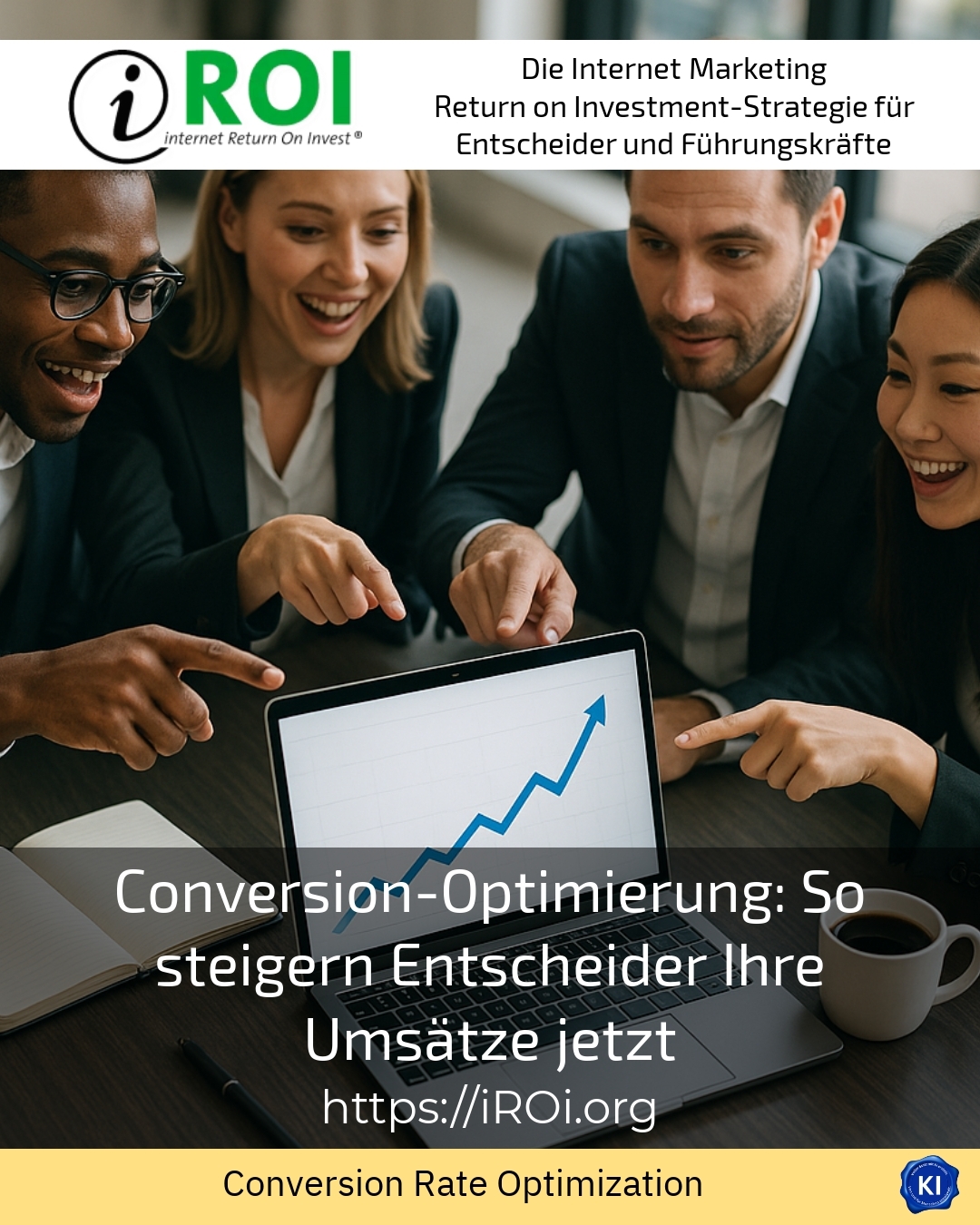
Conversion rate optimisation aims to turn more website visitors into actual customers. Decision-makers are increasingly relying on this measure to sustainably increase revenue these days. This doesn't just involve technical adjustments, but a holistic consideration of the user experience. After all, a website needs to be designed to be fast, accessible, and relevant to the user's interests. This is how visitors can be actively converted into paying customers.
Many companies report challenges such as high bounce rates or insufficient user retention. This is precisely where conversion optimisation comes in, supporting project implementation with targeted stimuli and continuous testing. The goal is not to promise supposed miracle cures, but to support a measurable improvement in user guidance and thus in the conversion rate.
Key levers for conversion optimisation
Key levers for conversion optimisation include the targeted adaptation of landing pages. They must be designed to perfectly match search intent and harmonise with ad copy. Clear call-to-action elements, understandable content, and the avoidance of distractions play a central role here. A/B tests, which examine different variations and identify the most effective solutions, are also proving beneficial.
Keyword optimisation helps to make relevant search terms visible on the target page, thereby increasing relevance for users. Decision-makers use this technique to consistently map the customer journey from the initial Google search to the completion of a purchase. Furthermore, the loading speed and technical performance of the website are critical. Fast pages not only lead to more satisfied users but also improve rankings, which in turn brings in more qualified visitors.
Best practices for handling personalisation
A frequently cited challenge is personalising content without losing sight of scalability. Advances in artificial intelligence now allow for web content to be adapted to user behaviour in real-time. Product recommendations, for instance, are precisely tailored to individual user profiles, which significantly increases the likelihood of a conversion.
Many reports from practise show that companies achieve a significantly higher engagement rate through personalised user addressing. User-friendliness also benefits when the website appears intuitive and individual. An accompanying role in such processes ensures that personalisation is not solely determined by technology, but is also supplemented by human expertise.
BEST PRACTICE at company XYZ (name changed due to NDA contract) A medium-sized company integrated AI-powered personalisation into its online platform. Website users received personalised product recommendations based on previous search queries and click behaviour. Following a parallel project focused on conversion optimisation, revenue increased by over 15% in a single quarter. Continuous optimisation and the addition of simple, clear calls to action contributed significantly to this success.
How user flow is improved through conversion optimisation
Decision-makers today expect users to navigate digital offerings intuitively. A seamlessly structured user flow reduces barriers and thus promotes the conversion rate. An analysis of typical purchasing obstacles and user-centric design with clear steps to the goal are helpful here.
Industry-experienced teams often report that this is precisely where the added value of guidance and coaching lies: they introduce impulses that go beyond mere technical implementation. Optimisation starts where users often hesitate or drop off. This creates a targeted journey for different user segments.
BEST PRACTICE at ABC (name changed due to NDA contract) As part of a project, the user journey on a B2B platform was analysed. Once common drop-off points had been identified, the navigation was simplified and the calls to action were made clearer. At the same time, loading times were improved. The result was a measurable 20% increase in enquiries within six weeks. The combination of technical and content optimisation proved to be a lasting success.
The Influence of SEO on Conversion Optimisation
SEO and conversion optimisation are closely intertwined. Search engine optimisation brings in organic traffic, but this only leads to revenue if the subsequent conversion is successful. That's why experienced consultants recommend linking SEO measures with conversion optimisation.
A clear site structure helps to best serve search intent. When users can quickly find what they are looking for, the conversion rate also increases. Furthermore, technical SEO optimisations lead to better loading times and thus lower bounce rates. Content should not only be search engine-friendly, but above all user-oriented, in order to offer real added value.
BEST PRACTICE at DEF (name changed due to NDA contract) An online shop had its product descriptions reviewed and customised with a focus on conversion. The structure of the pages was subsequently revised to make it easier for users to navigate. Page load times were also optimised. The combination of several small measures led to a rise in sales of nearly 18% within a short period, without any significant increase in traffic.
My analysis
Conversion optimisation is a key tool for decision-makers who want to increase their revenue now. Successful projects show that it's about far more than just technology: the combination of personalisation, clear user guidance, and precise SEO provides the crucial advantage. Every company benefits from not just implementing individual measures, but by continuously supporting and adapting the process. Clients often report that it is precisely the interplay of expertise and pragmatic implementation that makes the difference. An accompanied strategy can provide impetus, remove obstacles, and secure long-term success.
Further links from the text above:
[1] Conversion Rate Optimisation Tactics for 2025
[2] SEO and conversion rate optimisation are linked!
[4] Conversion Rate Optimisation: Best Practices for 2025 and Beyond
[5] Conversion optimisation explained quickly & simply
For more information and if you have any questions, please contact Contact us or read more blog posts on the topic TRANSRUPTION here.










 Deutsch
  English (UK)