
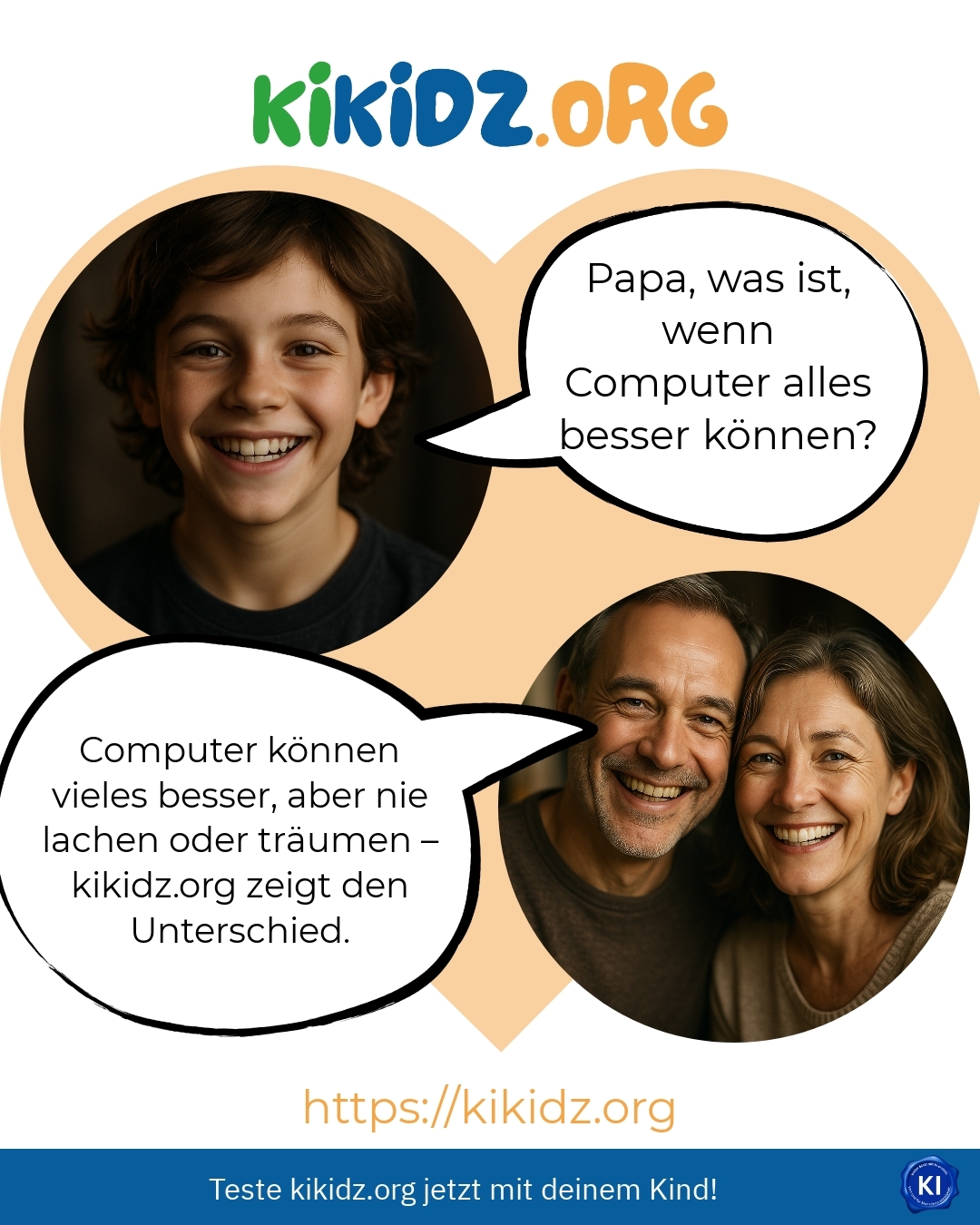
Dad, what if computers can do everything better? – A question for the future
Children always like to ask exciting questions that make adults think too. The question „Dad, what if computers can do everything better?“ shows a growing curiosity alongside uncertainty regarding the rapid development of technology. Many parents then feel challenged to explain things understandably while also offering encouragement for the future.
This is precisely where the training of kikidz.org – it supports parents in answering these very questions for children in a supportive and informative way. As the digital world increasingly seeps into our everyday lives, it is important to have meaningful conversations with children about technology, the world of work, and values.
Dad, what if computers can do everything better?„
When children ask if computers can do everything better, it's often about fears of machines being too powerful. Parents report that their children sometimes worry that humans might become redundant or less important in the future. That's why it's important to take the question seriously – and to explain the opportunities and limitations of computers in a child-friendly way.
Parents can say, for example, that although computers can handle many tasks more quickly, creativity, feelings, and real-life experiences cannot simply be replaced. This helps children see technology as a tool – not as a substitute for human abilities.
Three practical examples to help parents deepen conversations:
- A computer can assist with crafting or painting, but the ideas come from you.
- If you have a question, a computer can help quickly, but only you can understand what is truly important to you.
- Playing games with friends is fun together, something computers can't replicate.
Parents too ask themselves the question: „Dad, what if computers can do everything better?“ Especially when it comes to careers or school, one views digitalisation with mixed feelings.
Dad, what if computers can do everything better? - How parents support their children
To give children confidence when dealing with this question, parents should talk openly about how computers support us in everyday life. Examples include voice assistants, intelligent learning programs, or even smart devices in the home that make our daily lives easier. This creates a positive image of technology without stoking fears.
Parents can react in the following ways:
- „Computers are good at many things, but only you can feel your world and live your dreams.“
- „We're learning together how to use computers – that way they become friends, not enemies.“
- „Sometimes computers make mistakes. That's why we always need people to look closely.“
The kikidz.org course offers parents exactly these insights and many practical tips on how parents can manage media time, answer questions, and empower children for the digital future.
BEST PRACTICE for parents and teachers In a conversation with her son, a mother said: „I know you’re wondering if computers will eventually be able to do everything better than us. We'll look into this together and figure out how you can strengthen your skills. That way, the computer will help you, not replace you.“ This honest and open attitude gives children a sense of security and helps them to use technology with confidence.
Technology and Humans – Why Computers Can't Do Everything Better
It is important that children understand: computers can solve many calculation tasks faster or analyse data. However, social skills, emotions and creative ideas are the domain of humans. Parents can build on this and explain that computers want to support us, not replace us.
Everyday examples:
- When telling stories, it requires people's imagination, not just data from a program.
- When a friend is sad, a computer doesn't really understand – only humans can do that.
- For crafts or hobbies, we may use machines, but the ideas and enjoyment are ours.
Parents strengthen the perspective that humans and machines have different, valuable roles. This removes children's fear of being made „redundant“ by computers.
Dad, what if computers can do everything better? – My analysis
The question „Dad, what if computers can do everything better?“ is an expression of childish curiosity and also a period of social upheaval. Parents can see this question as an opportunity to accompany their children on their journey into a digitally influenced world. Open conversations, honest answers and, above all, learning together can help with this.
The best support for parents is offered by specialised training, such as from kikidz.org. There, they receive inspiration to teach children safety in dealing with digital media – and answers to questions that really matter.
Children benefit when they experience that technology remains a supplement, not a replacement, for human skills. This way, the future becomes a space where computers and people can act creatively, informed, and safely together.
Further links from the text above:
[1] kikidz.org – Professional training for parents and teachers
[2] 20 Examples of AI in Everyday Life – Tech Pulsion
[3] Fascinating Examples of Artificial Intelligence – Dreher Consulting
[4] AI in everyday life: Application examples – ZDFheute
[5] Smart everyday helpers through AI – Bitrix24
For more information and if you have any questions, please contact Contact us or read more blog posts on the topic Children and Artificial Intelligence here. You can find the courses here: Children and Artificial Intelligence Courses











 Deutsch
  English (UK)