kiroi.org

KIROI - Artificial Intelligence Return on Invest
The AI strategy for decision-makers and managers

Business excellence for decision-makers & managers by and with Sanjay Sauldie

KIROI - Artificial Intelligence Return on Invest: The AI strategy for decision-makers and managers

KIROI - Artificial Intelligence Return on Invest: The AI strategy for decision-makers and managers

Start » Mastering Compliance Strategy: KIROI Step 5 for Leaders
19 January 2025

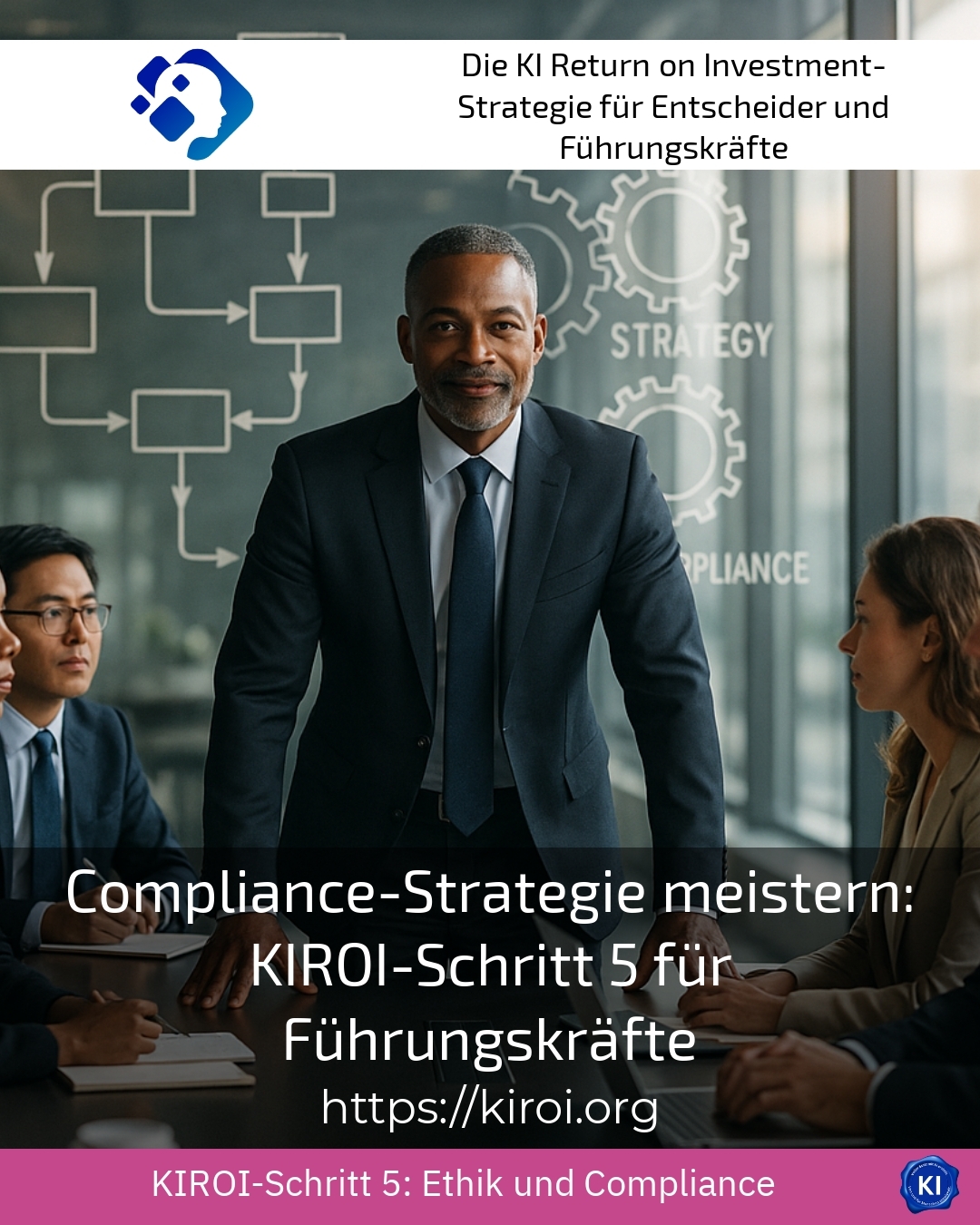
Mastering Compliance Strategy: KIROI Step 5 for Leaders

4
(1248)

A successful compliance strategy is indispensable for executives today. It helps to minimise legal risks while simultaneously strengthening the company's integrity. Many clients come to us with the question of how they can systematically develop and implement a compliance strategy. In this post, we show you how to purposefully use the KIROI 5-step method to master your compliance strategy.

What does a compliance strategy mean for executives?

A compliance strategy describes how a company ensures adherence to laws, regulations, and internal policies. It encompasses measures for risk assessment, rule development, and continuous monitoring. Management is responsible for ensuring that all employees understand and comply with the requirements.

Many companies implement a compliance strategy to avoid legal sanctions and strengthen the trust of customers and partners. Clients often report that a clear compliance strategy also helps them to structure internal processes more effectively.

The five steps of the KIROI method

The KIROI method offers leaders a structured way to develop a compliance strategy. Each step builds on the previous one, leading to a holistic approach.

Step 1: Analyse the context

Before you develop a compliance strategy, analyse your company's context. Which laws and regulations apply to your industry? Which internal policies are already in place?

Example: A healthcare company must comply with the General Data Protection Regulation (GDPR). A financial services provider must adhere to anti-money laundering policies. A retail company must meet product safety regulations.

Step 2: Identifying risks

In the next step, you will identify potential compliance risks. Which processes could lead to violations? Which employees are particularly affected?

For example: A marketing team might mistakenly use personal data without consent. A sales team could breach non-compete agreements during contract negotiations. An IT team might overlook security vulnerabilities in data processing.

Step 3: Develop Rules and Guidelines

Develop clear rules and guidelines that address the identified risks. Ensure that all employees can understand and adhere to the guidelines.

Example: An e-commerce company introduces a policy for consent to data collection. A construction company creates a checklist for compliance with health and safety regulations. A financial services company develops a guide for transaction documentation.

Step 4: Organisation and Communication

Organise the implementation of the compliance strategy and communicate the requirements clearly to all employees. Training and information events are particularly important here.

Example: A healthcare company conducts regular GDPR training. A retail company organises workshops on product safety compliance. A financial services company offers online training on anti-money laundering.

Step 5: Monitoring and Control

Monitor adherence to the compliance strategy and carry out regular checks. Adjust guidelines where necessary and document all measures.

Example: An e-commerce company conducts annual audits for compliance with data protection regulations. A construction company carries out regular inspections for compliance with occupational health and safety regulations. A finance company performs internal controls for the documentation of transactions.

BEST PRACTICE with one customer (name hidden due to NDA contract) A medium-sized healthcare company was experiencing difficulties implementing GDPR across all departments. With KIROI Step 5, we developed a compliance strategy that relied on regular training, clear guidelines, and annual audits. This significantly improved compliance with regulations and strengthened customer trust.

Mastering Compliance Strategy: Tips for Leaders

Leaders should actively support and embody the compliance strategy. Regular training and clear communication are crucial. Document all measures and adapt guidelines as needed.

Example: A CEO holds monthly compliance strategy meetings. A department head organises regulatory compliance workshops. A team leader documents all actions and immediately reports any breaches.

My analysis

A compliance strategy is indispensable for executives today. It helps to minimise legal risks and strengthen the integrity of the company. With KIROI Step 5, you can systematically develop and implement your compliance strategy. Regular training, clear communication and documented measures are crucial for success.

Further links from the text above:

Compliance: The most important things for companies at a glance

SEO for Managing Directors: Information & Tips

Compliance: Definition and significance for businesses – Haufe

Impact of GDPR – is SEO data protection compliant?

Compliance: Definition, Significance & Measures

For more information and if you have any questions, please contact Contact us or read more blog posts on the topic Artificial intelligence here.
How useful was this post?

Click on a star to rate it!

Average rating 4 / 5. Vote count: 1248

No votes so far! Be the first to rate this post.

Spread the love

transruption.org

The digital toolbox for
the digital winners of today and tomorrow

Business excellence for decision-makers & managers by and with Sanjay Sauldie

transruption
transruption

transruption: The digital toolbox for
the digital winners of today and tomorrow

Start » Mastering Compliance Strategy: KIROI Step 5 for Leaders
19 January 2025

Mastering Compliance Strategy: KIROI Step 5 for Leaders

4
(1248)

A successful compliance strategy is indispensable for executives today. It helps to minimise legal risks while simultaneously strengthening the company's integrity. Many clients come to us with the question of how they can systematically develop and implement a compliance strategy. In this post, we show you how to purposefully use the KIROI 5-step method to master your compliance strategy.

What does a compliance strategy mean for executives?

A compliance strategy describes how a company ensures adherence to laws, regulations, and internal policies. It encompasses measures for risk assessment, rule development, and continuous monitoring. Management is responsible for ensuring that all employees understand and comply with the requirements.

Many companies implement a compliance strategy to avoid legal sanctions and strengthen the trust of customers and partners. Clients often report that a clear compliance strategy also helps them to structure internal processes more effectively.

The five steps of the KIROI method

The KIROI method offers leaders a structured way to develop a compliance strategy. Each step builds on the previous one, leading to a holistic approach.

Step 1: Analyse the context

Before you develop a compliance strategy, analyse your company's context. Which laws and regulations apply to your industry? Which internal policies are already in place?

Example: A healthcare company must comply with the General Data Protection Regulation (GDPR). A financial services provider must adhere to anti-money laundering policies. A retail company must meet product safety regulations.

Step 2: Identifying risks

In the next step, you will identify potential compliance risks. Which processes could lead to violations? Which employees are particularly affected?

For example: A marketing team might mistakenly use personal data without consent. A sales team could breach non-compete agreements during contract negotiations. An IT team might overlook security vulnerabilities in data processing.

Step 3: Develop Rules and Guidelines

Develop clear rules and guidelines that address the identified risks. Ensure that all employees can understand and adhere to the guidelines.

Example: An e-commerce company introduces a policy for consent to data collection. A construction company creates a checklist for compliance with health and safety regulations. A financial services company develops a guide for transaction documentation.

Step 4: Organisation and Communication

Organise the implementation of the compliance strategy and communicate the requirements clearly to all employees. Training and information events are particularly important here.

Example: A healthcare company conducts regular GDPR training. A retail company organises workshops on product safety compliance. A financial services company offers online training on anti-money laundering.

Step 5: Monitoring and Control

Monitor adherence to the compliance strategy and carry out regular checks. Adjust guidelines where necessary and document all measures.

Example: An e-commerce company conducts annual audits for compliance with data protection regulations. A construction company carries out regular inspections for compliance with occupational health and safety regulations. A finance company performs internal controls for the documentation of transactions.

BEST PRACTICE with one customer (name hidden due to NDA contract) A medium-sized healthcare company was experiencing difficulties implementing GDPR across all departments. With KIROI Step 5, we developed a compliance strategy that relied on regular training, clear guidelines, and annual audits. This significantly improved compliance with regulations and strengthened customer trust.

Mastering Compliance Strategy: Tips for Leaders

Leaders should actively support and embody the compliance strategy. Regular training and clear communication are crucial. Document all measures and adapt guidelines as needed.

Example: A CEO holds monthly compliance strategy meetings. A department head organises regulatory compliance workshops. A team leader documents all actions and immediately reports any breaches.

My analysis

A compliance strategy is indispensable for executives today. It helps to minimise legal risks and strengthen the integrity of the company. With KIROI Step 5, you can systematically develop and implement your compliance strategy. Regular training, clear communication and documented measures are crucial for success.

Further links from the text above:

Compliance: The most important things for companies at a glance

SEO for Managing Directors: Information & Tips

Compliance: Definition and significance for businesses – Haufe

Impact of GDPR – is SEO data protection compliant?

Compliance: Definition, Significance & Measures

For more information and if you have any questions, please contact Contact us or read more blog posts on the topic Artificial intelligence here.

How useful was this post?

Click on a star to rate it!

Average rating 4 / 5. Vote count: 1248

No votes so far! Be the first to rate this post.

Spread the love

Other content worth reading:

Mastering Compliance Strategy: KIROI Step 5 for Leaders

written by:

Keywords:

#Big Data #compliance #Datenintelligenz #Ethikrichtlinien 1TP5ManagersBalance #InnovationDurchAchtsamkeit #yellow #artificial intelligence #Sustainability #Risikomanagement #SmartData #Unternehmenskultur #Verantwortungsketten

Follow me on my channels:

Questions on the topic? Contact us now without obligation

Contact us

[wpforms id="331781" title="false"]

More articles worth reading

    Leave a comment