kiroi.org

KIROI - Artificial Intelligence Return on Invest
The AI strategy for decision-makers and managers

Business excellence for decision-makers & managers by and with Sanjay Sauldie

KIROI - Artificial Intelligence Return on Invest: The AI strategy for decision-makers and managers

KIROI - Artificial Intelligence Return on Invest: The AI strategy for decision-makers and managers

Start » Compliance Strategies: KIROI Step 5 for Ethical Leadership
4 November 2025

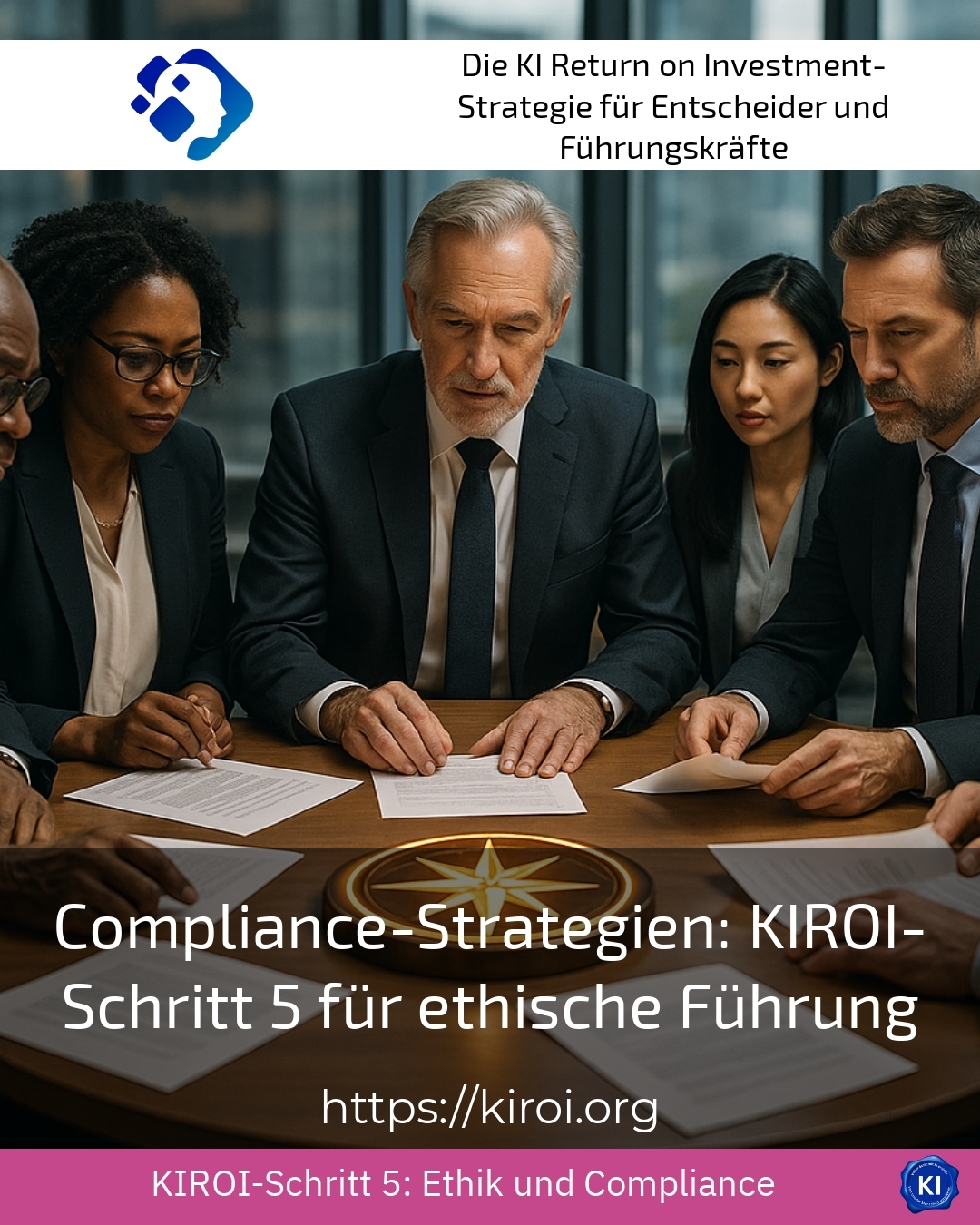
Compliance Strategies: KIROI Step 5 for Ethical Leadership

5
(1363)

Compliance strategies are essential building blocks for companies aiming to foster ethical leadership and a sustainable corporate culture. KIROI Step 5 places a particular focus on the practical implementation of ethical principles and the active engagement of leaders as role models. Only in this way can robust structures be created that extend far beyond mere rules and shape daily actions.

Compliance strategies as the foundation for ethical leadership

Compliance means far more than just adhering to legal requirements. It's about creating an environment where integrity and ethical behaviour are a matter of course. Companies in the financial sector often have strict compliance guidelines to prevent corruption and fraud. Successful compliance strategies help to connect the legal framework with a lived corporate culture. Many companies in the manufacturing industry also report better results when leaders actively promote transparency and lead by example for their employees. The IT sector additionally relies on regular training and dialogue to continuously review and develop technical and ethical standards.

Leaders play a key role: they must show responsibility, foster open communication and encourage employees to report compliance violations without fear of repercussions. Only in this way can risks be identified early and minimised[2][4][8].

KIROI Step 5: Practical Implementation of Ethical Leadership

KIROI Step 5 focuses on embedding compliance strategies through consistent ethical leadership. Here are some practical insights:

  • Implement clear values that the company understands as an ethical guiding star.
  • Foster a company culture that supports tolerance of mistakes and learning from breaches.
  • Ensure all levels of management are trained and sensitised – including in emotional intelligence and conflict mediation.

In the healthcare sector, for instance, ethics and compliance are indispensable for guaranteeing patient safety. Here, transparent communication channels between nursing staff and management strengthen the trust of all stakeholders. Service companies also benefit from such structures because employees are empowered in their sense of responsibility and remain motivated long-term. At a large retail company, ethical leadership was established through continuous workshops, which noticeably reduced compliance violations and improved customer feedback.

BEST PRACTICE with one customer (name hidden due to NDA contract) As part of KIROI Step 5, the renewable energy company implemented a leadership development programme. This programme specifically trained and empowered leaders in the area of responsible leadership, enabling them not just to manage compliance, but to actively embody it as part of their daily work. The result was improved employee identification with compliance strategies and a reduction in rule violations by more than 30 percent within one year.

Action recommendations for daily practice

Companies should not view compliance strategies as static rules. Rather, they require dynamic oversight that adapts to changing frameworks. The following steps support successful implementation:

  • Work together with different departments to develop a vibrant mission statement that clearly defines ethical values.
  • Encourage regular feedback sessions and anonymous reporting systems to establish an open error culture.
  • Embed ethical leadership in leaders' objectives and reward exemplary behaviour.

An example from the automotive industry shows how digital tools can be used flexibly for compliance training. This allows employees to interactively reflect on and adjust their behaviour with practical scenarios. In the pharmaceutical industry, ethics teams are set up that work closely with compliance management to integrate new legal requirements early on and communicate them transparently. Small and medium-sized enterprises often benefit from external coaches who act as neutral consultants to support compliance issues and strengthen management.

Strengthening compliance strategies for sustainable business success

Compliance strategies are not merely an administrative act, but are essential for long-term competitiveness. Companies in the media sector are observing that public credibility increases when ethical criteria are visibly lived. In the financial sector, inclusive compliance management has a positive effect on customer loyalty. And in the energy sector, consistent adherence to standards protects against high penalty payments and loss of reputation.

KIROI Step 5 of ethical leadership helps to bring compliance strategies to life and make them tangible across all areas of the company. This makes companies more resilient and attractive to employees, partners, and customers. Fostering a culture of integrity is therefore an investment in sustainable success.

My analysis

Compliance strategies are indispensable today to minimise legal, ethical, and economic risks. However, the desired benefits often fail to materialise if they are only implemented formally. KIROI Step 5 shows how leaders can make compliance a living part of entrepreneurship through active, ethical leadership. The combination of clear guidelines, lived corporate culture, and consistent communication creates acceptance and fosters trust at all levels. Companies that consistently pursue this path secure a long-term competitive advantage and sustainably improve their market position.

Further links from the text above:

Compliance: Definition and significance for businesses – Haufe
Compliance Policies and Ethical Leadership – KIROI
Compliance: The most important things for companies at a glance
Compliance and Ethics in Corporate Governance
Compliance Management: Systems, Definition & Tasks
Compliance & Integrity as a Leadership Task and Culture Shaping

For more information and if you have any questions, please contact Contact us or read more blog posts on the topic Artificial intelligence return on investment here.

How useful was this post?

Click on a star to rate it!

Average rating 5 / 5. Vote count: 1363

No votes so far! Be the first to rate this post.

Spread the love

transruption.org

The digital toolbox for
the digital winners of today and tomorrow

Business excellence for decision-makers & managers by and with Sanjay Sauldie

transruption
transruption

transruption: The digital toolbox for
the digital winners of today and tomorrow

Start » Compliance Strategies: KIROI Step 5 for Ethical Leadership
4 November 2025

Compliance Strategies: KIROI Step 5 for Ethical Leadership

5
(1363)

Compliance strategies are essential building blocks for companies aiming to foster ethical leadership and a sustainable corporate culture. KIROI Step 5 places a particular focus on the practical implementation of ethical principles and the active engagement of leaders as role models. Only in this way can robust structures be created that extend far beyond mere rules and shape daily actions.

Compliance strategies as the foundation for ethical leadership

Compliance means far more than just adhering to legal requirements. It's about creating an environment where integrity and ethical behaviour are a matter of course. Companies in the financial sector often have strict compliance guidelines to prevent corruption and fraud. Successful compliance strategies help to connect the legal framework with a lived corporate culture. Many companies in the manufacturing industry also report better results when leaders actively promote transparency and lead by example for their employees. The IT sector additionally relies on regular training and dialogue to continuously review and develop technical and ethical standards.

Leaders play a key role: they must show responsibility, foster open communication and encourage employees to report compliance violations without fear of repercussions. Only in this way can risks be identified early and minimised[2][4][8].

KIROI Step 5: Practical Implementation of Ethical Leadership

KIROI Step 5 focuses on embedding compliance strategies through consistent ethical leadership. Here are some practical insights:

  • Implement clear values that the company understands as an ethical guiding star.
  • Foster a company culture that supports tolerance of mistakes and learning from breaches.
  • Ensure all levels of management are trained and sensitised – including in emotional intelligence and conflict mediation.

In the healthcare sector, for instance, ethics and compliance are indispensable for guaranteeing patient safety. Here, transparent communication channels between nursing staff and management strengthen the trust of all stakeholders. Service companies also benefit from such structures because employees are empowered in their sense of responsibility and remain motivated long-term. At a large retail company, ethical leadership was established through continuous workshops, which noticeably reduced compliance violations and improved customer feedback.

BEST PRACTICE with one customer (name hidden due to NDA contract) As part of KIROI Step 5, the renewable energy company implemented a leadership development programme. This programme specifically trained and empowered leaders in the area of responsible leadership, enabling them not just to manage compliance, but to actively embody it as part of their daily work. The result was improved employee identification with compliance strategies and a reduction in rule violations by more than 30 percent within one year.

Action recommendations for daily practice

Companies should not view compliance strategies as static rules. Rather, they require dynamic oversight that adapts to changing frameworks. The following steps support successful implementation:

  • Work together with different departments to develop a vibrant mission statement that clearly defines ethical values.
  • Encourage regular feedback sessions and anonymous reporting systems to establish an open error culture.
  • Embed ethical leadership in leaders' objectives and reward exemplary behaviour.

An example from the automotive industry shows how digital tools can be used flexibly for compliance training. This allows employees to interactively reflect on and adjust their behaviour with practical scenarios. In the pharmaceutical industry, ethics teams are set up that work closely with compliance management to integrate new legal requirements early on and communicate them transparently. Small and medium-sized enterprises often benefit from external coaches who act as neutral consultants to support compliance issues and strengthen management.

Strengthening compliance strategies for sustainable business success

Compliance strategies are not merely an administrative act, but are essential for long-term competitiveness. Companies in the media sector are observing that public credibility increases when ethical criteria are visibly lived. In the financial sector, inclusive compliance management has a positive effect on customer loyalty. And in the energy sector, consistent adherence to standards protects against high penalty payments and loss of reputation.

KIROI Step 5 of ethical leadership helps to bring compliance strategies to life and make them tangible across all areas of the company. This makes companies more resilient and attractive to employees, partners, and customers. Fostering a culture of integrity is therefore an investment in sustainable success.

My analysis

Compliance strategies are indispensable today to minimise legal, ethical, and economic risks. However, the desired benefits often fail to materialise if they are only implemented formally. KIROI Step 5 shows how leaders can make compliance a living part of entrepreneurship through active, ethical leadership. The combination of clear guidelines, lived corporate culture, and consistent communication creates acceptance and fosters trust at all levels. Companies that consistently pursue this path secure a long-term competitive advantage and sustainably improve their market position.

Further links from the text above:

Compliance: Definition and significance for businesses – Haufe
Compliance Policies and Ethical Leadership – KIROI
Compliance: The most important things for companies at a glance
Compliance and Ethics in Corporate Governance
Compliance Management: Systems, Definition & Tasks
Compliance & Integrity as a Leadership Task and Culture Shaping

For more information and if you have any questions, please contact Contact us or read more blog posts on the topic Artificial intelligence return on investment here.

How useful was this post?

Click on a star to rate it!

Average rating 5 / 5. Vote count: 1363

No votes so far! Be the first to rate this post.

Spread the love

Other content worth reading:

Compliance Strategies: KIROI Step 5 for Ethical Leadership

written by:

Keywords:

#Big Data #compliance #Datenintelligenz #Ethikrichtlinien #Ethical Leadership #InnovationDurchAchtsamkeit #Integrity #yellow #artificial intelligence #Sustainability #SmartData #Unternehmenskultur #Verantwortungsketten

Follow me on my channels:

Questions on the topic? Contact us now without obligation

Contact us

[wpforms id="331781" title="false"]

More articles worth reading

    Leave a comment