
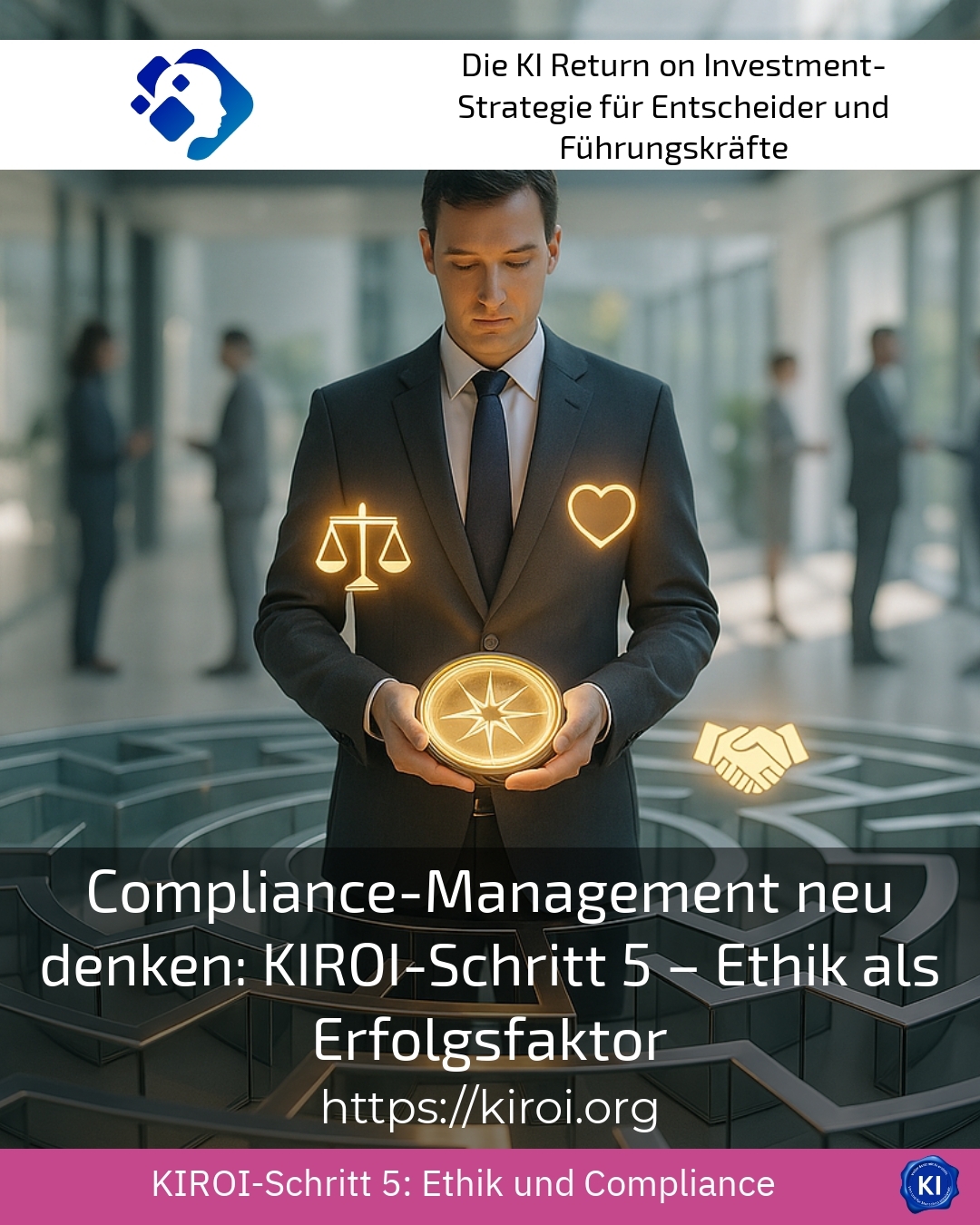
The importance of ethics in compliance management is increasingly relevant. Reimagining compliance management means not only adhering to legal regulations but also integrating ethics as a key success factor. Companies that make this connection strengthen their culture and sustainably increase their economic success. KIROI Step 5 precisely outlines this path: ethics as the cornerstone of a trustworthy and effective compliance strategy.
Rethinking Compliance Management: Ethics as a Central Pillar
Many companies find that simply adhering to regulations is no guarantee of sustained success. Employees often encounter challenges in compliance management projects that go far beyond mere rule-following. The issues range from moral dilemmas in the workplace to decisions that can affect the company's image.
Ethics here serves as a guideline for responsible action. It provides impetus on how employees can make considered decisions in complex situations. This transforms compliance rules into lived principles that shape daily work and strengthen the integrity of the entire company.
In practice, this is demonstrated, for example, in a manufacturing company that, in addition to its obligation to comply with standards, also fosters a culture of fairness and transparency. Here, managers report on the positive response to regular ethics dialogues, which give employees the space to discuss difficult cases together and develop solutions.
A large service provider implemented digital feedback tools that allow suggestions and concerns in the compliance area to be expressed anonymously. This has strengthened trust and visibly advanced activities to promote an ethical culture. A financial service provider, in turn, relies on practical training sessions where case studies make ethical issues, such as handling conflicts of interest or data protection, tangible.
BEST PRACTICE with one customer (name hidden due to NDA contract)
As part of KIROI Step 5, a comprehensive initiative to integrate ethics into compliance management was developed for an international food service provider. The combination of workshops, leadership coaching, and digital learning modules led to a significantly increased awareness of ethical issues. Employees felt empowered to manage sensitive situations confidently and responsibly. This project demonstrates how ethics can be practically supported as a success factor.
Ethics as a driver for sustainable corporate success
Success and compliance management are closely linked to a lived value-based orientation today. Companies that consciously promote ethics benefit in multiple ways: risks can be better identified and managed. At the same time, the trust of customers and partners is strengthened, which enhances competitiveness.
The willingness to comply with rules is demonstrably heavily dependent on employees' attitudes. Therefore, it is important to understand compliance measures not only as a mandatory programme but as an integrated part of the company culture. Managers play a central role in this because they embody values and act as multipliers.
In this context, a medium-sized technology company has established an internal mentoring system. Experienced employees support their younger colleagues in recognising difficult ethical questions and making well-founded decisions. This practice promotes the sustainable development of a compliance culture.
Another example is provided by a construction company that combines anonymous reporting channels for compliance violations with targeted support for those affected. This measure not only improves protection against misconduct but also clearly demonstrates that ethics and a sense of responsibility are at the core of its operations.
Finally, an international provider from the healthcare sector reports that the integration of ethical standards into further training significantly contributes to clarifying conflicts and noticeably improving awareness of compliance risks.
Impulses for Business: Actively Shaping Ethics
Companies that want to design compliance management with a view to the future should consider ethics as a firm success factor and promote it accordingly. Here are some concrete tips:
- Offer regular, practical ethics workshops that give employees space for discussion.
- Targeted training for managers so they can credibly lead by example with ethical responsibility.
- Using digital tools to facilitate dialogue, questions, and feedback on compliance culture.
- not only codify codes of conduct in writing, but also bring them to life through training and case studies.
- To establish complaint and reporting systems that build trust and ensure protection against misconduct.
These measures create a practical and inclusive approach that views compliance management not as an obstacle, but as a crucial success factor.
My analysis
KIROI Step 5 clearly shows: Rethinking compliance management means integrating ethics as a firmly established success factor. This approach fosters a vibrant compliance culture that builds trust and minimises risks. Companies benefit from responsible interaction, which strengthens economic success and is sustainable in the long term. Ethics is not an additional burden, but an essential component of modern and effective compliance management.
Further links from the text above:
[1] Strengthening Compliance Culture: KIROI Step 5 to Ethics & Success
[2] Success factors for compliance management
[3] Integrity Management – more than just compliance!
[4] Compliance and Policy Management: Success Factors
[5] Compliance Management in Business: Significance
[6] Compliance Management Handbook
[7] Key factor: Transparency
[8] Martin R. Schulz | Corporate Compliance Management
[9] Compliance Management (German Version) by Martin ...
For more information and if you have any questions, please contact Contact us or read more blog posts on the topic Artificial intelligence here.











 Deutsch
  English (UK)