
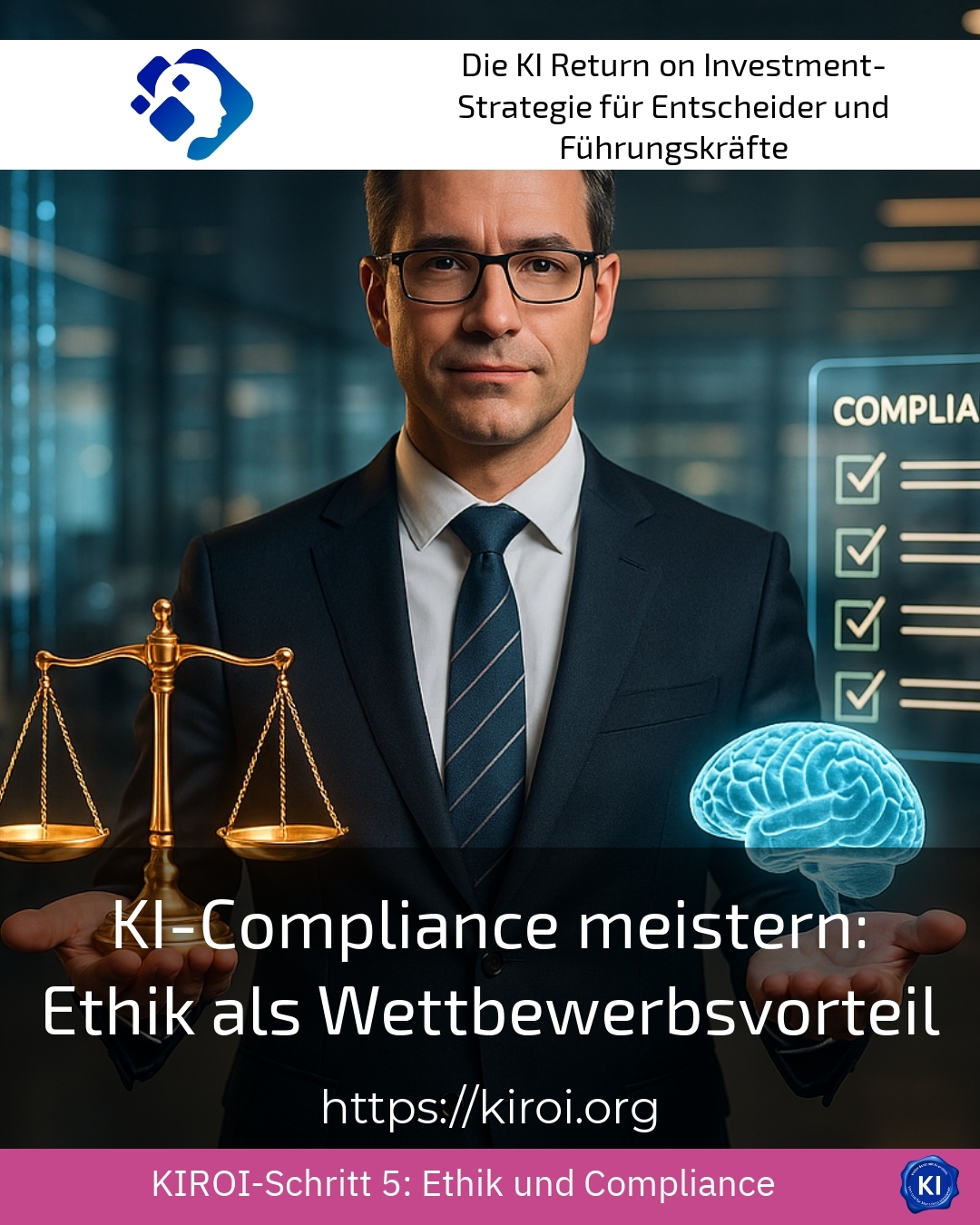
In a world where algorithmic systems increasingly make decisions that affect the lives of millions, a fundamental question arises: How can companies Mastering AI Compliance: Ethics as a Competitive Advantage and simultaneously achieve their economic objectives? The answer to this question decides the success or failure of entire business models, because consumers and business partners are more mindful than ever of responsible action. Those who set the right course now secure a decisive lead over the competition.
Understanding the basics of responsible technology use
The integration of intelligent systems into business processes requires a profound understanding of the associated responsibilities. Companies must make their algorithmic decision-making systems transparent and document them comprehensibly [1]. This is not only about complying with legal requirements, but also about building a foundation of trust with all stakeholders. Clients often report that they initially underestimated the complexity of these requirements. The path to an ethically sound technology strategy begins with an honest assessment of one's own processes.
For example, a financial services provider uses automated systems for creditworthiness checks of its customers. The algorithms used must not only deliver accurate results but also be free of discriminatory patterns. An insurance company, in turn, uses intelligent systems for claims assessment and must ensure that these decisions remain fair and comprehensible. Asset managers who use algorithmic trading strategies also face the challenge of designing their systems to be transparent and ethically justifiable.
Why mastering AI compliance is crucial: ethics as a competitive advantage
The importance of an ethically founded technology strategy can hardly be overstated, as it influences almost every aspect of corporate governance in the modern business world. Today, customers expect their data to be handled responsibly. They want to understand how decisions that affect them are made. Regulators are continuously tightening their requirements for transparency and traceability. Companies that ignore these developments risk not only penalties but also significant damage to their reputation.
For example, a private bank implemented an automated investment advisory system without sufficient ethical review. The result was recommendations that systematically disadvantaged certain customer groups. A payment service provider, on the other hand, invested early in transparent systems, thereby strengthening the trust of its users. A building society, in turn, used the introduction of new technologies as an opportunity to place its entire customer relationship on an ethically sound foundation.
Best practice with a KIROI customer A medium-sized financial institution was faced with the challenge of revising its automated decision-making processes in the lending business. Although the existing systems delivered efficient results, the decisions were not sufficiently transparent for customers and supervisory authorities. As part of the transruptions coaching support, a comprehensive analysis of the existing processes was first carried out. This revealed that certain customer groups were systematically receiving worse conditions without this being objectively justified. The company then developed a new approach that focussed on transparency and fairness. The algorithms were adapted so that every decision can be documented and explained in a comprehensible manner. Customers now receive a detailed explanation of their credit decision on request. The implementation took around six months and required the co-operation of various departments. The result exceeded all expectations, as customer satisfaction increased measurably. At the same time, the relationship with the supervisory authorities improved significantly.
Practical steps for implementing ethical guidelines
The implementation of a responsible technology strategy requires concrete measures at various levels of the organisation. The first step involves developing clear ethical guidelines that include all relevant stakeholders [2]. These guidelines must not only exist on paper but be actively lived and regularly reviewed. Transruption coaching supports companies in approaching these processes in a structured manner and anchoring them sustainably.
For example, a factoring company defined clear criteria for evaluating receivables using automated systems. These criteria are regularly reviewed for fairness and adjusted as needed. A leasing provider developed a comprehensive testing process for new algorithmic systems. Before these go into productive use, they undergo a multi-stage ethical assessment. A securities trading firm, in turn, established an independent committee that continuously monitors the impact of automated trading decisions.
Building governance structures for sustainable compliance
An effective governance structure forms the backbone of any successful compliance strategy in the field of intelligent technologies. Companies require clear responsibilities and decision-making pathways. The establishment of special committees can help to incorporate various perspectives. Regular audits and reviews ensure that established standards are adhered to. transruptions-coaching supports this with methodical expertise and practical experience.
For example, a credit union established a three-person ethics committee for technological decisions. This committee reviews all new applications for their compatibility with the company's values. A fintech startup integrated ethical considerations directly into its product development process. Every new feature undergoes a standardised assessment process before release. A large insurance group even created its own dedicated unit for responsible technology.
Best practice with a KIROI customer An international asset manager was looking for ways to ethically underpin its algorithmic investment strategies. The existing systems optimised solely for financial returns without taking sustainability aspects into account. As part of the transruptions coaching support, a comprehensive transformation process was initiated. First, all relevant stakeholders were involved in a dialogue to define the ethical requirements. This revealed that both institutional and private investors are placing increasing value on responsible investments. The company then developed a multi-dimensional assessment approach for its investment decisions. In addition to financial indicators, social and ecological factors are now also incorporated into the algorithmic decisions. The technical implementation required considerable adjustments to the existing systems. At the same time, training programmes were set up for all employees to raise awareness of the new requirements. The feedback from customers was overwhelmingly positive and confirmed the course taken.
Mastering AI Compliance: Ethics as a Competitive Advantage in Customer Relationships
The way companies handle sensitive customer data and automated decisions significantly shapes the perception of their brand [3]. Customers appreciate it when companies communicate transparently about their methods. They value it when their concerns are taken seriously. Complaints about algorithmic decisions offer an opportunity to improve systems. Open communication about the limitations of automated processes builds trust.
For example, a direct bank introduced a comprehensive information programme for customers, explaining how automated credit decisions are made. A robo-advisor provider allows its users to individually adjust the criteria for their investment decisions. A debt collection company, in turn, uses algorithmic systems to propose fair payment agreements that take the debtor's financial situation into account.
Employee development as the key to success
The best technical systems are of little use if the people working with them are not adequately trained. Employees must understand how algorithmic decisions are made and where their limitations lie. They must be able to recognise critical situations and act appropriately. Regular training and workshops help to create the necessary awareness. Transruptive coaching provides impetus for the development of corresponding qualification programmes.
For example, one mortgage financier developed a comprehensive training programme for its credit advisors. They are now learning how to critically question automated recommendations and override them if necessary. A fund management company trained its portfolio managers in how to handle algorithmic trading recommendations. A payment provider, in turn, established regular ethics workshops for all employees who work with automated systems.
Proactively meet regulatory requirements
The regulatory requirements for the use of intelligent technologies are continuously becoming stricter and more complex [4]. Companies that proactively anticipate this development gain a significant advantage. They not only avoid penalties and sanctions but also position themselves as trustworthy partners. The European legal framework is setting new standards for transparency and traceability. Early adjustments considerably reduce later effort.
An investment management company, for example, began documenting its algorithmic decision-making processes early on. A credit card provider adapted its fraud detection to meet the new transparency requirements. A building society, in turn, used the regulatory changes as an opportunity for a fundamental overhaul of its automated processes.
My KIROI Analysis
Accompanying numerous financial service providers in the introduction of responsible technology strategies has shown that ethical principles and economic success are not opposites, but can reinforce each other if the implementation is well thought out. Companies that invest early in transparent and fair systems benefit from increased customer confidence and an improved relationship with regulators. The biggest challenges often lie not in the technology, but in the corporate culture and established processes. Successful transformations therefore require a holistic approach that involves all levels of the organisation. Experience from transruptions coaching support shows that the key to success lies in the combination of clear ethical guidelines, robust governance structures and continuous development. Companies that master AI compliance: understanding and implementing ethics as a competitive advantage position themselves for long-term success in the market. Investing in responsible technology pays off in the long term, as it creates the basis for lasting trust and economic success in an increasingly digitalised business world.
Further links from the text above:
[1] European Commission – Artificial Intelligence Strategy
[2] BaFin – Supervision of FinTech Companies
[3] IEEE – Ethically Aligned Design Standards
[4] EU AI Act – European Parliament
For more information and if you have any questions, please contact Contact us or read more blog posts on the topic Artificial intelligence here.











 Deutsch
  English (UK)