
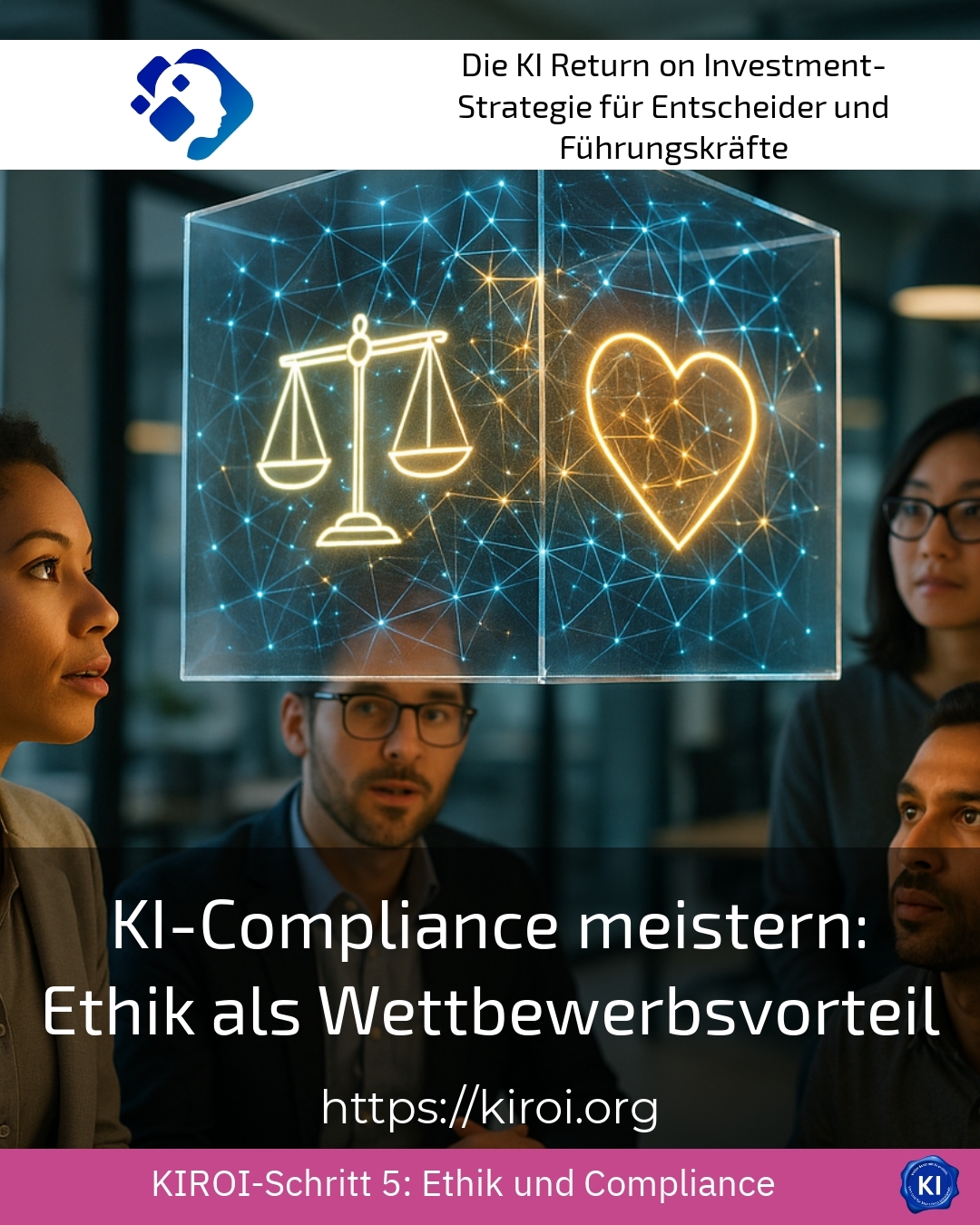
Imagine your company is facing a regulatory audit, and it suddenly becomes clear that your automated decision-making processes do not comply with the new European regulations. This scenario is currently a concern for many executives. The area Mastering AI Compliance: Ethics as a Competitive Advantage is rapidly evolving into a strategic differentiator. Companies that integrate ethical principles into their technological processes early on are not only legally compliant but also sustainably gain the trust of their customers and business partners.
Why ethical principles are indispensable today
Digital transformation is fundamentally changing business models in almost all industries. Automated systems are making decisions that were previously the preserve of humans. This development brings enormous opportunities. At the same time, new responsibilities are emerging that companies cannot ignore. With the AI Act, the European legislator has created a binding framework [1]. This framework defines clear requirements for transparency, fairness, and traceability.
Many decision-makers initially view regulatory requirements as a burden. However, this perspective is too short-sighted. Companies that act proactively often report positive side effects. They improve their internal processes and strengthen their market position. Thus, what appears to be an obligation becomes a genuine opportunity for differentiation.
The path to responsible technology use
The first step is to critically analyse existing systems. What automated decisions does your company already make today? How transparent are these processes for those affected? These questions form the basis for any further action. In the financial sector, for example, banks use algorithmic systems to assess creditworthiness. The traceability of these decisions is increasingly being scrutinised by supervisory authorities [2]. Insurance companies use similar technologies to assess risks and calculate premiums.
In healthcare, intelligent systems support diagnostics and therapy planning. Particularly sensitive data is central here. Patients rightly expect their information to be protected. At the same time, medical decisions must remain explainable and verifiable. Clinics that strike this balance build trust with both patients and cost bearers.
Best practice with a AIROI customer
A medium-sized company in the industrial manufacturing sector approached us with a complex challenge. The existing automated quality control systems delivered reliable results. However, no one in the company could explain why certain products were rejected. This led to tensions with suppliers and significantly complicated communication with end customers. As part of the transruption support, we jointly analysed the entire decision-making chain of the systems. We identified critical points where transparency was lacking and systematically documented them. Subsequently, we developed a concept that prioritised explainability without compromising process efficiency. Employees received training to better understand and communicate how the systems worked. After six months, the company reported significantly improved supplier relationships and increased customer confidence. The regulatory audit proceeded without any issues, which particularly pleased the management.
Mastering AI compliance means thinking strategically
Compliance is not a one-off project, but a continuous process. Companies must create structures that function in the long term. This requires clear responsibilities and regular reviews. In retail, for example, large chains use intelligent systems for price optimisation. These systems analyse customer behaviour and dynamically adjust offers. Consumer advocates are increasingly observing such practices critically [3].
Logistics companies are relying on automated route planning and fleet management. The efficiency gains are considerable and noticeably reduce costs. However, ethical questions also arise here, for example regarding driver surveillance. Companies that consider these aspects from the outset avoid later conflicts. They create a working culture based on trust and fairness.
In human resources, automated systems are fundamentally revolutionising recruitment. Algorithms sift through applications and make preliminary selections within seconds. However, this efficiency has a downside when biases in the data are reproduced. A major technology group had to withdraw such a system because it systematically disadvantaged women. This example strikingly shows how important careful checks are before deployment.
Understanding and utilising ethics as a competitive advantage
The term "competitive advantage" initially sounds like pure economic logic. However, it is closely linked to social responsibility. Customers are increasingly making conscious decisions about which companies they buy from. Studies show that ethical behaviour strengthens brand loyalty [4]. Younger target groups in particular pay attention to transparency and sustainability in their purchasing decisions.
In the banking sector, institutions clearly differentiate themselves from the competition through responsible lending. They openly communicate how decisions are made, thereby building trust. Insurances that guarantee fair algorithms sustainably gain the trust of critical customer groups. This differentiation becomes increasingly valuable for all involved in an ever more regulated market.
Best practice with a AIROI customer
An insurance company approached us with a specific request that immediately piqued our interest. They wanted to ensure their automated claims processing was ethical and future-proof. Clients in such situations often report internal resistance to change. This was no different here, as various departments pursued different priorities. As part of the transruption coaching, we intensively supported the interdisciplinary teams over several months. We provided impetus for designing fair decision-making processes and constructively moderated controversial discussions. Together, we developed criteria that took both efficiency and fairness into account and served all stakeholders. The teams learned to recognise potential biases before they could become problematic. The company now actively uses a seal of approval for fair automation in its communications. Customer surveys show measurably higher satisfaction, especially in complex claims and complaints.
Practical steps for implementation in the company
The implementation begins with a comprehensive inventory of all relevant systems. What automated processes already exist within your company? Who is responsible for their correct functioning and monitoring? These questions may seem trivial, but they often reveal surprising gaps. Many companies do not know exactly how many such systems they actually use.
In the manufacturing sector, for example, intelligent systems automatically control complex production processes. They optimise energy consumption and minimise waste in an impressive way. But who checks whether these optimisations have no unwanted side effects? In the food industry, sensors continuously monitor quality parameters in real time. The traceability of these measurements is regularly checked and documented during audits.
The energy sector efficiently uses smart grids for load balancing and consumption forecasting. This concerns critical infrastructure, which places particularly high demands on reliability. Errors can have far-reaching consequences and affect entire regions. Therefore, particularly strict requirements for transparency and control of all systems apply in this area.
Mastering AI compliance through continuous development
Technologies are evolving rapidly, and regulatory requirements are steadily keeping pace. What is compliant today may require adjustments tomorrow. Companies therefore need flexible structures that enable and support change. In the telecommunications sector, for example, data protection requirements are constantly changing and becoming stricter. Providers must regularly adapt and update their systems.
In the field of education, adaptive learning systems are increasingly taking hold and changing teaching. They adapt to individual learning progress and automatically provide personalised content. However, questions about fairness and data protection for learners also arise here. Universities that proactively address these aspects enjoy a better reputation among students.
Best practice with a AIROI customer
A retail company with several hundred branches sought support in ethically orienting its data analysis. The challenge was to use customer data responsibly without losing trust. Many companies in this situation report uncertainty regarding legal limits. In transruptions coaching, we supported the project team from conception through to implementation. Together, we developed guidelines for ethical data use that were practical and understandable. These guidelines were subsequently integrated into all relevant processes and regularly reviewed. Of particular importance was the training of employees at customer interfaces in sales. They can now competently provide information on how data is used and answer questions confidently. Since then, the company has recorded a significantly higher participation rate in customer loyalty programmes. The data protection officer speaks of a noticeably improved compliance culture throughout the company today.
The role of leadership in ethical transformation
Ethical principles cannot be enshrined through guidelines alone; they require role models. Leaders significantly shape company culture through their own behaviour. If they embody transparency and fairness, teams naturally follow their example. In the healthcare sector, for instance, responsible hospital management sets clear signals for the ethical use of technology. They actively involve patients in decisions regarding the deployment of automated systems.
In the financial sector, transparent communication strategies build trust with both investors and customers. Banks that openly explain their automated processes differentiate themselves positively from the competition. Investment companies are increasingly using this as a quality feature in their external image and marketing.
My AIROI Analysis
The engagement with ethical aspects of automated decision systems is not a temporary fad, but a fundamental shift. Companies that invest in responsible structures today will secure their long-term competitiveness. Regulatory requirements are expected to continue to increase. At the same time, the expectations of customers, employees, and business partners regarding ethical conduct are continuously rising.
From my experience with numerous projects, I can confirm that the effort is worthwhile. Companies that consistently implement ethical principles report a variety of positive effects. They not only improve their compliance situation but also their internal processes noticeably. Employees identify more strongly with a company that acts responsibly and demonstrates this.
The biggest challenge often lies not in the technology itself, but in the culture. Change takes time, and resistance is normal and understandable. Transruption coaching provides sustainable support for projects involving the ethical use of technology. The combination of technical expertise and process-oriented guidance creates lasting results for everyone.
Who Mastering AI Compliance: Ethics as a Competitive Advantage not only understood as a buzzword, positions itself for the future. The integration of ethical principles into technological processes is becoming a differentiating factor for successful companies. Now is the right time to embark on this path and set the course for the future.
Further links from the text above:
[1] EU AI Act – Official Information Page
[2] BaFin – Supervision of Banks and Financial Service Providers
[3] Federation of German Consumer Organisations – Digital
[4] Bitkom – Digital Transformation
For more information and if you have any questions, please contact Contact us or read more blog posts on the topic Artificial intelligence here.








 Deutsch
  English (UK)