
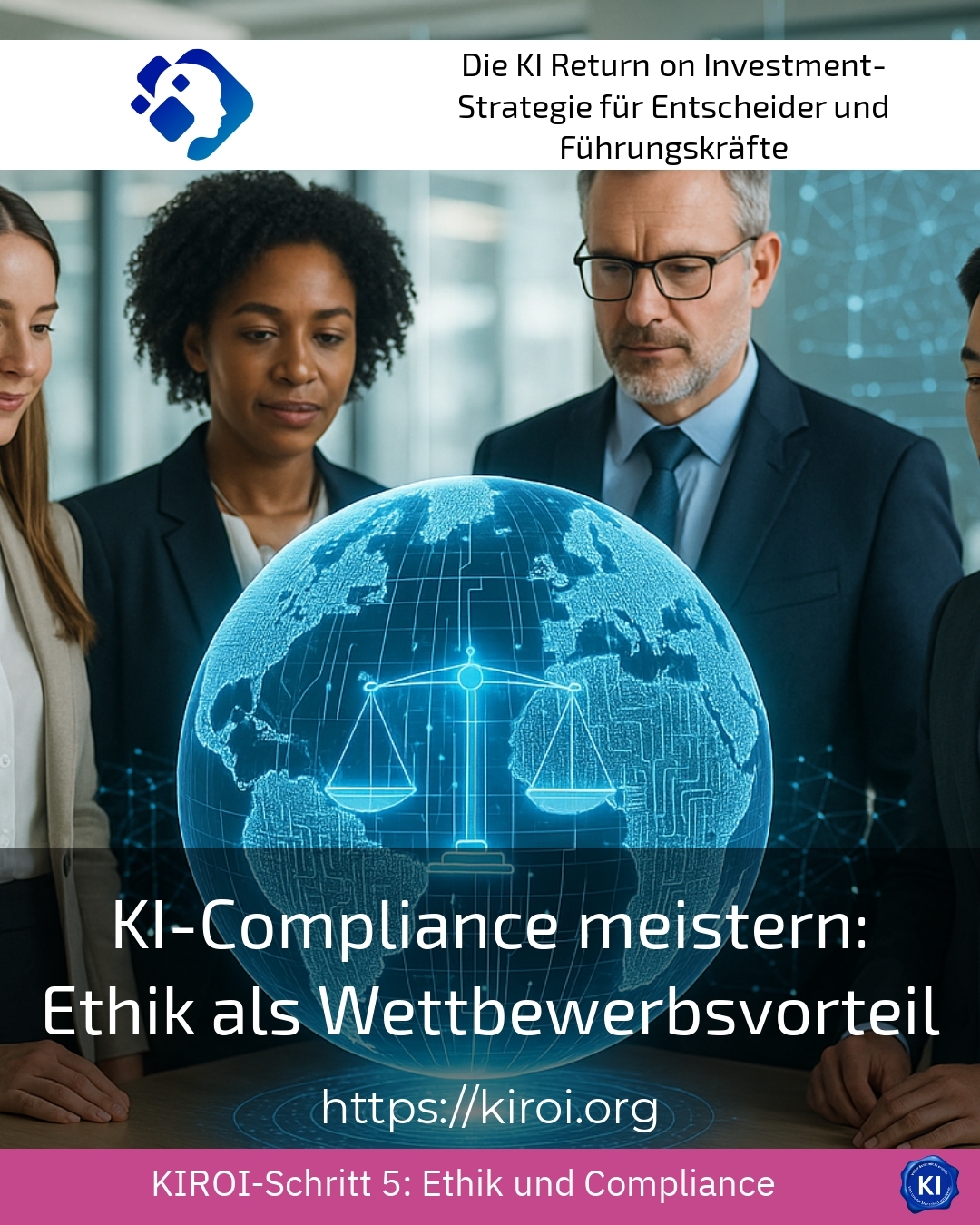
Imagine your company is facing a decision worth millions in revenue. You're using intelligent systems to help you. But suddenly, questions arise that go far beyond technology. This is precisely where the journey into the topic begins Mastering AI Compliance: Ethics as a Competitive Advantage. Why do some organisations become pioneers? And why do others fail miserably despite state-of-the-art technology? The answer doesn't lie in the algorithms themselves. It lies in the way responsibility is taken. In an era where automated decisions are becoming increasingly important, ethical conduct determines success or failure. This article shows you concrete ways to achieve this. It provides practical examples and strategic impulses.
The new responsibility in a digitised economy
The economic world is undergoing profound change. Automated systems make millions of decisions daily. They influence credit decisions, staff selection, and customer relationships. This creates new challenges that were previously unthinkable. Companies must now account for processes. These processes are often not fully understood even by their own developers. This creates a gap between technical possibility and ethical responsibility.
A medium-sized logistics company recently implemented a route optimisation system. Initially, everything seemed to work perfectly. Delivery times improved significantly. However, it then emerged that certain residential areas were systematically disadvantaged. The cause lay in historical data, which reflected old prejudices. The company responded admirably and adjusted the algorithms. At the same time, it introduced transparent control mechanisms.
Another example comes from the retail sector. A corporation there used automated, real-time price adjustments. The technology was impressive. However, it resulted in vulnerable customer groups paying higher prices. This happened without malicious intent. It was a side effect of the optimisation. The company only recognised the problem through external reports. Today, it works with ethical guidelines. These prevent such unintentional discrimination.
The problem is particularly evident in the financial sector. Banks use intelligent systems for credit scoring. These systems can amplify unconscious bias. A large financial institution recently had to completely revise its model. It had systematically rated certain professional groups less favourably. The revision cost significant resources. However, it prevented greater reputational damage.
Mastering AI Compliance: Strategically Leveraging Ethics as a Competitive Advantage
Many executives initially see ethical guidelines as an obstacle. They view them as tiresome duties. However, this perspective falls far too short. In reality, well-considered standards offer considerable business advantages. Customers trust companies more that act responsibly. Employees identify more strongly with their organisation. And investors increasingly favour sustainable business models.
The insurance industry offers insightful findings here. A leading provider voluntarily introduced strict transparency guidelines. Initially, management feared competitive disadvantages. The opposite occurred. Customer satisfaction increased measurably. New customers cited trust as the most important decision factor. The initial investments paid off within months.
The situation in healthcare is particularly sensitive. Diagnostic support systems must meet the highest standards. A medical technology company developed a model for early disease detection. From the outset, it involved ethical advisors in the development process. The result was a system with built-in protection mechanisms. It prevents premature diagnoses and protects patient rights. Market success exceeded all expectations.
Positive developments can also be seen in Human Resources. Applicant tracking systems are often criticised. An international corporation decided to take a different approach. It made the functioning of its selection processes completely transparent. Applicants can understand which criteria are relevant. This openness significantly improved the quality of applications. At the same time, it sustainably strengthened the employer brand.
Best practice with a AIROI customer
A family-run company with a long tradition in the manufacturing sector faced considerable challenges when it wanted to introduce intelligent systems for quality control, as its existing processes were no longer meeting growing demands. Transruptions Coaching supported this project from the initial planning phase right through to successful implementation, with particular emphasis placed on involving all employees. We began by conducting intensive workshops to address the ethical dimensions of the planned technology, and these discussions revealed concerns that management had not anticipated. The production employees, in particular, feared that their experience would be devalued and saw their jobs at risk. Through structured dialogue, we jointly developed a concept that integrates human expertise and machine precision rather than pitting them against each other. The employees became active participants in shaping the change, as they were able to contribute their specialist knowledge to the system configuration. Today, team leaders report higher job satisfaction and increased productivity, and the error rate has fallen by an impressive forty percent. The company also received an award for exemplary digitalisation, which explicitly recognised its ethical approach. This example impressively demonstrates how responsible transformation can succeed when all stakeholders are taken seriously and are allowed to contribute their perspectives.
Transparency as a cornerstone of sustainable innovation
Without transparency, genuine trust cannot arise. This applies to customers just as much as to employees. Modern regulations increasingly demand the traceability of automated decisions. However, smart companies go beyond the minimum. They make transparency part of their corporate culture. This approach distinguishes long-term successful organisations from short-term optimisers.
A telecommunications provider recently introduced a customer dialogue system. It automatically explains why certain recommendations are given. Customers can request detailed justifications at any time. Acceptance of the suggestions increased significantly as a result. Complaints about opaque decisions fell considerably. The system has become a model for the industry.
In the energy sector, utility companies are experimenting with transparent tariff systems. These show customers exactly which factors influence their price. A regional provider achieved excellent customer loyalty values with this. People appreciate it when they understand what is happening with their money. Trust is built on openness, not on marketing.
Transparency is also gaining importance in e-commerce. Recommendation systems are ubiquitous, but often opaque. An online retailer decided to reveal its logic [1]. Customers can see why certain products are suggested. They can even influence these factors. Conversion rates improved, because trust facilitates the purchasing decision.
Understanding Regulatory Requirements and Mastering AI Compliance
The legal framework is evolving dynamically. New regulations set clear expectations for automated systems [2]. Companies that act early gain advantages. They avoid costly rectifications. They position themselves as responsible players. And they gain valuable experience in dealing with complex requirements.
The automotive industry faces particular challenges here. Assistance systems are becoming increasingly powerful. At the same time, demands for safety and reliability are rising. A leading supplier set up an interdisciplinary team. It consists of engineers, lawyers, and ethics experts. Together, they are developing standards that go beyond legal requirements. This strategy ensures long-term competitiveness.
Banking is subject to strict documentation requirements. Every automated credit decision must be traceable. A medium-sized institution developed innovative solutions for this. It created a system that automatically logs the basis for decisions. Auditors can access this at any time. Compliance costs fell despite higher quality standards.
The retail sector also has to adapt to new rules. Personalised advertising is subject to increasingly strict regulations. A retail group used this as an opportunity [3]. It developed data-protection-friendly marketing methods. These respect customers' privacy. Nevertheless, they reach their target groups effectively. The approach attracted international attention.
Staff qualification as a key to success in ethical standards
Technology alone does not create an ethical organisation. People must be empowered to make responsible decisions. Training programmes play a central role in this. They raise awareness of potential pitfalls. They impart practical knowledge. And they create a shared values base within the company.
A pharmaceutical company introduced mandatory ethics training for all employees. The initial response was mixed. Some considered it over the top. However, after a few months, the atmosphere noticeably changed. Employees began to ask critical questions. They proactively reported potential issues. The company culture underwent a lasting transformation.
In the IT sector, companies are experimenting with new formats. Hackathons for ethical solutions are growing in popularity. Teams develop innovative protection mechanisms during these events. A software company generously rewards the best ideas. The events foster creativity and a sense of responsibility equally. Many of the suggestions are incorporated into actual products.
Even managers require special qualifications. An industrial group established an executive programme. It teaches decision-makers the fundamentals of responsible technology use. Participants report changed perspectives. They now make strategic decisions with greater awareness. Transruption Coaching supports such initiatives through individual guidance.
Best practice with a AIROI customer
A dynamic startup in the digital health services sector approached us because they wanted to ethically secure their data-driven analysis processes before entering the regulated market. The young founders had excellent technical skills, but they lacked experience in handling sensitive health data and the associated responsibilities. Transruptions coaching worked together with the team to develop a comprehensive code of ethics that covers all aspects of data processing while remaining practical. We analysed every single process step for potential risks and developed concrete instructions for action for various scenarios that can occur in practice. The introduction of regular ethics reviews, during which independent experts examine the systems for unintended consequences and provide constructive feedback, was particularly valuable. This proactive approach enabled the startup to convince several investors who were explicitly looking for responsible business models and were willing to invest in sustainable innovations. Certification for the European market was achieved on the first attempt, which is by no means a matter of course in this industry and brought significant time and cost advantages. Today, the company is considered a role model for ethical innovation in the healthcare sector and is regularly invited to specialist conferences to share its experiences.
Practical steps for implementing ethical standards
Theory alone is not enough. Organisations need concrete guidelines for action. The first step is an honest stocktake. What automated systems are already in use? What decisions do they make? And who bears responsibility if something goes wrong?
An energy supplier recently conducted a comprehensive analysis. It documented all relevant systems in a central register. Each system was assigned a risk assessment. High-risk applications were prioritised. This overview enables targeted improvements. It also aids communication with regulatory authorities.
In retail, the stakeholder engagement approach is proving its worth. Affected groups are actively involved in development processes [4]. A fashion company regularly invites customers to feedback sessions. These evaluate new technologies from their perspective. Many valuable insights stem from these discussions. The products are thereby made more user-friendly and fairer.
The chemical industry relies on external auditing. Independent inspectors assess the ethical quality of automated processes. A large corporation voluntarily publishes these reports. This transparency strengthens public trust. It demonstrates a genuine commitment to responsible action.
Mastering Long-Term Benefits through AI Compliance: Establishing Ethics as a Competitive Advantage
Investing in ethical standards pays off in multiple ways. In the short term, companies avoid risks and reputational damage. In the medium term, they gain the trust of key stakeholders. In the long term, they secure their social legitimacy. These advantages add up to a significant competitive advantage.
The tourism industry provides impressive examples. Booking platforms are experimenting with fair algorithms. These distribute visibility more equitably between large and small providers. An innovative tour operator made this its brand core. Sustainability-conscious customers appreciate this approach. Booking figures rose continuously.
Similar trends are emerging in the property sector. Valuation models can amplify prejudice. An estate agency developed fair algorithms that take relevant factors into account without discrimination. The quality of valuations improved measurably. Both customers and sellers benefit equally.
The education sector is also seizing these opportunities. Learning platforms are personalising content for each user. However, personalisation harbours risks of restriction. One educational provider introduced transparency obligations. Learners can understand why certain content is recommended. They can consciously override these recommendations. This approach promotes self-determination and critical thinking.
My AIROI Analysis
The analysis of numerous projects clearly shows that ethical standards and economic success are not mutually exclusive, but can mutually reinforce each other if organisations are willing to invest in long-term value creation. Companies that establish responsible practices early on often report unexpected positive side effects such as improved employee motivation, stronger customer loyalty, and easier access to capital, as investors increasingly focus on and preferentially finance sustainable business models.
As experience has shown, the biggest challenges lie not in the technology itself, but in the organisational and cultural changes required to truly live ethical principles, rather than just documenting them on paper. Transruption coaching supports organisations with precisely these transformation processes by providing impetus and practical support tailored to the specific needs of each client.
Particularly successful are those organisations that integrate ethical considerations into their strategy development from the outset, rather than introducing them retrospectively as a control mechanism, because proactive action in this area is considerably more cost-effective than reactive corrections. The coming years will show which companies have set the right course and which will pay dearly for their failures.
My recommendation, therefore, is not to wait for regulatory pressure, but to begin a systematic review now and implement gradual improvements that secure long-term competitive advantages. Experience from many projects shows that this approach is not only possible but also rewarding.
Further links from the text above:
[1] Federal Ministry for Economic Affairs – Dossier on Intelligent Systems
[2] European Commission – Regulatory Framework for Automated Decision-Making Systems
[3] Bitkom – Guide to Responsible Technology Use
[4] AlgorithmWatch – Resources for the ethical assessment of automated systems
For more information and if you have any questions, please contact Contact us or read more blog posts on the topic Artificial intelligence here.








 Deutsch
  English (UK)